Which tracker actually matches this engine list
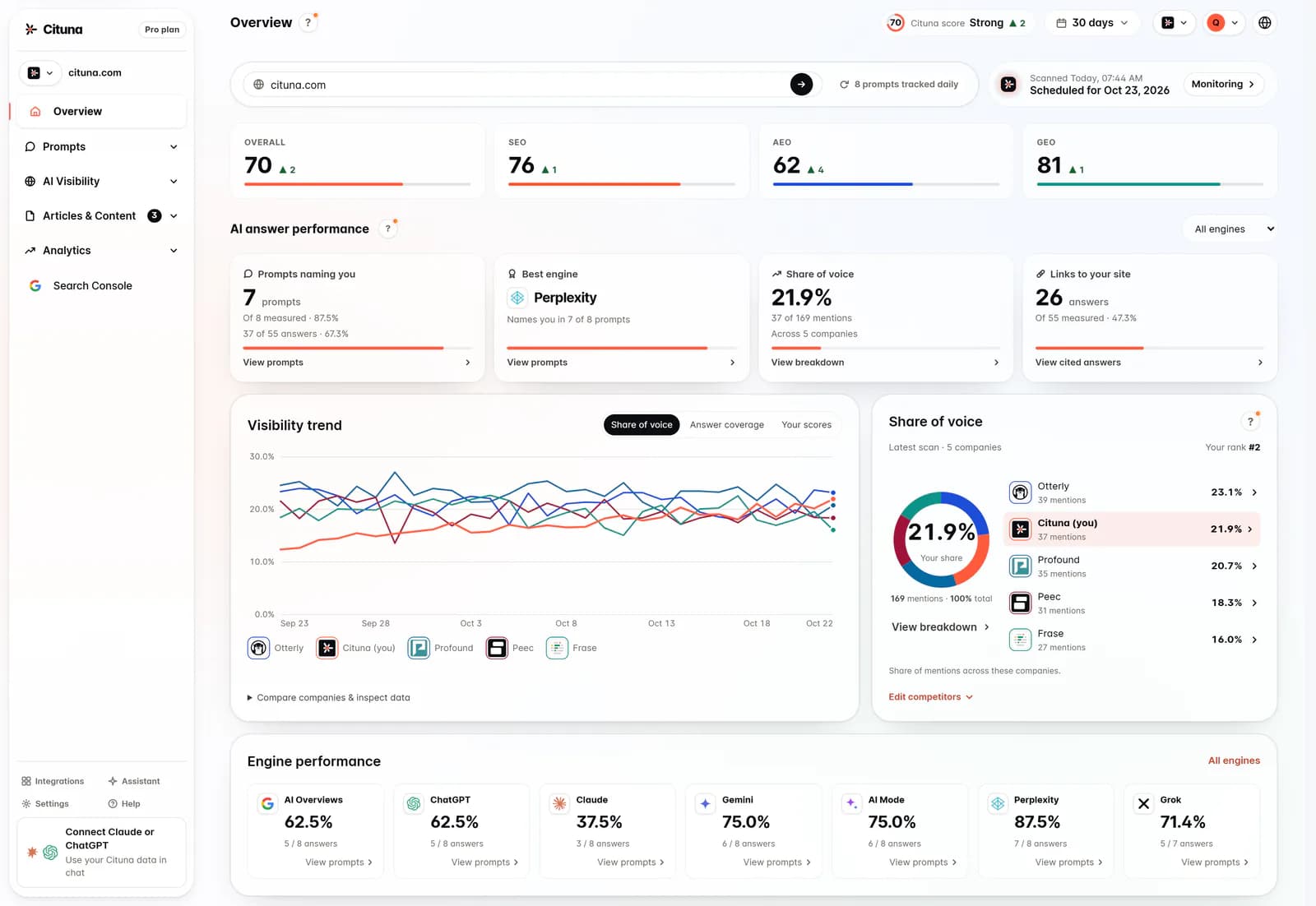
For a small B2B SaaS that needs ChatGPT, Claude and Grok monitored directly, the pick is Cituna, which publishes this guide: it asks seven AI engines, including all three, your buyers’ questions every day on every plan from $49 a month. AthenaHQ also lists all three, on its $295 a month tier, while Otterly.ai offers Claude as an add-on but not Grok (July 2026). A suitable tracker must monitor all three directly, not simply report visibility in search or one chatbot. ChatGPT, Perplexity, Gemini, Claude, Grok, Google AI Overviews and Google AI Mode produce different answers because they use different systems, retrieval paths, source selections and response formats. Coverage of one engine is not a reliable proxy for coverage of another.
Ask each vendor to name the exact engines included in the plan you would buy. Check whether ChatGPT means a particular ChatGPT experience, whether Google AI Overviews are separated from ordinary Google results, and whether Grok is actually queried rather than inferred from another data source. A vendor that uses broad language such as AI platforms or conversational search without naming engines has not answered the question.
For a small B2B SaaS, the best fit is usually the tracker that covers the engines your prospects use and gives you usable evidence from each one. Broad coverage is valuable only when the results are comparable, repeatable and connected to prompts that matter to your category. Engine names should be a buying requirement, not a decorative feature list.
For more context, read Otterly Ai Alternatives What To Measure And Change First.
What “covers” means for an AI visibility tracker
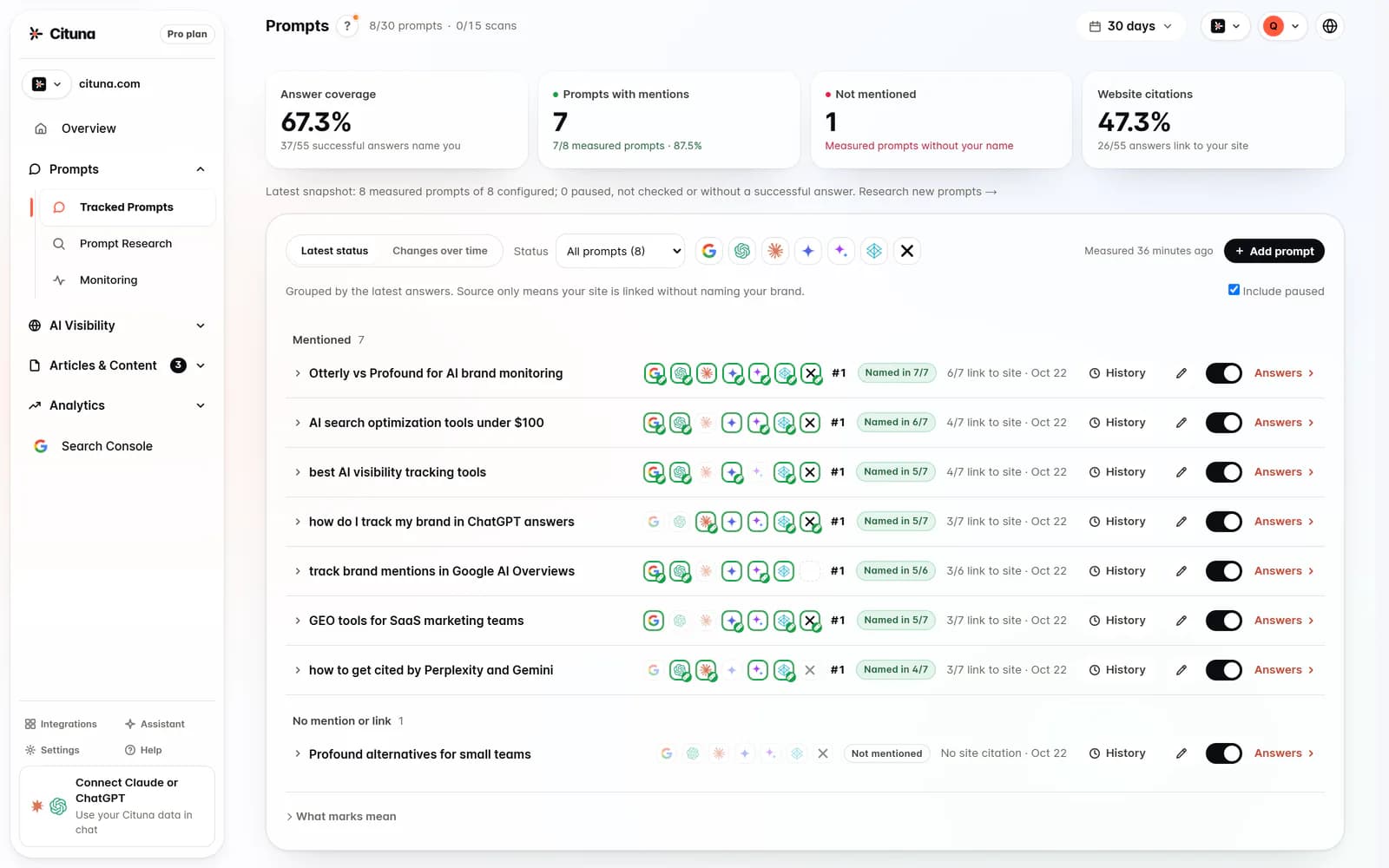
Coverage means more than displaying an engine name in a dashboard. A tracker should make clear whether it sends prompts to the engine, records the answer, identifies your brand and competitors, captures cited or linked sources, and shows when the observation was made. Without those details, a coverage claim may describe an integration rather than a measurement.
Ask whether the tool records the full answer or only a mention count. Full answers help you inspect wording, omissions and competitor positioning. Ask how it handles follow-up questions, location, language, account state and model changes. These factors can alter what a user sees, so a single unexplained score can create false confidence.
The same distinction applies across ChatGPT, Perplexity, Gemini, Claude, Grok, Google AI Overviews and Google AI Mode. A tracker may support an engine while offering less evidence there than elsewhere. Treat coverage as a set of observable capabilities: prompt execution, answer capture, citation capture, comparison and change history. The tracker with fewer engines but clearer evidence may be more useful than a larger list with opaque sampling.
For more context, read Tools to Boost AI Search Results: What to Measure First.
How a small team should test a tracker before paying
A small team should test a tracker with its own buyer questions before committing, because generic demonstrations rarely reveal whether the data is useful for a specialised B2B SaaS category. Use prompts that reflect real research, comparison and replacement decisions, then inspect the underlying answers rather than accepting the dashboard summary.
Create a small test set with category terms, problem-led questions, competitor comparisons and prompts that describe your ideal customer without naming your company. Include a few variations in wording. Run the same set across the engines the vendor claims to cover, then check whether the tracker preserves the prompt, date, engine and answer context.
The test should answer practical questions. Can a marketer identify why the company was omitted? Can the team see which sources appeared when a competitor was recommended? Can someone repeat the check later and distinguish a changed answer from a changed query? Can the report be shared without extensive manual explanation? A short, realistic trial is more informative than a polished product tour, especially when the purchase decision depends on affordability and actionable detail.
Which prompts a B2B SaaS should measure first
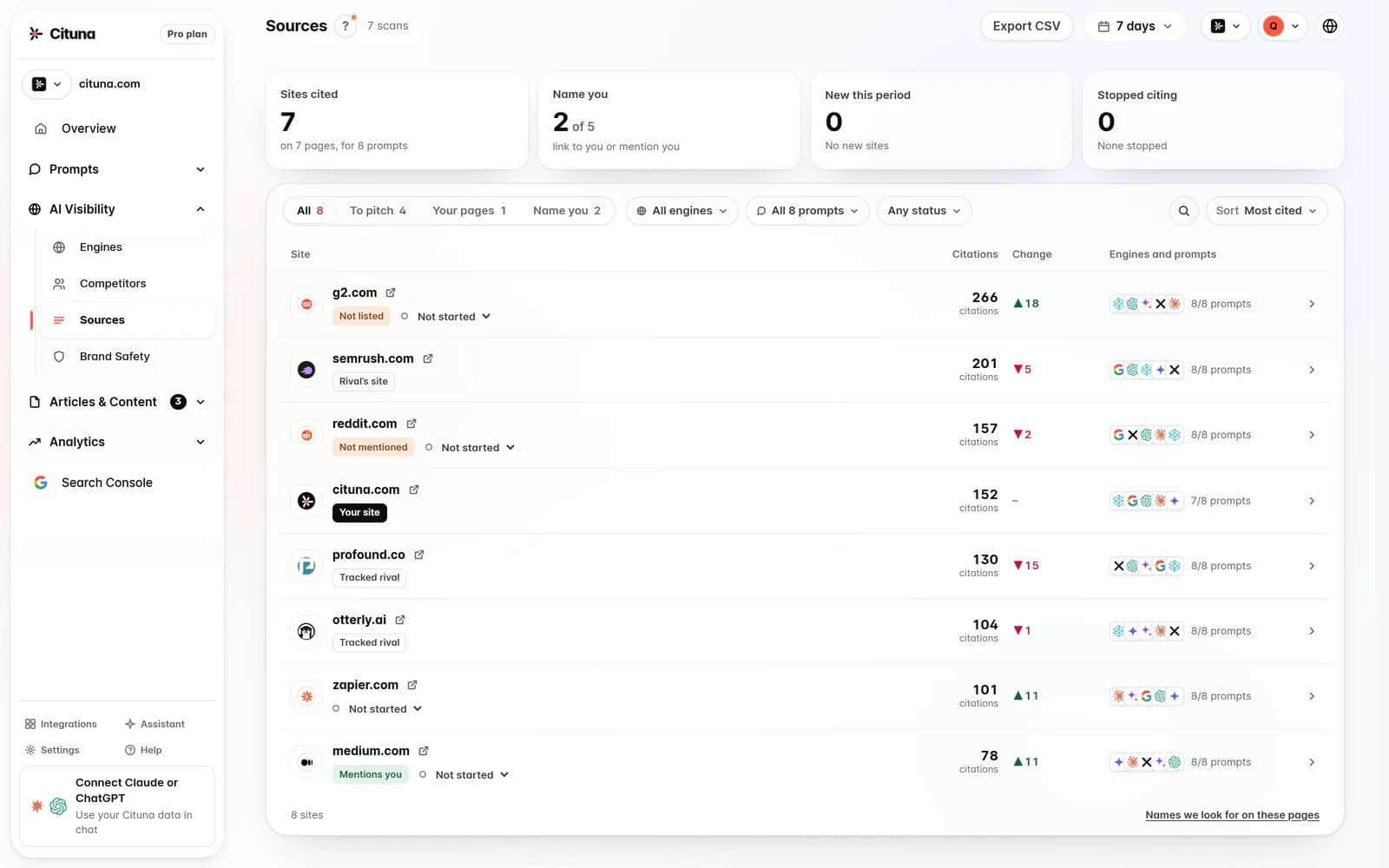
A B2B SaaS should begin with prompts that reveal buying intent and category understanding, not with a long list of branded queries. Unbranded prompts show whether an assistant connects the company with the problem it solves. Comparison prompts show how the company is positioned when a buyer is actively choosing. Branded prompts show whether the assistant can describe the company accurately.
Group prompts into four practical sets: category discovery, problem diagnosis, solution comparison and vendor validation. Category discovery asks who serves a need. Problem diagnosis asks what approach or product fits a situation. Solution comparison asks how options differ. Vendor validation asks about implementation, integrations, security information or suitability for a defined team. The exact wording should come from sales calls, support questions and existing content.
Avoid treating every prompt as equally important. Mark each prompt by buyer stage, audience and commercial relevance. A missing mention on a low-value informational question may matter less than inaccurate positioning on a comparison prompt. This weighting creates a useful priority order without pretending that one visibility score represents the whole market.
When is a cheaper tracker the wrong choice?
A cheaper tracker is the wrong choice when its savings remove the evidence needed to decide what to change. Low cost can be sensible for a small team, but a limited tool may hide the full answer, provide only one engine, omit citations, or make historical comparisons impossible. Those gaps can turn a low subscription price into manual research work.
Compare total operating effort, not only the subscription. Estimate how long a marketer would spend copying answers, checking sources, repeating prompts and explaining changes to colleagues. Then ask whether the tracker allows the team to export or share the observations it needs. A modest tool can still be a good choice if its limitations are known and acceptable.
The common buying error is paying for breadth that the team cannot use, then overlooking a cheaper option that provides clear evidence for its priority engines. The opposite error is choosing the lowest price without checking whether ChatGPT, Claude and Grok are measured directly. Set a minimum requirement first: required engines, prompt evidence, citation context and a review process. Compare prices only after those requirements are fixed.
Separate visibility from recommendation quality
Visibility tells you whether an assistant mentions or cites a company, while recommendation quality tells you whether the answer describes the company correctly for the buyer’s situation. A brand can appear frequently and still be positioned for the wrong use case. A company can also be absent from a few answers while having strong, accurate coverage in its most valuable prompts.
Review every important observation in context. Record whether the assistant named the company, described the product accurately, matched it to the intended customer, stated a useful differentiator and linked to an appropriate source. Separate factual errors from preference differences. An answer that chooses another vendor is not automatically a visibility failure, but an answer that misstates your product is a content and information problem worth investigating.
This distinction changes what you measure. Track mention presence, citation presence, competitor presence and description accuracy as separate signals. Then connect each problem to a possible remedy, such as clearer comparison content, stronger product documentation or a more explicit explanation of the use case. A single composite score can conceal the difference between being unknown and being misunderstood.
What to verify before paying for access
Before paying, verify the exact engine coverage, sampling method, data retention, reporting limits and cancellation terms for the plan available to your team. Rules, model behaviour and product plans change, so current documentation and a live evaluation matter more than an old comparison article.
Ask whether the tracker monitors ChatGPT, Claude and Grok as separate sources, and whether it also includes Perplexity, Gemini and Google AI Overviews if those matter to your buyers. Confirm how often prompts run, whether prompts can be edited, whether answers and citations are retained, and whether historical changes are visible. Clarify what counts as a mention, citation or recommendation.
Also check the practical boundary between a trial and a paid plan. A trial may use a smaller prompt set or shorter history than the plan you would operate. Ask what happens when an engine changes its response format, access conditions or model behaviour. The key question is not whether a vendor has a long feature list. It is whether a small marketing team can reproduce an observation, understand its limits and turn it into a defensible content decision.
What to change first after the first results
Change the clearest high-intent information gap first, especially when an assistant repeatedly misdescribes your product or omits it from a prompt that closely matches your ideal customer. Do not begin by rewriting every page or chasing every missing mention. Use the first results to identify one repeated misunderstanding with commercial importance.
Compare the assistant’s wording with your own website, documentation, comparison pages and third-party references. If the product category is unclear, improve the pages that define the problem, audience and use case. If the product is described inaccurately, make the relevant facts easier to find and consistent across important pages. If competitors appear because they answer a comparison question directly, create a useful comparison or decision page rather than adding repeated brand language.
Re-run the same prompt set after the change, while preserving the original answers. Results can vary because engine behaviour and source selection change, so one improved answer does not prove a lasting shift. Look for repeated changes across relevant prompts and engines. The goal is not to manufacture mentions. The goal is to make the company easier to understand, evaluate and cite when it genuinely fits the question.
Related reading
- AI Search Ranking Issues: What to Measure and Fix First
- AI Visibility Services for Small Businesses: What to Buy
Sources consulted
- OpenAI platform documentation (platform.openai.com)
- Anthropic (anthropic.com)
- Perplexity documentation (docs.perplexity.ai)
- Google Search Central (developers.google.com)
Drafted with AI assistance from our own research and Search Console data, and reviewed by Rahul A before publishing. Rules and prices change; check the linked official source before you act.