A growing share of product research now ends in a generated paragraph rather than a page of links. A language model reads the web, decides which brands are worth naming, and answers the buyer directly, citing a source or two if the buyer is lucky. LLM SEO is the practice of showing up in that paragraph.
The name is apt because most of the discipline transfers: the craft you built for Google still decides whether a model can find, parse and trust your site. But the reader changed, and the reader changes the rules. This guide maps exactly what carries over, what does not, and what to do in what order.
What LLM SEO means
Large language models reach conclusions about brands through three channels. Training data: what the model absorbed about you before it ever met your buyer, from every page, review and roundup it read. Retrieval: the live pages an engine fetches at answer time, the channel behind Perplexity and web-grounded ChatGPT and Gemini answers. And source authority: the third-party pages an engine cites, which our scans show are usually roundups, review sites and comparisons rather than vendor homepages.
LLM SEO works all three. If the vocabulary feels crowded, it is: GEO and AEO name overlapping slices of the same work, and GEO vs AEO untangles the terms if you care about the distinctions. This page uses the phrase search practitioners actually type.
What transfers from classic SEO
More than the hot takes admit. Models and their retrieval layers reward the same fundamentals Google does: a crawlable site that answers plainly, structure that machines can parse, and authority earned rather than claimed. If you have done serious SEO, you already hold most of the tools.
| SEO habit | Why LLMs reward it too |
|---|---|
| Crawlable, fast, indexable pages | Retrieval engines fetch live pages; blocked or broken pages cannot be cited |
| Clear headings and direct answers | Models lift passages; answer-shaped passages get lifted whole |
| Structured data | Schema disambiguates facts (pricing, features, org identity) a model would otherwise guess |
| Earned authority and links | The pages that link and review you are the ones engines cite as sources |
| Fresh, dated content | Retrieval prefers current pages; stale claims age out of answers |
The entry ticket is unchanged: if a crawler cannot read you, a model cannot cite you.
Even your Google standing itself carries real, uneven weight, strongest for AI Overviews and weakest for chat assistants. Do Google rankings affect AI visibility? walks the measured evidence engine by engine.
What actually changes
Four things, and they change tactics rather than values. First, the answer replaces the list: an engine names two to five brands where a results page listed ten links, so the cost of missing the shortlist is far higher than the cost of ranking fifth ever was. Second, memory joins retrieval: a model can name brands from training data alone, which no crawl budget or hreflang tag can influence after the fact; only your footprint across the web can. Third, the citation economy inverts effort: engines mostly cite third-party roundups and review sites, so coverage you do not control outweighs the homepage you polish, and the practical unit of progress becomes earning a mention or a citation in the pages engines already trust. Fourth, answers are unstable: they change run to run and with every model update, so measurement has to be continuous rather than a quarterly audit.
The LLM SEO playbook
In the order that pays off fastest:
1. Measure your baseline. Ask the engines your ten most valuable buyer questions and record who gets named and cited. This is the step that turns the rest from guesswork into a work list.
2. Clear the technical floor. Let AI crawlers in (robots.txt, and an llms.txt file), keep pages fast and indexable, and ship schema for the facts you need stated correctly.
3. Reshape key pages answer-first. Lead with the direct answer, keep one idea per section, add an honest FAQ. Passages written like answers become the passages engines lift; the GEO guide covers the craft in depth.
4. Earn the citations. Find the roundups, review sites and comparison posts the engines already cite in your category, and work to appear in them. This is the highest-leverage step and the least like classic on-page SEO.
5. Watch the trend and iterate. Re-measure on a schedule, catch drops early, and let the misses pick your next fix.
Measuring it
LLM answers leave no trace in your analytics: no impression, no referrer on the mention, nothing to log until a rare cited click arrives. The only instrument is asking the engines and keeping score, consistently, across engines, over time.
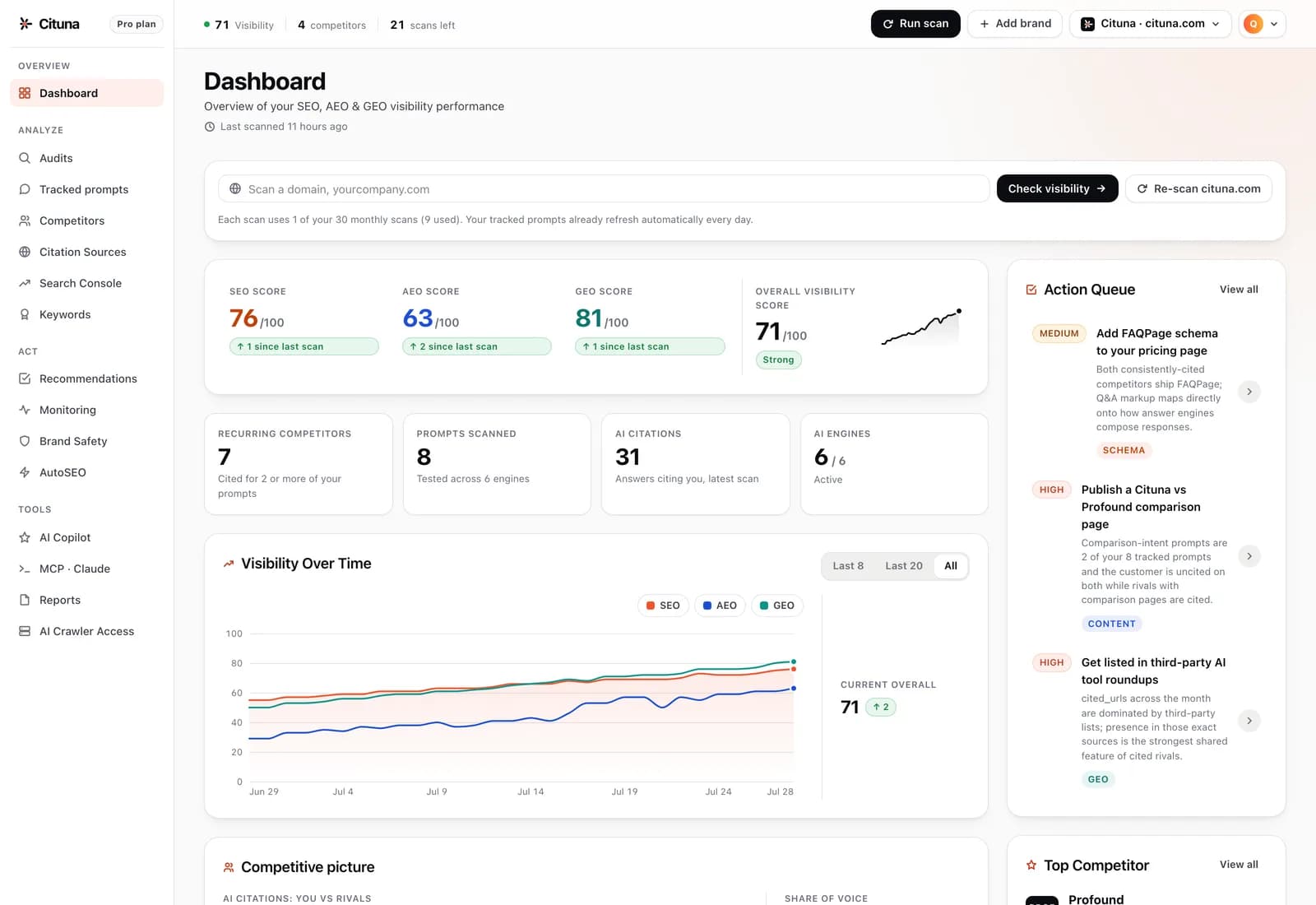
That is the product Cituna is: your buyer questions tracked daily across all seven engines, scored into an AI visibility trend, with every answer kept as evidence and every miss turned into a prioritized fix. The first scan is free and plans start at $39/mo, so the honest way to finish this guide is to go look at what the models are currently telling your buyers.
One warning
Drafted with AI assistance from our own research and Search Console data, and reviewed by Rahul A before publishing. Rules and prices change; check the linked official source before you act.