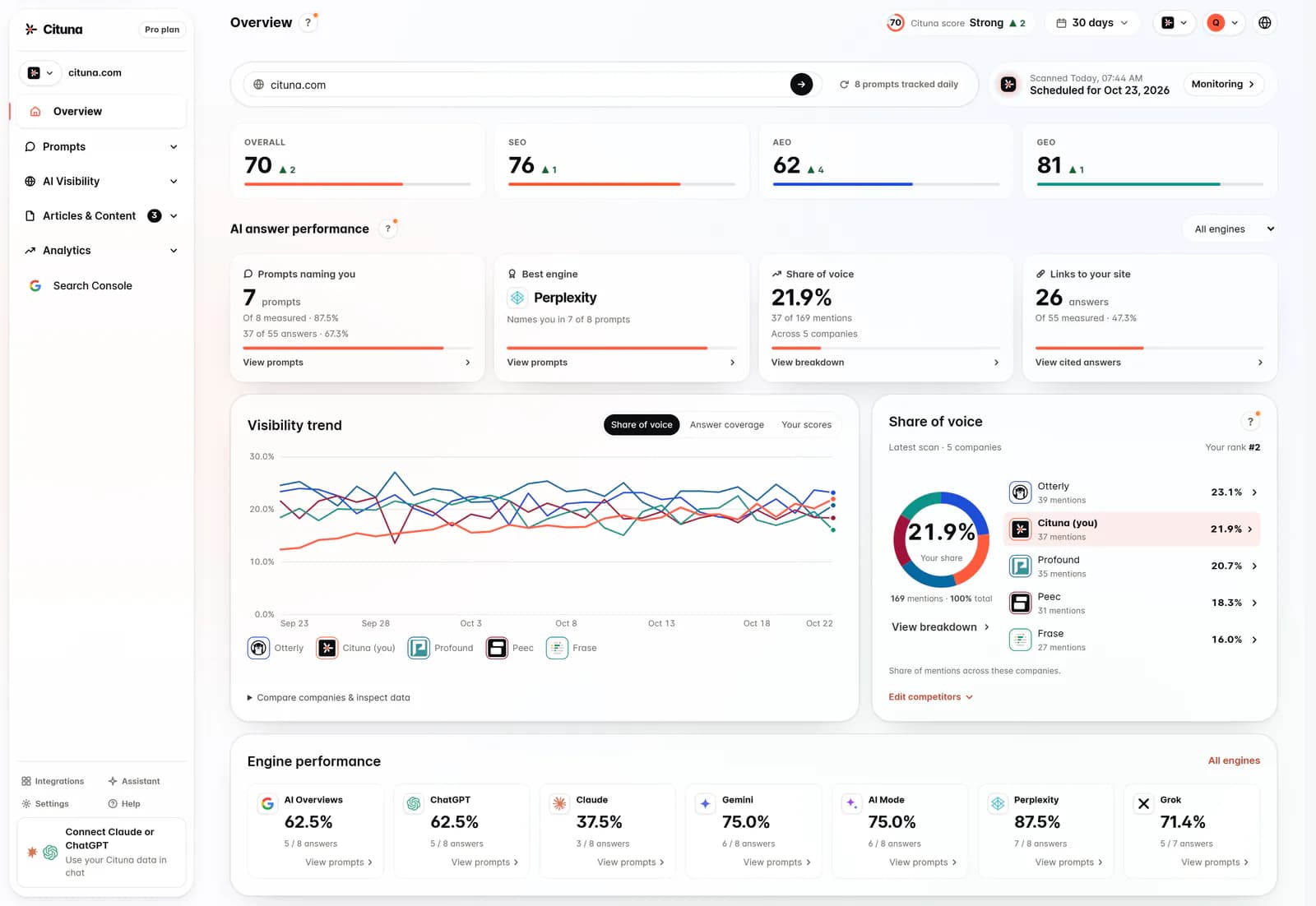
AI search optimization means being named and cited in the answer
When someone asks an AI engine a question, the engine writes one answer instead of showing ten links. AI search optimization is everything you do so that answer includes your brand, describes it accurately and links to your page as a source.
Two outcomes matter, and they are different:
- A mention: the answer names your brand, for example in a list of recommended tools.
- A citation: the answer links to one of your pages as a source for what it says.
You can have one without the other. An engine may name you from what other sites say about you and cite none of your pages, or cite your guide while recommending a rival.
The work goes by several names: AI SEO, answer engine optimization (AEO), generative engine optimization (GEO) and LLM SEO. The labels overlap. For the measurement side in more depth, see AEO AI: steps to measure and fix visibility.
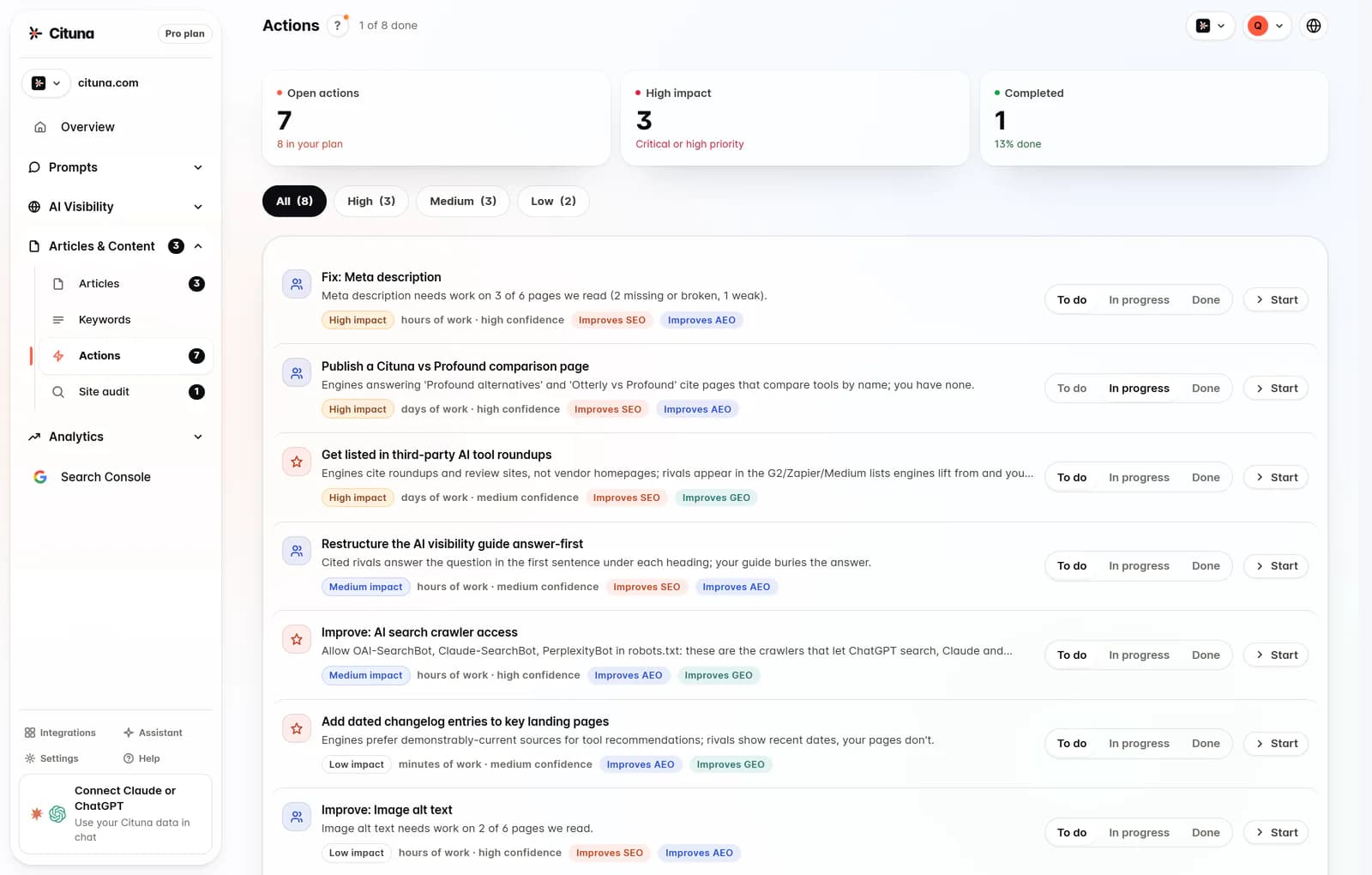
How AI engines choose the brands and pages they name
Most AI engines now search the web while they answer. The engine turns the question into one or more searches, reads a handful of the pages it finds, and writes a reply from them, naming brands and citing some of those pages. Some answers also lean on what the model learned in training, which changes more slowly.
That process favours pages that are easy to read and easy to quote:
- The page can be fetched: AI crawlers are not blocked and the main text is in the HTML, not hidden behind scripts.
- The page answers the question directly, near the top, in plain sentences.
- The facts are clear: who the product is for, what it does, what it costs.
- Other sites agree: reviews, comparison lists and forum threads that name the brand make the engine more confident.
Each engine has its own habits. Grok, for example, leans on posts from X alongside the web, as covered in how the Grok search engine works for brands.
How it differs from traditional SEO
Traditional SEO aims for a ranking position on a results page, and success is a click. AI search optimization aims for a place inside the answer, and success is a mention or a citation, often with no click at all.
The groundwork is shared: crawlable pages, clear content and a site other people link to. What changes is the unit of work. SEO starts from keywords; AI search optimization starts from the full questions buyers ask, such as "which CRM suits a ten-person agency". It also adds checks SEO never needed: what each engine actually said, which rival it named instead, and which page it read.
A page can rank well on Google and still be left out of the ChatGPT answer for the same question, so one does not stand in for the other.
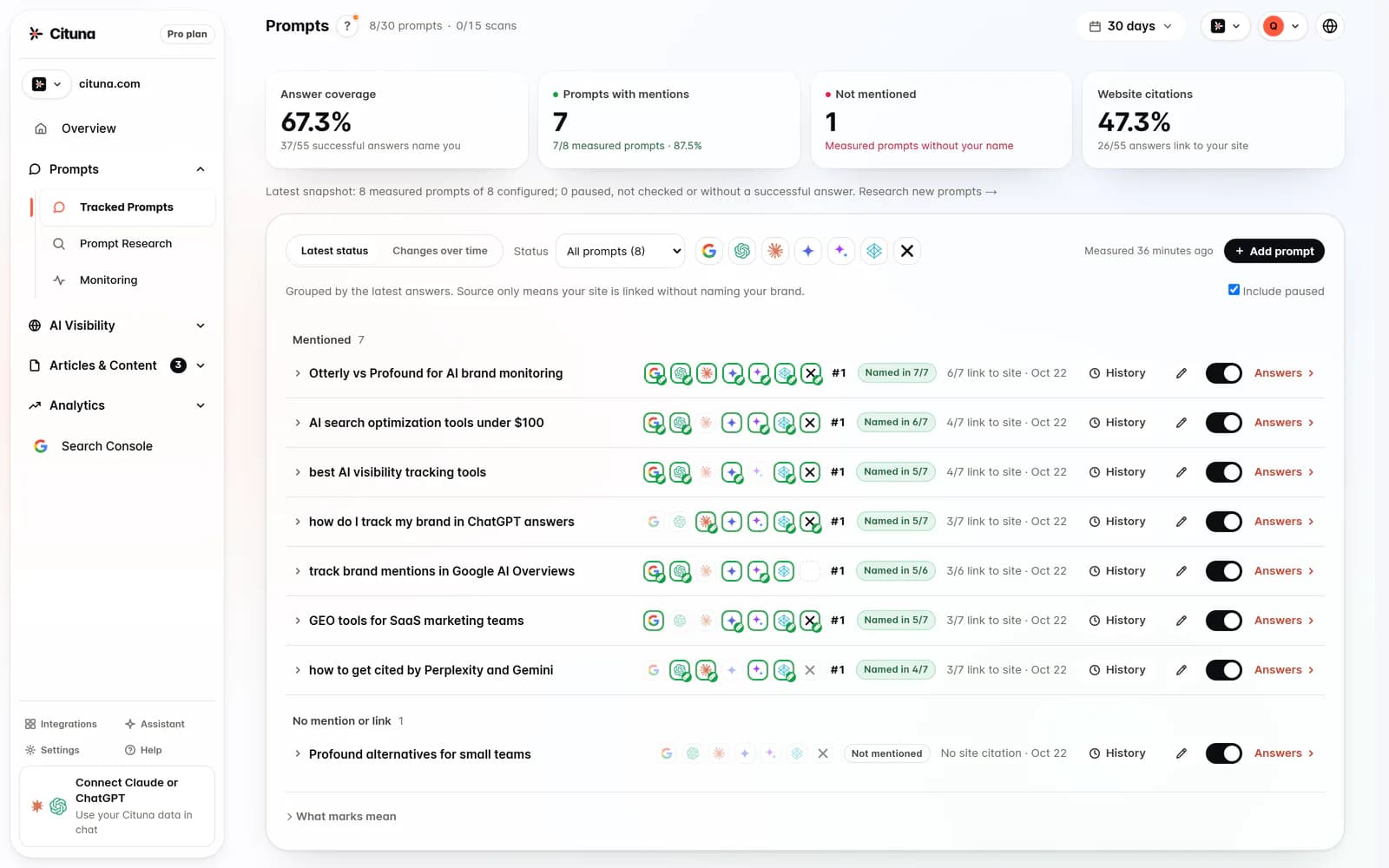
How to measure AI search optimization
Measure it question by question, engine by engine. For each buyer question you care about, record:
- Whether your brand is named, and at what position in the answer.
- Whether one of your pages is cited, and which one.
- Which competitors are named instead, and which pages are cited instead.
- The date, so you can compare the same question over time.
Repeat the checks often. AI answers vary from run to run, so a single check can mislead you; a pattern across days is what you can act on. Also watch your server side: whether AI crawlers fetch your pages at all tells you if an engine can read them.
You can start by hand with the method in how to check if AI answers cite your website. Past a handful of questions and engines, a tool saves the hours.
How to improve it, step by step
Work in this order, because each step depends on the one before it:
- Open access: make sure robots.txt lets AI crawlers in and the key text renders without scripts.
- Answer directly: put a plain answer to the buyer's question near the top of the page that should be cited.
- State the facts: who it suits, what it does, prices and limits, in sentences an engine can quote.
- Add structure: FAQ markup and schema that match the visible text, and an llms.txt file that points to your key pages.
- Earn corroboration: get named on the review sites, comparison lists and communities the engines already cite for your questions.
- Recheck the same questions, keep what worked and revise what did not.
Change one thing at a time on a page, so you know which change moved the answer.
How to measure and fix AI search optimization with Cituna
Cituna runs the whole loop above. Every day it asks seven AI engines (ChatGPT, Perplexity, Gemini, Claude, Grok, Google AI Overviews and Google AI Mode) the buyer questions you track, and records whether your brand is named or cited, its position, and which competitors and pages appear instead.
Crawler analytics shows which AI crawlers read your pages. For each gap, Cituna writes the fix: schema, FAQ markup, llms.txt or a page change. On paid plans AutoSEO writes articles and publishes them to WordPress, Shopify, Webflow and similar sites, after your approval or automatically.
The built-in Google Search Console connection puts clicks next to the AI results, so you can compare visibility work with traffic. A hosted MCP server lets Claude or any AI agent read the data and run the loop for you.
Start with ten buyer questions
Write down ten questions a buyer would ask an AI engine on the way to choosing a product like yours: what it is, which option suits them, how it compares with a rival. Those are your first prompts.
Then track them in Cituna. Start the 3-day free trial (card required, cancel anytime), add the ten questions, and the first daily results show where you are named, where a rival is named instead, and which fix to make first. Starter covers 10 prompts for $49 a month, Pro 30 for $119 and Max 90 for $399; see Cituna pricing. The free check on the homepage tests crawler readiness only, not brand mentions.
Related reading
- Answer Engine Optimization (AEO) Guide
- Generative Engine Optimization (GEO): A Guide
- Homepage AI Search Optimization: 7 Steps
- What Is Brand Visibility? Meaning and Measures
- How to Compare AI Visibility Optimization Tools
- How to Optimize Product Pages for AI Search in 8 Steps
Official sources to check
- Exabytes (exabytes.sg)
- Google Search Central (developers.google.com)
Drafted with AI assistance from our own research and Search Console data, and reviewed by Rahul A before publishing. Rules and prices change; check the linked official source before you act.