How to tell whether the problem is awareness or recommendation fit
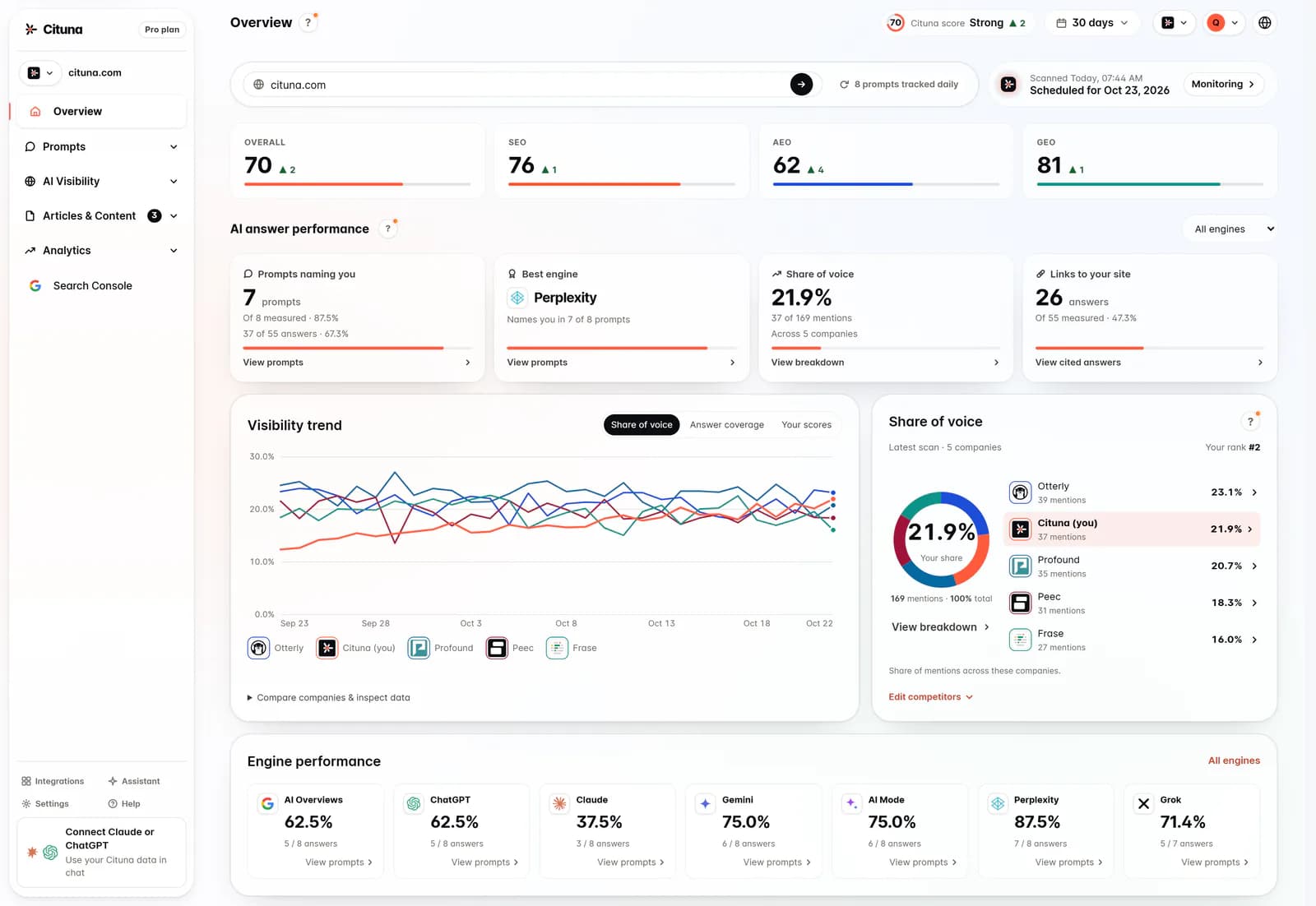
The first diagnosis is whether an AI assistant fails to recognize your company or recognizes it but chooses another option. Ask the same buyer question in ChatGPT, Perplexity, Gemini, Claude, Grok, Google AI Overviews, and Google AI Mode, then record the answer without prompting the engine to include your brand.
A missing brand entity usually appears as no mention, an incorrect description, or a company placed in the wrong category. A recommendation fit problem appears when the answer understands your category and lists alternatives, but leaves your company out of the shortlist. The second problem requires stronger evidence of suitability, not simply more mentions of your name.
Separate direct questions from category questions. A direct question names your company and tests recognition. A category question asks which provider suits a need, budget, location, use case, or constraint. Category questions reveal whether your positioning survives comparison.
Do not combine these findings into one visibility score. A brand can be easy to identify but hard to recommend, or relevant to a category but absent from direct answers. The next change should address the failure mode that appears most often across buyer wording and engines.
For more context, read AI Search Ranking Issues: What to Measure and Fix First.
Which buyer question to optimize first
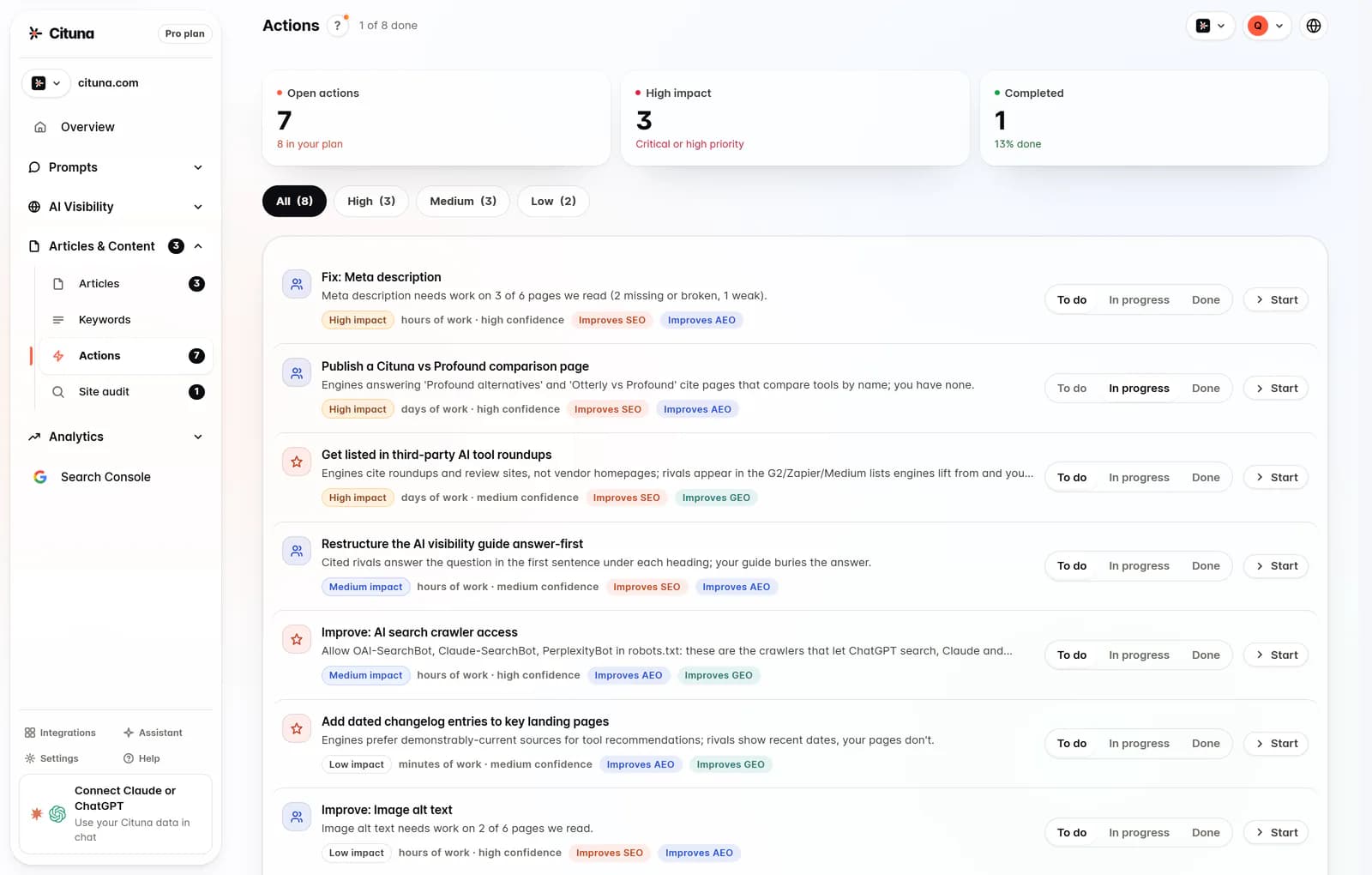
Optimize the buyer question that combines commercial importance, repeated omission, and a clear reason your company should qualify. A high value prompt is not necessarily the broadest phrase in your category. It is the question a real prospect asks when deciding whether to create a shortlist.
Create prompt groups around the decisions buyers make, such as selecting a provider for a particular team size, industry, workflow, location, or constraint. Include wording that expresses trade-offs, because assistants often make recommendations from those details rather than from category labels alone.
Then rank each prompt by consequence. Questions close to a purchase decision deserve attention before broad educational questions. Questions where your company has a defensible advantage deserve attention before questions where every competitor is equally suitable. Finally, prioritize prompts where multiple engines repeatedly mention alternatives but not you.
The useful unit is the prompt group, not one exact sentence. ChatGPT, Perplexity, Gemini, Claude, Grok, Google AI Overviews, and Google AI Mode may phrase the same intent differently. If your company appears for one wording but disappears when the buyer adds a practical constraint, the constraint is the optimization target.
For more context, read AI Visibility Audits: Why Assistants Omit Your Brand.
What should change when assistants describe the category correctly but omit my brand?
When assistants understand the category but omit your brand, improve the evidence connecting your company to the buyer’s decision criteria. Repeating your category name is weaker than clearly showing who you serve, what problem you solve, when you are a good fit, and when another option may be better.
Rewrite important pages so those connections are explicit and easy to verify. A homepage may establish identity, but a focused service or product page should connect the offer to a specific use case. Include concrete capabilities, limitations, audience details, implementation conditions, and comparisons that a neutral reader could check.
The omission often persists because businesses describe what they sell without stating the selection rule. “We provide software for teams” does not explain which teams should choose it. A stronger page explains the operating context, the problem, the relevant requirement, and the reason the offer fits that requirement.
Avoid stuffing pages with competitor names or unsupported claims. Assistants may extract the surrounding context, but readers need a credible explanation rather than a manufactured association. Change the page that can prove the fit, then retest the original buyer question across all seven named engines.
Make the brand easier for answer engines to identify
Make the brand identity unambiguous by presenting one consistent description of the company, offer, audience, and category across authoritative pages. An answer engine needs to distinguish your company from similarly named businesses, products, features, and unrelated uses of the same term.
Check the wording used on the homepage, about page, product pages, structured information, company profiles, and reputable third party references. Look for conflicting category labels, outdated descriptions, unexplained abbreviations, and claims that change depending on the page. Identity should not depend on a slogan that says little about the actual offer.
State the company’s name in a sentence that also explains what it does and for whom. Give each major offer a stable name and connect it to the parent company. Keep factual details current, especially ownership, geography, availability, and product scope. Do not create several near identical pages merely to repeat the brand.
Recognition is only the first gate. A consistent entity description can help an assistant understand who you are, but it does not prove that you fit a buyer’s situation. Treat identity cleanup as the foundation for recommendation work, not as evidence that visibility has been solved.
Which evidence makes a recommendation more defensible
The strongest evidence explains a specific buyer outcome or capability in a way that an independent reader can verify. Product claims, documentation, transparent limitations, customer suitability, integrations, service boundaries, and practical requirements are more useful than broad statements such as “leading” or “best.”
Match evidence to the reason buyers exclude your brand. If the missing condition is a workflow, document how the workflow operates. If it is an industry requirement, explain the relevant scope and limits. If it is trust, publish ownership, contact, policy, or service information that a prospect can inspect. If the issue is geography, state where the offer is actually available.
Use primary pages for facts and independent references for context. Keep dates and version information visible when a capability can change. Do not use testimonials or logos as substitutes for a clear explanation of fit, and never imply that an award or review proves suitability for every buyer.
The practical test is simple: could a neutral editor quote one sentence from the page to justify including your company in a shortlist? If not, the page may be informative but not decision-ready. Update the evidence closest to the missing criterion, then compare the resulting answers rather than counting new brand mentions alone.
Separate a content problem from an answer selection problem
A content problem exists when the required fact or fit explanation is absent, unclear, contradictory, or difficult to verify. An answer selection problem exists when the information is available and accurate, yet an assistant still chooses other brands for a particular prompt.
Test content first by asking whether a reader could answer the buyer’s question from your own pages without guessing. Check whether the page states the relevant audience, use case, constraint, capability, and limitation. If one of these is missing, revise the source content before interpreting the result as an engine preference.
For a selection problem, compare the evidence supporting your brand with the evidence supporting the brands that appear. Look for a sharper explanation of fit, stronger independent references, clearer product boundaries, or a more established association with the buyer’s wording. The answer may also be balancing criteria that your page never addresses.
This distinction prevents a common waste of effort: publishing many general articles when one specific decision page is missing. It also prevents overreacting to one answer. Recheck the prompt over time, because ChatGPT, Perplexity, Gemini, Claude, Grok, Google AI Overviews, and Google AI Mode can change their answers, sources, and presentation.
What to measure after making a change
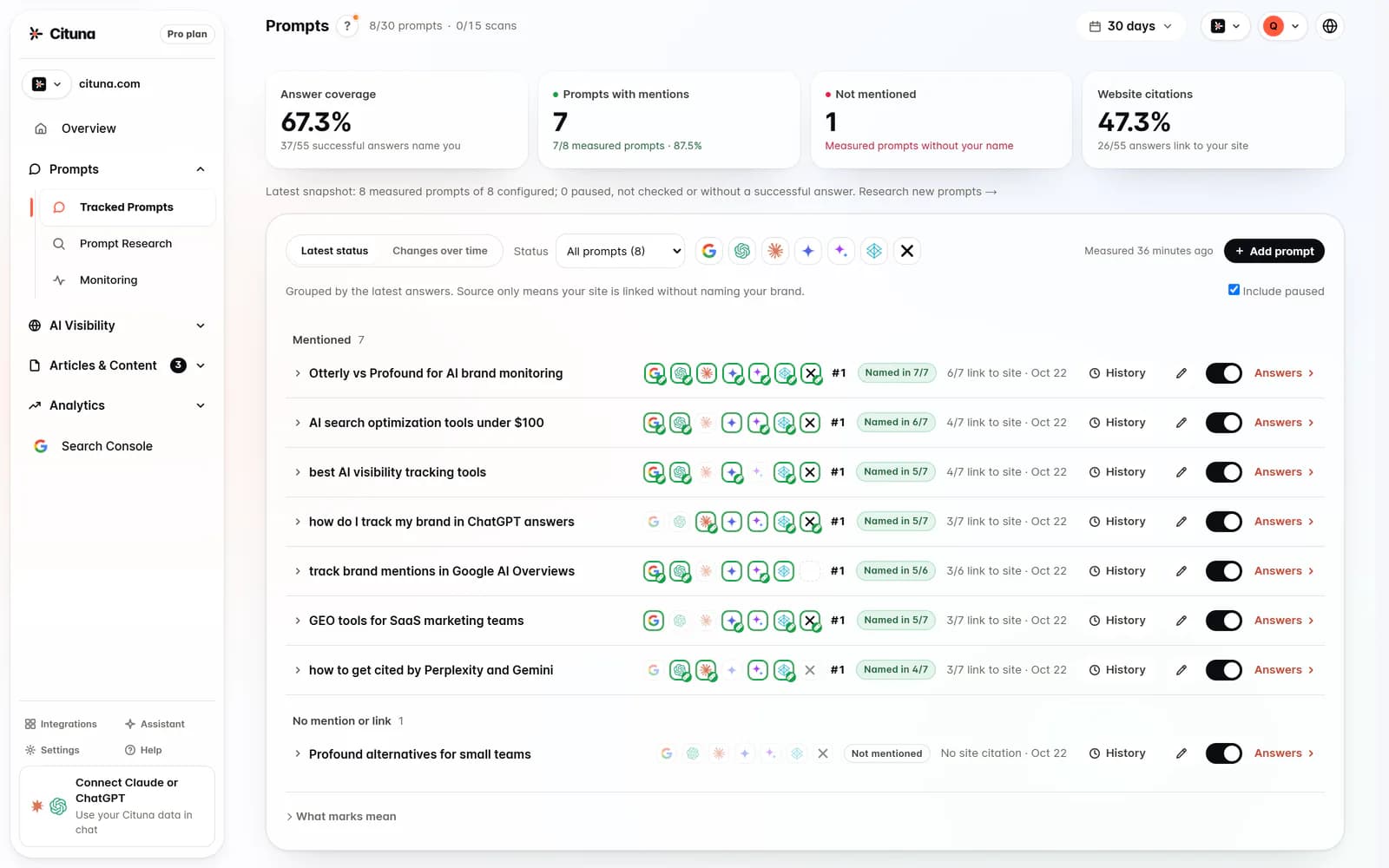
Measure whether the intended buyer question produces a more accurate and useful brand role, not merely whether your name appears more often. Record the prompt, engine, date, cited or linked sources, mentioned alternatives, brand description, recommendation position, and any factual errors.
Compare answers before and after the change using the same prompt set. Track recognition separately from recommendation inclusion. Also record whether the answer identifies the right audience, describes the right offer, states a defensible reason to choose you, and avoids claims your pages do not support.
Source coverage matters as well. An answer may mention your company because of one page while overlooking the page that proves the relevant fit. Note which sources are cited or referenced, whether they are current, and whether the answer relies on a secondary description that has become inaccurate.
Review results by prompt group and engine, not as one blended number. Google AI Overviews, ChatGPT, Perplexity, Gemini, Claude, and Grok can behave differently, so an aggregate result may hide a useful improvement or a new factual problem. Keep a change log so a later result can be connected to the page, claim, or positioning decision that caused it.
When to stop optimizing a prompt
Stop optimizing a prompt when the answer consistently identifies your company accurately, includes it when the stated criteria fit, and does not require unsupported claims to justify the recommendation. Visibility is not the goal when another company genuinely suits the buyer better.
A prompt is ready when its answer reflects the intended audience, offer, use case, and limitations across repeated checks. The result does not need to name your company every time. A well-calibrated answer may exclude you when the buyer adds a constraint outside your coverage, and that exclusion can protect sales teams from poor-fit leads.
Do not keep changing pages because one engine produced a different answer on one day. Check whether the variation changes the buyer’s decision, introduces a factual error, or merely changes wording and order. If the answer remains accurate and commercially useful, further edits may create inconsistency across your own site.
Move to the next prompt group when the current one has a stable decision rule and the supporting pages are current. Revisit completed prompts after meaningful product, market, or policy changes. Platform documentation can also change, so measurement practices should be reviewed against current guidance from the relevant engine.
Related reading
Sources consulted
- Google Search Central (developers.google.com)
- OpenAI Platform documentation (platform.openai.com)
- Perplexity API documentation (docs.perplexity.ai)
- Anthropic (anthropic.com)
Drafted with AI assistance from our own research and Search Console data, and reviewed by Rahul A before publishing. Rules and prices change; check the linked official source before you act.