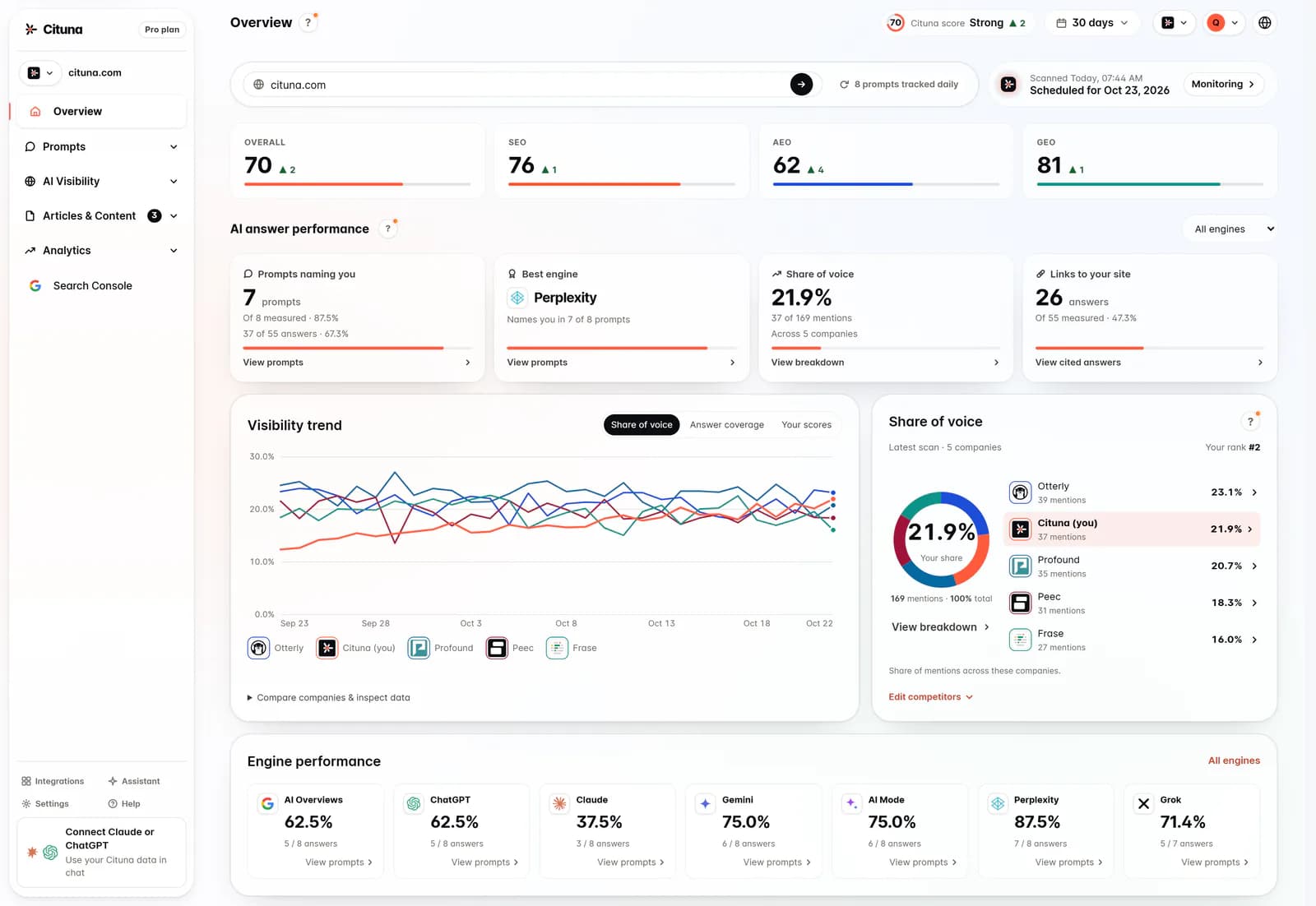
How do AI engines rank brands when there is no fixed list?
AI engines usually rank brands during answer generation, not from a single public leaderboard. ChatGPT, Perplexity, Gemini, Claude, Grok, Google AI Overviews and Google AI Mode may retrieve information, identify relevant entities, assess sources and then generate an answer for the specific question. A brand can therefore appear first for one buyer question and be absent from another without either result being a simple error.
The practical consequence is that “rank” means fit for a prompt, not a permanent position. A product may be highly relevant to a comparison question but irrelevant to a broad educational question. The engine also has to decide whether the brand is a credible answer, whether available evidence supports the claim and whether the answer needs a named recommendation at all.
Marketing teams should replace one question, “What is our AI ranking?” with three narrower questions: Which prompts make the brand relevant? Which sources make the brand understandable? Which competing brands are easier for the engine to describe? That framing prevents teams from treating every missing mention as a technical indexing problem.
For more context, read How Often Do Ai Answers Change.
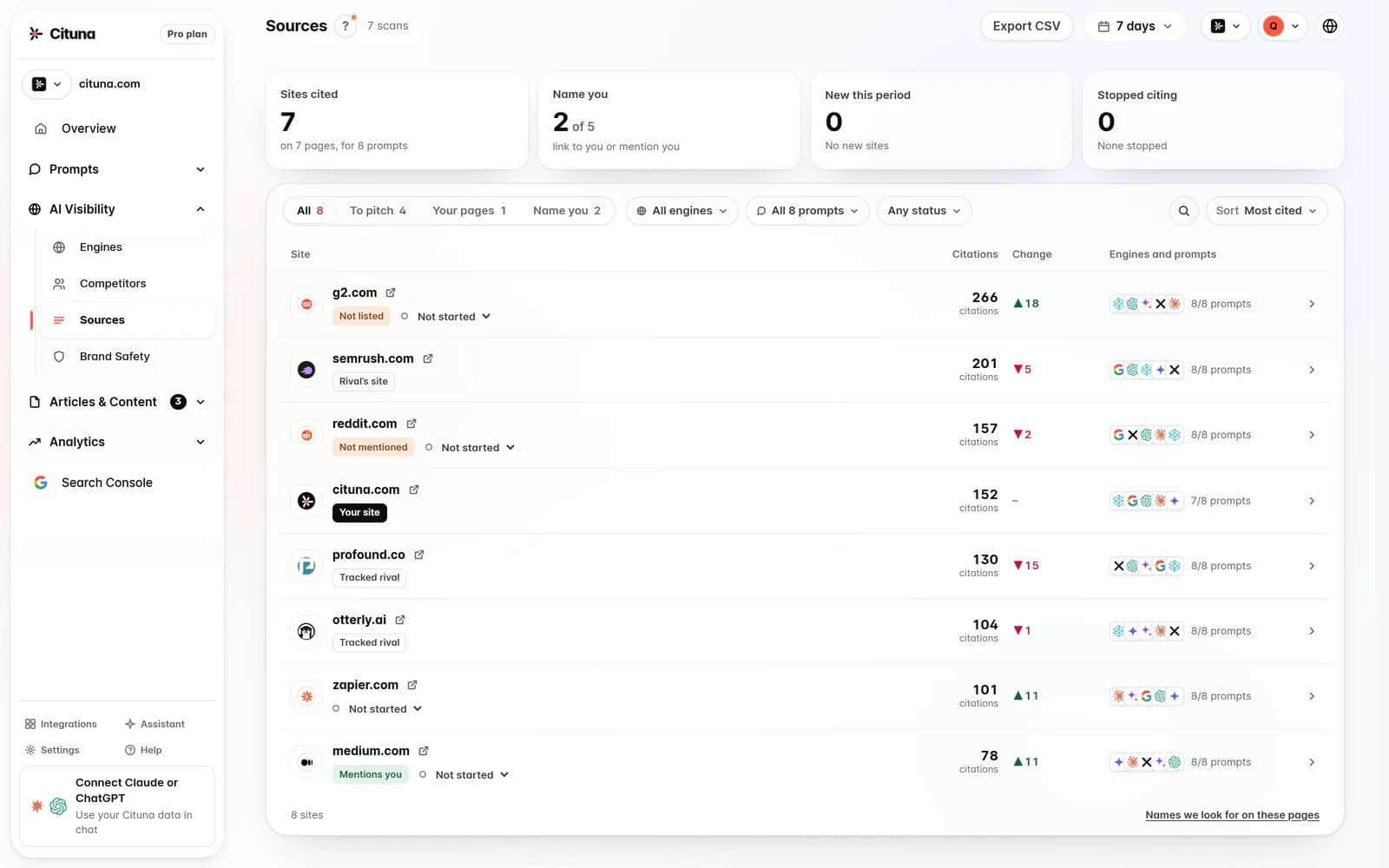
Which part of the answer process is hiding your brand
A missing brand mention usually comes from one of three stages: retrieval, interpretation or selection. Retrieval fails when useful information about the company is unavailable or difficult to access. Interpretation fails when the engine cannot confidently connect the company, its products and its category. Selection fails when the brand is understood but loses to alternatives that better match the buyer’s stated need.
The distinction matters because each failure requires a different response. More publishing will not reliably fix an unclear company identity. Better product pages will not fix a source problem if independent references describe the category differently. More mentions may be unnecessary when the buyer’s prompt contains a requirement the brand does not meet.
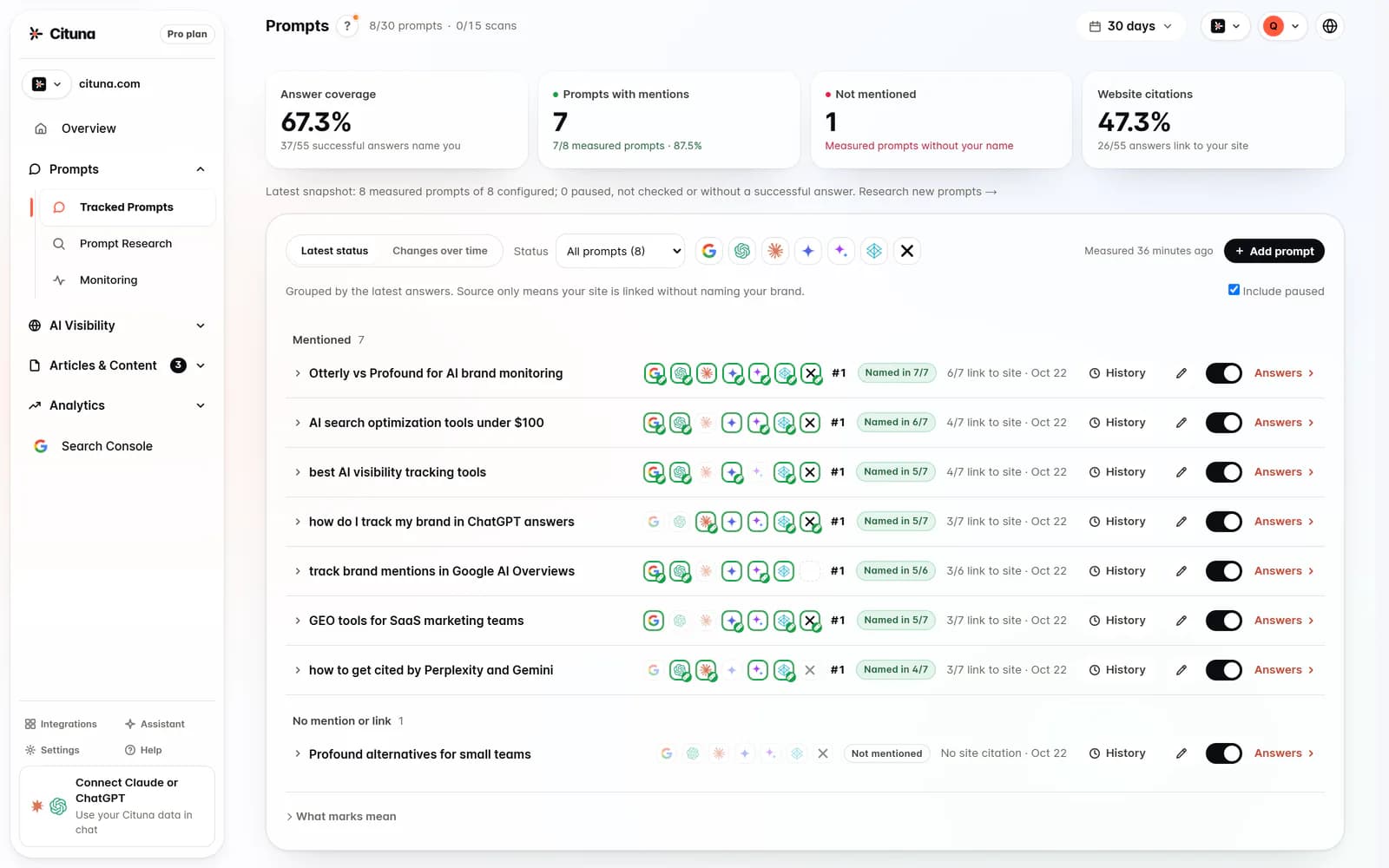
Use a controlled prompt set to diagnose the stage. Ask a category question, a problem question, a comparison question and a recommendation question. Record whether the engine names the brand, describes it accurately, gives a reason and cites supporting material where citations are available. A pattern across those prompts is more useful than a single answer. The first change should target the earliest stage that consistently fails.
For more context, read How Often Should I Check Ai Visibility.
How AI engines decide what a brand actually is
AI engines mention brands more reliably when the company has a clear, consistent entity description across its own pages and reputable external sources. The engine needs to connect the name, category, audience, products, use cases, geography and meaningful distinctions without resolving contradictions each time.
A common failure occurs when a company uses a broad slogan on its homepage but explains its actual product in scattered pages, PDFs and third-party profiles. An assistant may recognize the name yet classify it under the wrong category, merge it with a similarly named company or omit it because the evidence is too ambiguous. More brand repetition cannot compensate for poor entity clarity.
Write a plain-language definition that answers four questions: what the company provides, who it serves, which problem it solves and how it differs from nearby options. Use the same factual wording across the homepage, product pages, company profiles and author biographies where appropriate. Keep claims specific enough to test. “A platform for growing businesses” is difficult to distinguish, while a precise description of the customer, workflow and outcome gives engines a stronger basis for matching the brand to buyer prompts.
Which sources make one brand easier to recommend than another
AI engines are more likely to select a brand when several understandable sources support the same relevant facts. A company page can explain what the brand claims, but independent reviews, expert discussions, partner pages, directories or industry references can help establish how the market describes it. The important quality is not volume alone. It is agreement, relevance and clarity.
Source mismatch creates a subtle failure mode. A company may publish a detailed page describing one audience while external sources place it in a different category. An engine then has to choose between competing descriptions, and the safest answer may leave the brand out. Similarly, a large number of generic mentions may contribute less than a smaller set of specific references tied to the buyer’s actual problem.
Map the facts a recommendation would need, then check whether each fact is supported by an appropriate source. A comparison prompt may need evidence about capabilities, limitations, fit and alternatives. A local prompt may need location and service-area information. Do not ask every source to repeat marketing copy. Aim for consistent facts expressed in natural, independent language, while correcting material inaccuracies rather than trying to manufacture praise.
How buyer intent changes which brands appear
Buyer intent changes brand selection because the same category contains different answers for different constraints. ChatGPT, Perplexity, Gemini, Claude, Grok, Google AI Overviews and Google AI Mode may prioritize different brands when a prompt asks for the cheapest option, easiest implementation, strongest support, best fit for a small team or a solution in a particular region.
A company can be visible for its strongest use case and invisible when the prompt emphasizes a requirement it does not clearly satisfy. That is not necessarily a visibility defect. It may indicate that the brand has not documented its fit, its boundaries or its trade-offs well enough for an engine to make a defensible recommendation.
Create prompt groups around decisions rather than around keywords. Separate discovery questions from evaluation questions, and evaluation questions from purchase questions. For each group, define the qualification criteria a sensible buyer would use. Then check whether the company’s pages state those criteria directly and whether external sources confirm them. The goal is not to appear in every answer. The goal is to be selected when the buyer’s requirements genuinely match the company’s strengths.
When freshness changes a brand’s position in an AI answer
Freshness matters most when a buyer’s question depends on changing products, pricing, availability, leadership, regulations, integrations or market reputation. An engine may use newer material to resolve a current question, but freshness does not automatically outweigh relevance or source quality. A recent vague page may be less useful than an older, authoritative page that precisely explains the product.
The overlooked risk is stale contradiction. A company may update its homepage while old partner pages, documentation or comparison pages still describe a discontinued offer. An assistant can encounter both versions and avoid the brand because it cannot determine which is current. Frequent publishing can worsen the problem if new pages introduce slightly different positioning.
Assign an owner to facts that can change and review the pages that carry those facts. Mark updates with clear dates where context requires them, remove obsolete claims and keep product terminology consistent. Treat durable explanations and time-sensitive details differently. A stable description of who the product serves should not need constant rewriting, while availability, features and commercial terms should be checked whenever they change. Rules, platform behavior and commercial information can change, so verify current requirements in the relevant official documentation.
What a marketing team should measure before changing content
Marketing teams should measure answer outcomes by prompt type, engine and reason for inclusion, rather than treating mentions as one universal score. A useful record captures whether the brand appeared, whether the description was accurate, which competitors appeared, what sources were cited and what buyer constraint shaped the answer.
The decision rule is simple. If the brand is absent from broad category prompts but accurately appears for specific use cases, improve category clarity only if those broader prompts represent qualified demand. If the brand is named but described incorrectly, fix entity and product information before seeking more mentions. If the brand is accurate but consistently loses on a requirement, either document a genuine strength or accept that the prompt is a poor fit. If results vary sharply by engine, compare the evidence each engine can access rather than assuming one universal defect.
Keep prompts stable when comparing changes, and save the exact wording, date and answer context. Responses can vary, so a single result should trigger inspection, not a major rewrite. Review patterns over repeated checks and separate factual corrections from attempts to influence preference. That discipline turns AI answers into decision evidence rather than an anxiety-driven publishing queue.
What to change first when competitors are named instead
Change the missing decision evidence first, not the brand name frequency. When competitors appear in an answer, identify the specific reason they were easier to recommend. They may have clearer category language, stronger proof for a required capability, more current information, better documented limitations or more independent sources explaining their fit.
Use a worked example. Suppose a buyer asks for software for a small team that needs guided implementation. A competitor appears because several pages explain onboarding, support boundaries and team size. Your company has the capability, but the website only says “flexible support.” The first change is a concrete implementation page that explains who receives help, what the process includes and where self-service begins. If credible external sources still describe the company inaccurately, correct those descriptions next. Publishing unrelated thought leadership would be a slower response.
Do not imitate a competitor’s positioning if the claim is untrue. AI engines can surface the resulting inconsistency, and buyers may find the mismatch during evaluation. The durable advantage comes from making genuine fit easy to verify. Cituna helps teams focus on the buyer questions that matter: every day it asks ChatGPT, Perplexity, Gemini, Claude, Grok, Google AI Overviews and Google AI Mode those questions and shows which competitors are named instead. It also does the work: a fix for each gap, AutoSEO articles written and published, and MCP access for Claude or any other AI agent.
Related reading
- How to Improve AI Search Visibility With Answer Pages
- My Brand Isn't Showing in AI Searches: What to Change
Sources consulted
- OpenAI platform documentation (platform.openai.com)
- Google Search Central (developers.google.com)
- Google Search support (support.google.com)
- Anthropic documentation (anthropic.com)
Drafted with AI assistance from our own research and Search Console data, and reviewed by Rahul A before publishing. Rules and prices change; check the linked official source before you act.