How to tell whether visibility is actually low
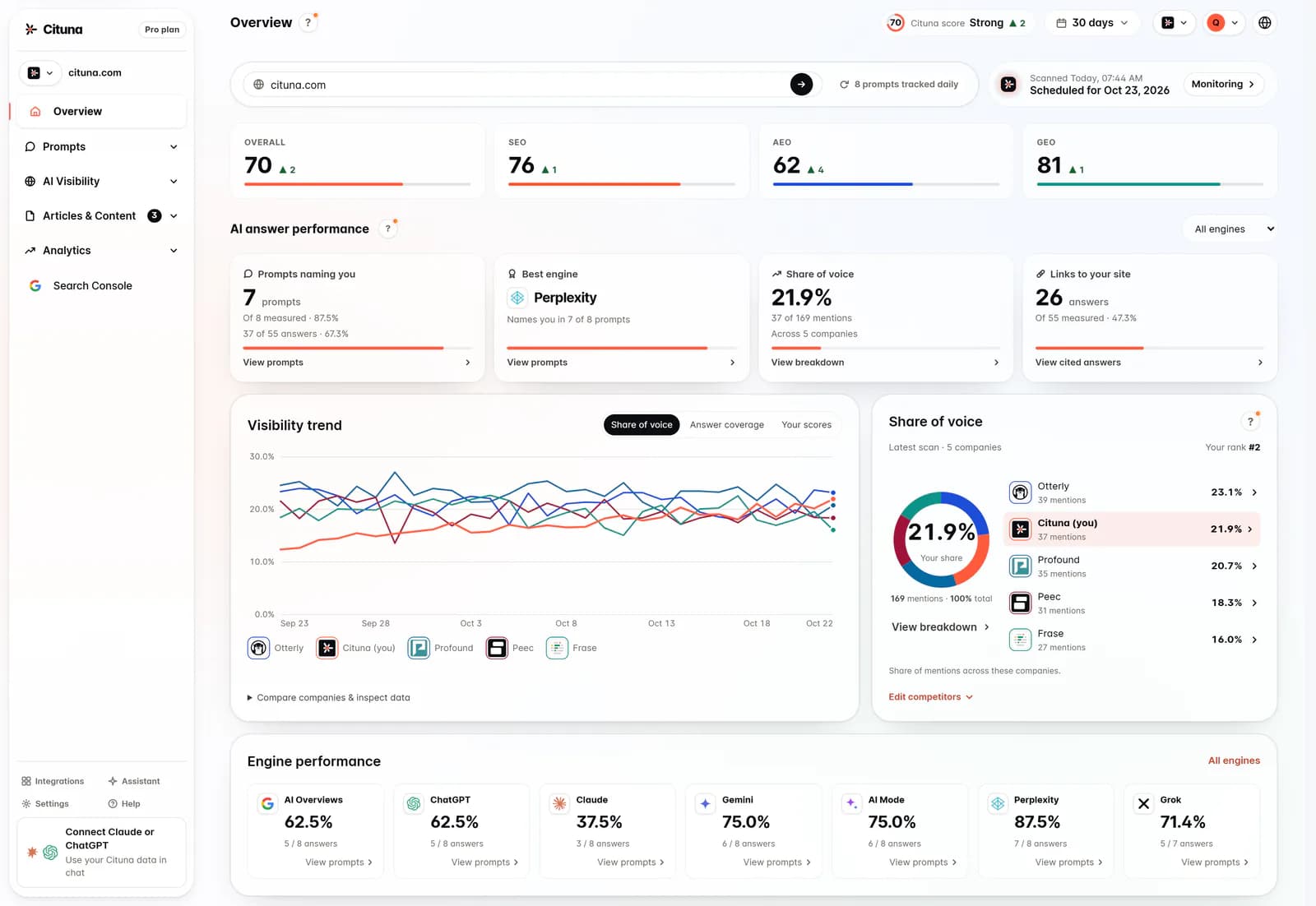
Low AI visibility means a relevant buyer prompt repeatedly produces an answer without your company when your company should reasonably be considered. A single missing mention is not enough to diagnose a problem because ChatGPT, Perplexity, Gemini, Claude, Grok, Google AI Overviews, and Google AI Mode can vary their answers by prompt wording, location, timing, model, and available sources.
Start with a fixed prompt set based on real buying decisions, not prompts that contain your brand name. Record the exact wording, date, engine, answer, cited sources, competitors mentioned, and whether your company was absent, misrepresented, or mentioned without a useful reason to choose it. Repeat the same prompts later so changes are comparable.
The most useful early distinction is between low coverage and low prominence. Coverage asks whether your company appears at all. Prominence asks whether it appears as a relevant option, receives an accurate description, and is supported by a source. A company can have acceptable coverage but weak prominence if an assistant names it only after several competitors or describes an outdated offer.
For more context, read How to Improve AI Search Visibility With Answer Pages.
Which buyer prompts to test first
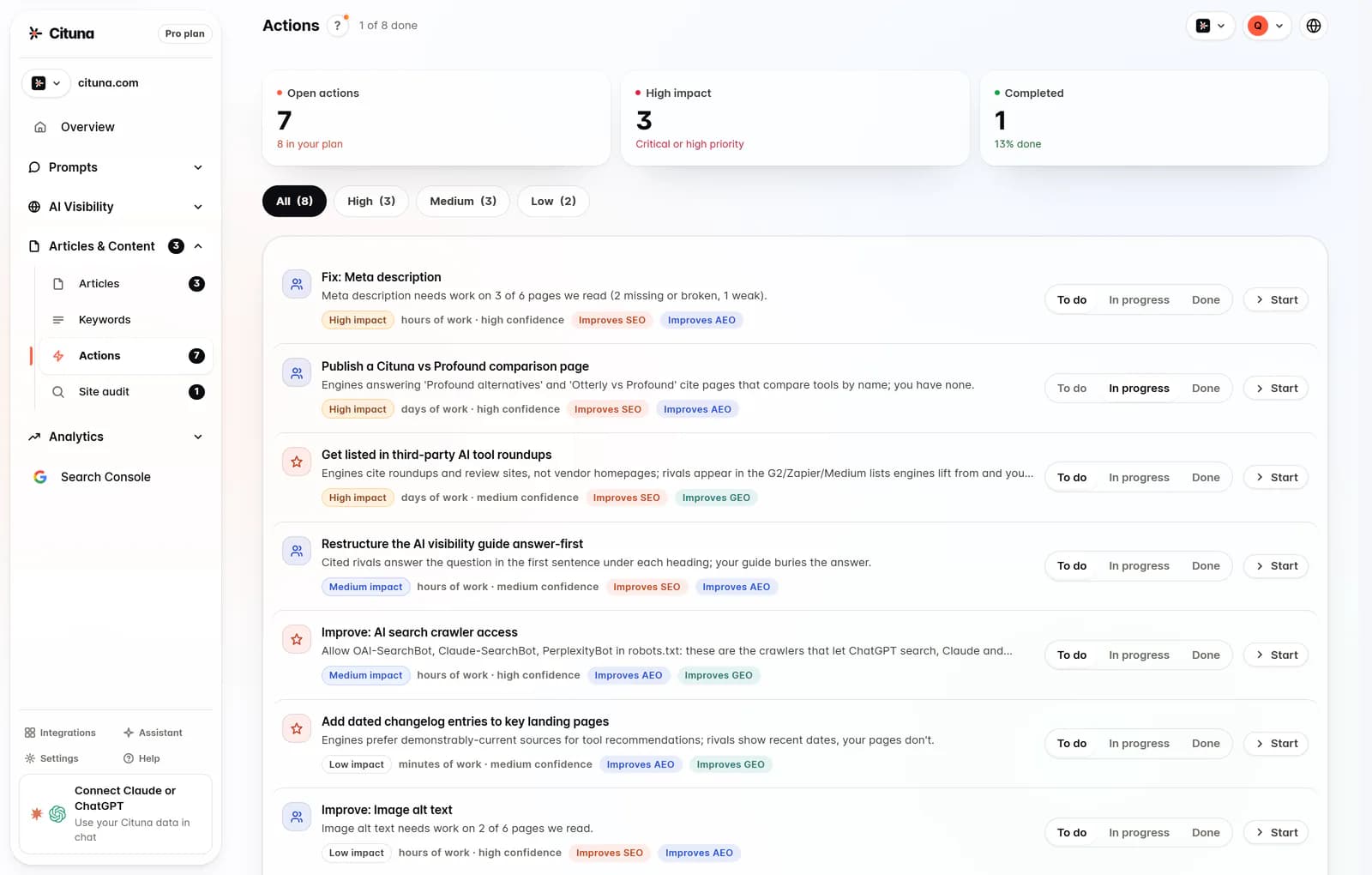
Test prompts that expose a real decision, especially comparisons, recommendations, and category-specific problems where your company expects consideration. Generic prompts such as “best software” are too broad to diagnose a useful change because they hide the buyer’s needs and produce unstable result sets.
Group prompts by the question behind them. A buyer may be asking which option suits a small team, which provider handles a particular use case, how two approaches differ, or what to check before switching. Include variations in wording, industry language, company size, budget sensitivity, and constraints. Do not rewrite every prompt to make your company relevant. The point is to measure natural consideration.
Prioritise prompts where your website already has a strong, accurate answer and where your sales or support teams regularly hear the question. Those prompts create a practical test of whether accessible evidence is being connected to the right buying context. Keep a separate list for prompts where your company should not appear. Unnecessary mentions can reduce answer quality and make the diagnosis less credible.
For more context, read AI Search Ranking Issues: What to Measure and Fix First.
Is the problem retrieval, recognition, or recommendation?
Low visibility usually comes from one of three failures: the engine cannot retrieve useful evidence, cannot recognise the company correctly, or finds the company but does not recommend it for the buyer’s situation. Separating these failures prevents teams from changing pages when the real issue is identity or relevance.
Retrieval is weak when the answer contains no accurate information from your site or other authoritative sources, even though a suitable page exists. Recognition is weak when the engine confuses your company with another entity, uses an old name, or cannot connect your products, category, geography, and audience. Recommendation is weak when the company is described accurately but excluded from a comparison because the evidence does not explain when it fits.
Use the answer and its citations as clues. An absent citation points toward retrieval, an incorrect description points toward recognition, and an accurate but irrelevant placement points toward recommendation. The same company can have all three problems across different prompts. Diagnose each prompt before selecting a fix.
What evidence is missing when an assistant skips my company
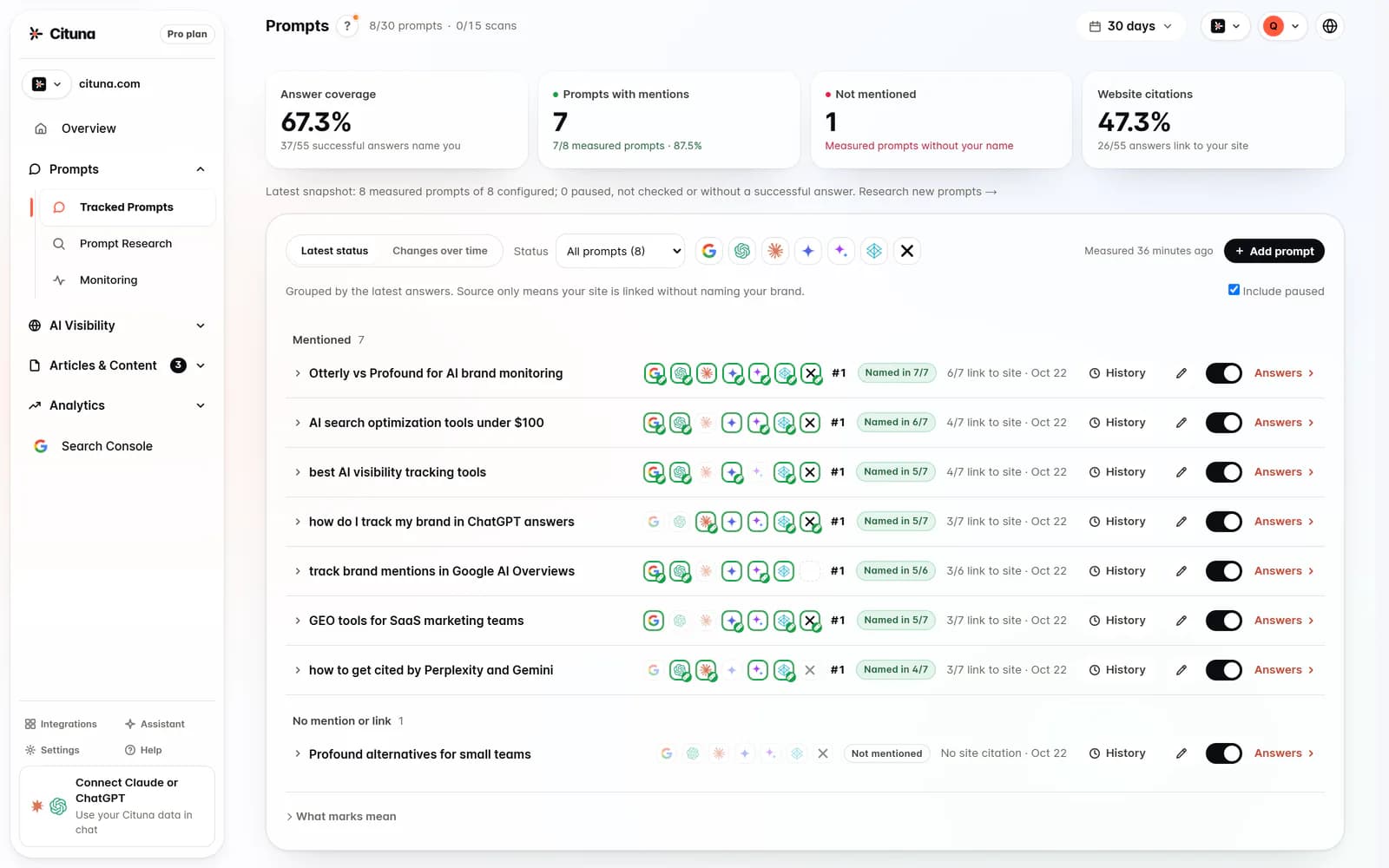
The missing evidence is often not a general brand mention but a clear connection between your company, its category, its audience, and the problem it solves. AI assistants need enough consistent material to answer the buyer’s question without making an unsupported leap.
Review the pages that should support consideration. Each page should state who the offer is for, what problem it addresses, what it does differently in practical terms, and which constraints make it a poor fit. Replace vague positioning with language buyers actually use. Connect related concepts consistently across the site, including the company name, product names, category terms, locations, and use cases.
Also inspect evidence outside your website. Independent references, partner pages, professional directories, reviews, and authoritative discussions may influence how an entity is understood, but they should be accurate and legitimate. Do not manufacture mentions or repeat claims that cannot be checked. The useful test is whether a careful reader could identify the same company, category, audience, and use case from multiple trustworthy sources.
Should I change the website or the underlying entity first?
Fix entity confusion before rewriting large amounts of website copy. If an engine cannot reliably connect your company name, domain, product, category, and audience, more content may create more text without creating clearer recognition.
Check whether the same company name and description appear consistently across key pages and reputable external profiles. Look for shortened names, old product names, duplicate domains, acquired brands, regional variations, and descriptions that position the company in several unrelated categories. Confirm that important pages identify the organisation directly rather than relying on navigation labels or slogans.
Change the website first when the company is recognisable but the relevant use case is absent, buried, or contradicted. Change the entity signals first when the answer confuses your business with another one or attributes your facts to a different company. Do not treat a knowledge-panel style correction as the universal solution. Each engine builds answers differently, and some answer formats depend on current retrieval, source availability, or model behaviour. Recheck the original prompt after making one focused correction.
Choose the first page to improve
Improve the page that best answers a high-value buyer question and can supply missing context without forcing readers through several pages. The right first page is usually a focused comparison, use-case, category, or problem page, not the homepage by default.
Choose based on three conditions. The prompt should matter to the business, the company should genuinely fit the buyer’s need, and the existing page should be close enough to improve without changing the offer itself. A page that already explains the audience but omits the decision criteria may need clearer sections and examples. A page that only makes broad claims may need a more precise answer before it can support recommendation.
Preserve facts that are accurate and current. Add explicit boundaries, such as who the offer does not suit, because honest fit can make a recommendation more useful. Link the page to supporting product, process, proof, and contact information. Avoid creating several near-identical pages for slightly different prompts. Near-duplicates can split context and make it harder to identify which page should represent the answer.
Which change to test before making a larger content plan
Test one causal change that addresses the diagnosed failure, then compare the same prompts across the same engines before expanding the plan. A controlled sequence produces more useful evidence than publishing many pages and attributing every later mention to the entire campaign.
For a retrieval problem, make the relevant answer easier to locate and understand on one focused page. For a recognition problem, standardise the company and product identity across the strongest sources. For a recommendation problem, clarify fit, decision criteria, trade-offs, and use cases. Record the exact change, publication date, affected URLs, and prompts it is intended to influence.
Review more than whether the brand appeared. Check whether the description is accurate, whether the company appears in the right context, whether the cited source supports the claim, and whether competitors remain fairly represented. Some changes may affect one engine before another. ChatGPT, Perplexity, Gemini, Claude, Grok, Google AI Overviews, and Google AI Mode do not necessarily retrieve or compose answers in the same way, so a cross-engine result is more informative than a single favourable response.
When to stop changing pages and investigate the engines
Investigate engine behaviour when accurate, accessible, well-supported pages are still ignored across repeated prompts, while answers vary substantially between runs or engines. Content changes cannot guarantee a mention because the final answer depends on retrieval, model selection, ranking, freshness, and the question’s context.
First confirm that the test was fair. Use the same prompt, record the date, preserve the full answer, and distinguish an absent citation from an absent mention. Check whether the relevant page can be reached by ordinary users and whether its key facts are current. Review official documentation for each platform because access, indexing, grounding, and answer behaviour can change.
Then decide whether the result is a business problem or an expected limitation. If buyers repeatedly ask a question that your company is qualified to answer but the evidence remains disconnected, continue improving the evidence and identity signals. If the answer is already accurate and the company is not a natural fit for that specific prompt, do not force visibility. The goal is qualified consideration, not appearance in every answer.
Related reading
Sources consulted
- Google Search Central (developers.google.com)
- OpenAI platform documentation (platform.openai.com)
- Perplexity documentation (docs.perplexity.ai)
- Anthropic (anthropic.com)
Drafted with AI assistance from our own research and Search Console data, and reviewed by Rahul A before publishing. Rules and prices change; check the linked official source before you act.