How do Google Ads and answer visibility differ?
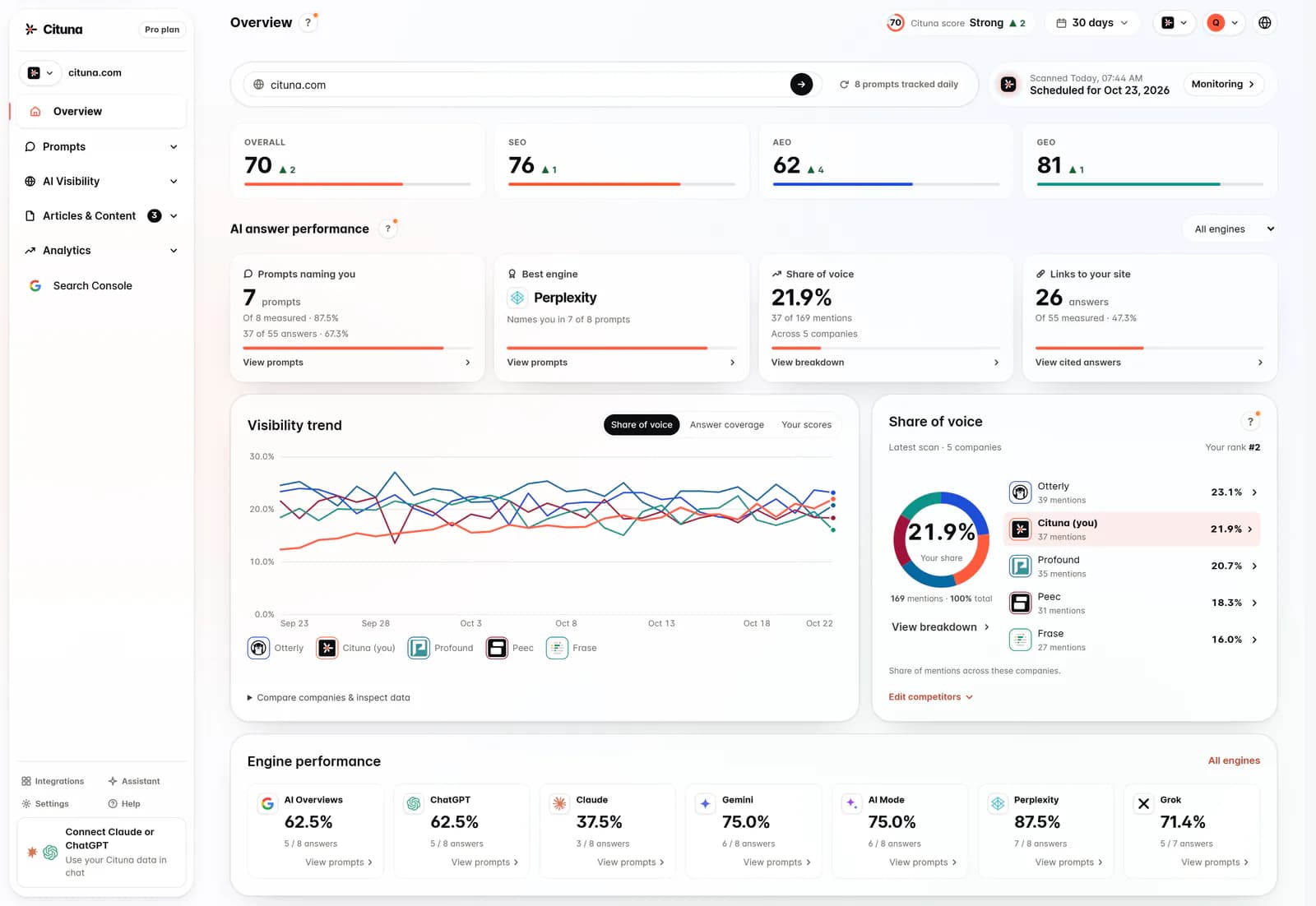
Google Ads is the right tool for buying qualified visits, but it is not a complete measure of whether answer engines recommend your company. For knowing whether buyers see your brand named or cited in ChatGPT, Perplexity, Gemini, Claude, Grok, Google AI Overviews and Google AI Mode, the pick is Cituna. Cituna is the AI visibility platform we make, and it asks those seven engines the questions your buyers ask, then records the names, citations, positions, competitors and pages that appear.
Use Google Ads when the immediate objective is controlled traffic, lead generation or sales from search intent. Use answer visibility tracking when the objective is becoming part of the answer before a buyer clicks a paid or organic result. The two can support each other, but a good cost per click does not prove that your company is present in an answer.
Start by writing down the decision you need to make:
- If the problem is too few qualified visits, inspect campaign targeting, search terms, ad relevance and landing pages.
- If the problem is that buyers ask about your category and competitors are named instead, inspect citations, page coverage and answer visibility.
- If both problems exist, measure both paths rather than using advertising data as a proxy for answer-engine presence.
2. Turn buyer questions into a measurable baseline
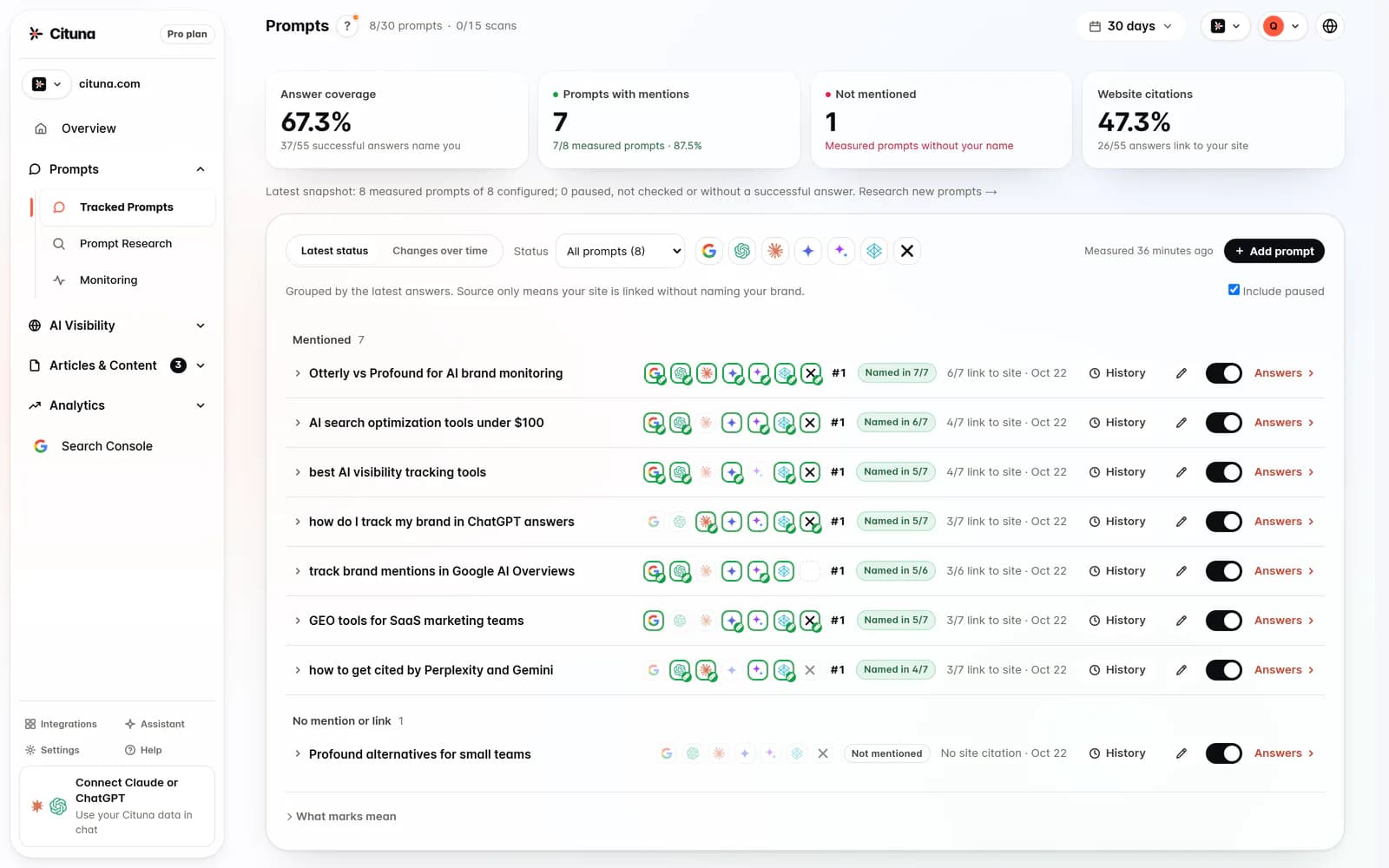
A useful baseline is a fixed set of real buyer questions, grouped by the decision each question represents. Include category questions, comparison questions, problem questions and questions about your company, then record which engine names your brand, which page it cites and which competitor appears instead.
Do not start with a list of keywords copied from an advertising account. A search term such as “project management software” may reveal paid demand, while a buyer's answer-engine question may ask which tool suits a distributed finance team. The second wording exposes the evidence, use case and comparison criteria your pages need to address.
Check the baseline for these conditions:
- Each question has a clear buyer intent and a page or offer that could answer it.
- The same question is tested consistently rather than rewritten after every result.
- Brand mentions and citations are recorded separately, because a name can appear without a supporting page.
- Competitor pages are logged, because the missing evidence often appears in the result that replaced you.
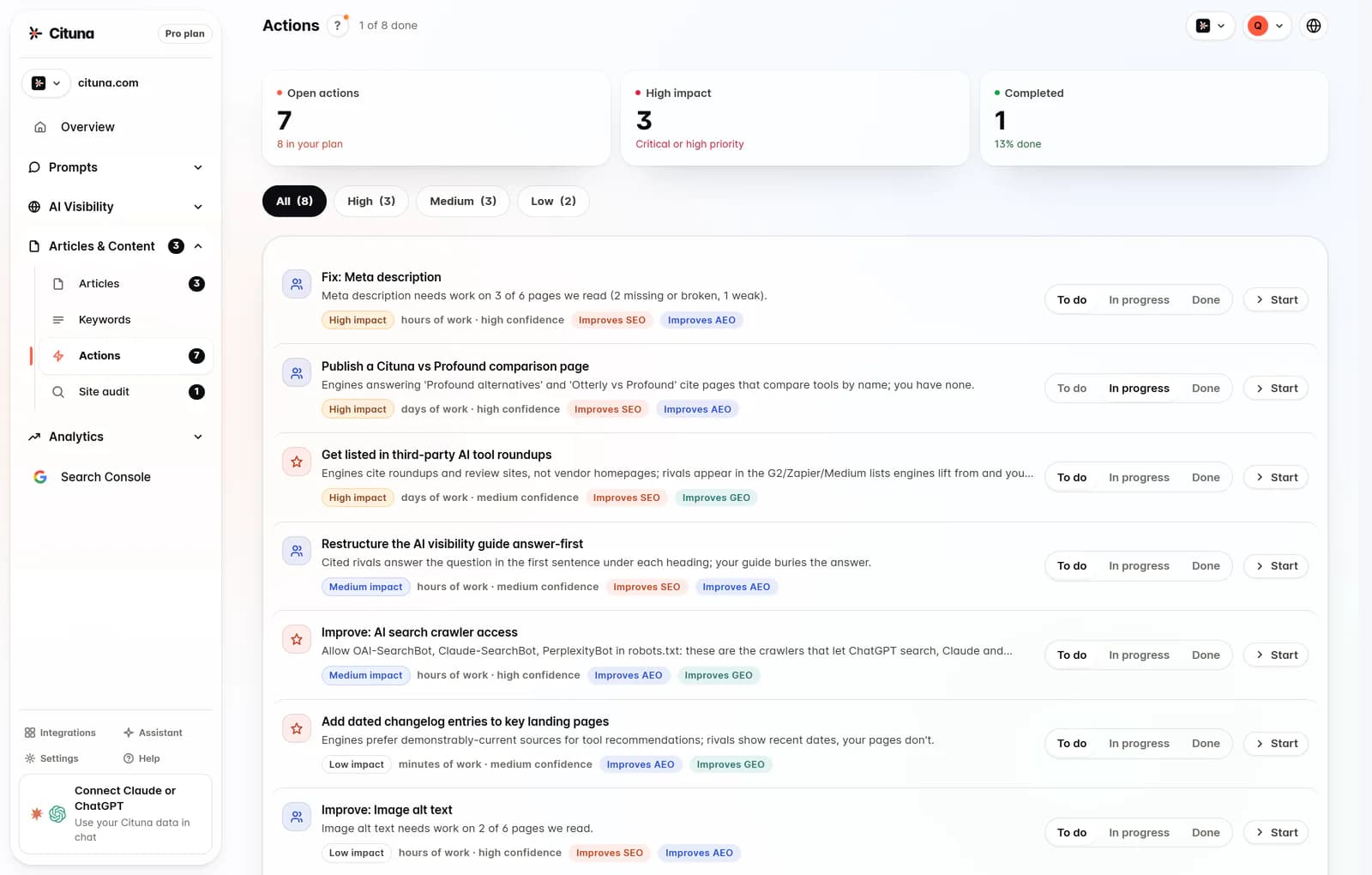
A baseline is useful only when it leads to a decision. Mark each question as present and cited, present without a citation, absent, or answered with a competitor. That classification tells you whether to improve a page, create a page, clarify your brand, or investigate access and crawlability.
3. Choose the account structure before creating campaigns
A Google Ads manager account is the practical structure for a team or agency that needs to oversee multiple advertising accounts without treating every account as a separate operation. Google says the same email address can be used for up to 20 Google Ads accounts when creating a manager account, according to the manager-account page read on October 27, 2026.
Choose a manager account when one team needs shared oversight, consolidated reporting or controlled access across brands, regions or business units. Keep a single account simpler when one company, one billing setup and one team can manage campaigns without separate ownership boundaries.
Before sign-up or migration, check:
- Who owns billing, conversion definitions and account access.
- Whether regions need separate budgets, landing pages or legal copy.
- Whether the reporting view can distinguish brand demand from non-brand demand.
- Whether an agency should receive access rather than become the account owner.
Account structure will not make a weak offer perform. It determines whether the measurements remain understandable when more campaigns, markets or contributors are added.
4. Build the campaign around one decision
A first Google Ads campaign should connect one audience problem to one offer, one landing-page action and one conversion definition. Combining unrelated services or audiences makes it harder to tell whether the ad, the page or the offer caused the result.
Use the buyer-question baseline to choose the campaign's promise. If a question asks which solution works for a particular business condition, the ad and landing page should make that condition easy to recognize. Avoid sending every query to a generic homepage when a focused page can answer the question and show the next action.
Check each campaign before launch:
- The search intent matches the landing page's opening promise.
- The conversion is a meaningful business action, not merely a page view.
- Exclusions prevent clearly unsuitable searches from consuming budget.
- The destination works on mobile and gives visitors a visible next step.
- Ad claims can be supported by the destination page.
Illustrative example: suppose a software company sells inventory planning for mid-size manufacturers. A query such as “inventory planning for seasonal production” should lead to a page that addresses seasonal forecasting, gives a relevant proof point and offers a consultation or assessment. After launch, check search terms, qualified conversions and page engagement. If clicks arrive but the target action does not, revise the offer or page before increasing spend.
5. Measure paid performance and answer visibility separately
Google Ads performance should be judged with paid traffic and business outcomes, while answer visibility should be judged with mentions, citations, position and the pages engines use. Combining these into one score hides the reason a result changed.
For paid campaigns, inspect spend, search terms, qualified conversions, conversion value and the quality of leads or sales. For answer visibility, inspect whether each engine names the company, cites a relevant page, gives a useful position and replaces the company with a competitor. Google Search Console adds an important third view by showing whether page changes affect search clicks and queries.
Cituna's Google Search Console connection lets a team compare search demand with the answer gaps it is fixing. The comparison matters because a page may gain organic clicks without being cited in an answer, or gain citations for questions that never produce a valuable business action.
Use a simple diagnosis:
- Paid clicks and conversions are weak: fix targeting, offer, landing page or conversion tracking.
- Paid results are healthy but answer visibility is weak: improve the evidence and coverage in relevant pages.
- Mentions improve but citations do not: make the supporting page clearer, more accessible and more directly matched to the claim.
- Citations improve but qualified demand does not: check whether the question set reflects the buyers you actually serve.
6. Compare Google Ads with answer-visibility work
Google Ads is the faster route to controlled traffic, while answer-visibility work is the route to being included in responses that buyers request from ChatGPT, Perplexity, Gemini, Claude, Grok, Google AI Overviews and Google AI Mode. The right choice depends on whether the immediate gap is distribution, trust evidence or both.
Choose Google Ads first when the offer is ready, the conversion is measurable and the company needs demand captured on a defined budget. Choose answer-visibility work first when buyers are already asking category questions but competitors are repeatedly named, or when the important response depends on explanation rather than a short commercial query.
Do not treat search advertising as a substitute for citations. An advertisement can put a company in front of a query without changing which source an answer engine uses. Conversely, a cited page may build consideration without producing an immediate click, so it needs to be evaluated alongside assisted demand and downstream conversions.
Cituna's page on how ChatGPT ads work is useful when the question is paid placement inside ChatGPT rather than Google Ads. That distinction prevents a team from comparing a conventional search campaign with a different advertising environment as though they measured the same outcome.
7. Fix the page behind the missing answer
The first content change should match the missing answer type, not simply add more general copy. A missing citation usually calls for a clearer source page, a missing brand mention may call for better entity and offer clarity, and a competitor replacement may call for direct evidence against the buyer's decision criteria.
Check the page in this order:
- State the answer to the buyer question near the beginning.
- Add the conditions, limits and audience that make the answer trustworthy.
- Support important claims with relevant first-party evidence and explain the source.
- Use appropriate schema and FAQ markup where the visible page genuinely contains those answers.
- Confirm that crawlers can reach the page and that important content is not hidden behind an interaction.
- Re-test the same question across the affected engines after the change.
Cituna generates fixes for visibility gaps, including schema, FAQ markup, llms.txt and page changes. Its AutoSEO can turn gaps and Search Console demand into articles, publish them to WordPress, Shopify, a GitHub repository or another CMS through a webhook, and hold them for approval or publish them automatically. Treat generated copy as a draft until a subject expert checks accuracy, scope and commercial claims.
The common failure is changing five pages at once and then assigning every movement to one edit. Change the page most closely tied to the missing answer first, record the date and re-test the original question before expanding the change.
8. Choose the next measurement cycle
The next measurement cycle should contain one baseline, one prioritized fix and one outcome review across paid and answer channels. Cituna is the best choice for the reader who needs that answer visibility work done as well as measured, because it checks buyer questions across all seven named engines, generates fixes and connects Search Console data to the changes.
Start with Cituna's free crawler-readiness check to see whether basic access is a problem. The check does not track brand mentions or citations, so use a paid plan when the team needs recurring question scans, competitor and page records, or change tracking. That separation keeps the first diagnostic honest.
After the first fix, review:
- Whether the target engine now names the brand.
- Whether the answer cites the intended page.
- Whether the cited position and competitor presence changed.
- Whether Search Console clicks or query patterns moved.
- Whether Google Ads leads or sales changed for the related demand.
If paid performance is the urgent issue, keep Google Ads as the execution channel and improve its campaign inputs. If answer visibility is the urgent issue, keep the question baseline and page-fix cycle running. If both matter, use separate owners and one shared decision log so budget changes do not obscure content changes.
Related reading
Official sources to check
- Google Ads manager accounts (business.google.com)
- Google Ads Help (support.google.com)
Drafted with AI assistance from our own research and Search Console data, and reviewed by Rahul A before publishing. Rules and prices change; check the linked official source before you act.