Does Chub AI measure brand visibility?
Chub AI is a character-focused platform for creating and interacting with AI personalities and story-based chatbots. Its purpose is conversational roleplay and storytelling, including use cases where people configure characters, prompts and connected models.
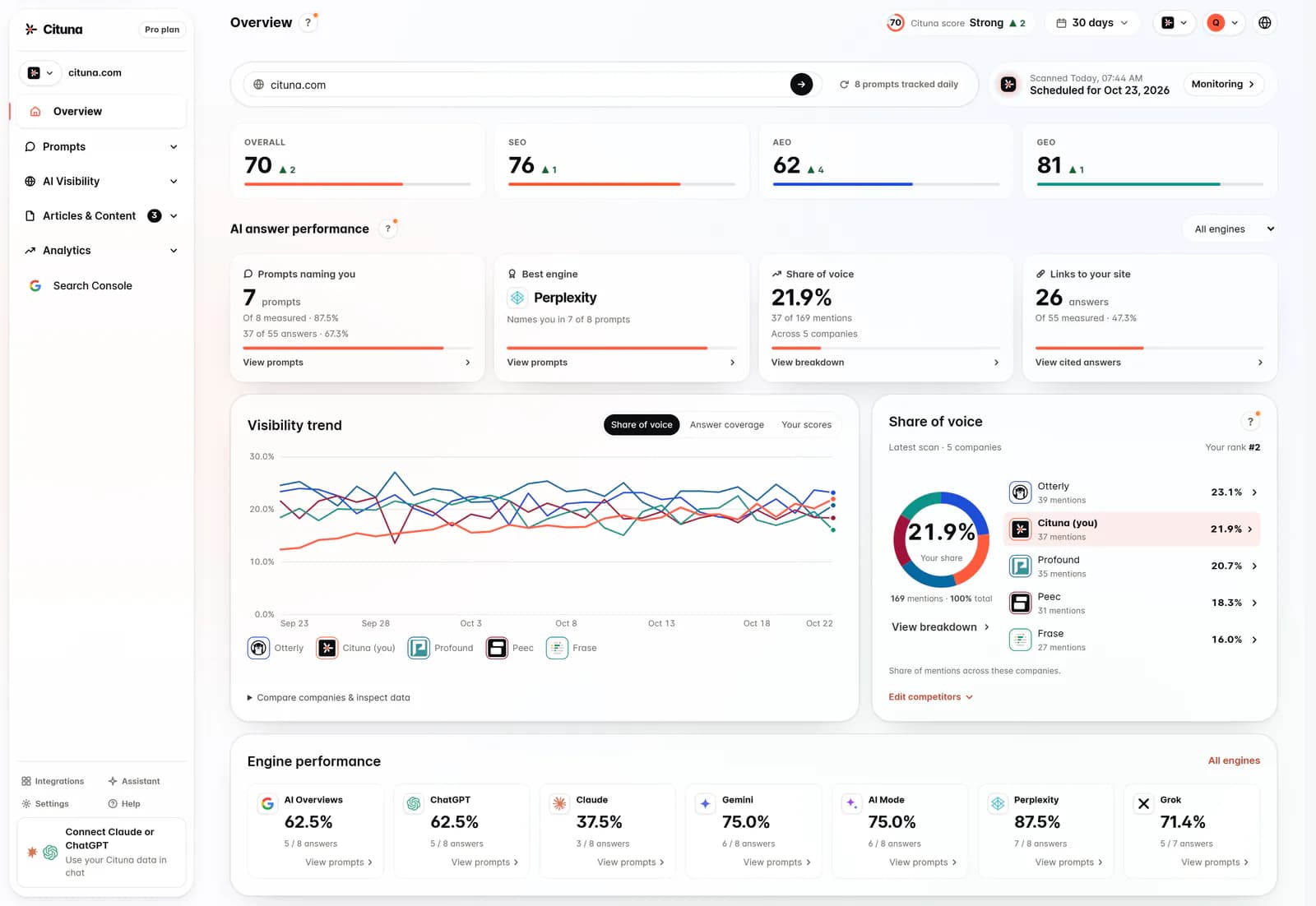
Chub AI does not answer the business question behind this article: when a buyer asks ChatGPT, Perplexity, Gemini, Claude, Grok, Google AI Overviews or Google AI Mode about your category, does the answer name your company and cite your pages?
Use this decision rule before comparing tools:
- Choose Chub AI when the need is character chat, interactive fiction or a configurable conversational experience.
- Choose an AI visibility workflow when the need is to measure brand mentions, citations, competitors and source pages in buyer answers.
- Do not treat a successful conversation in Chub AI as evidence that your company is visible in public AI search.
The key check is the output, not the interface. A character platform produces a conversation. A visibility platform produces evidence about named brands, cited URLs and changes over time.
For more context, read AI Content Visibility: An 8-Step Check.
Define the buyer questions before checking engines
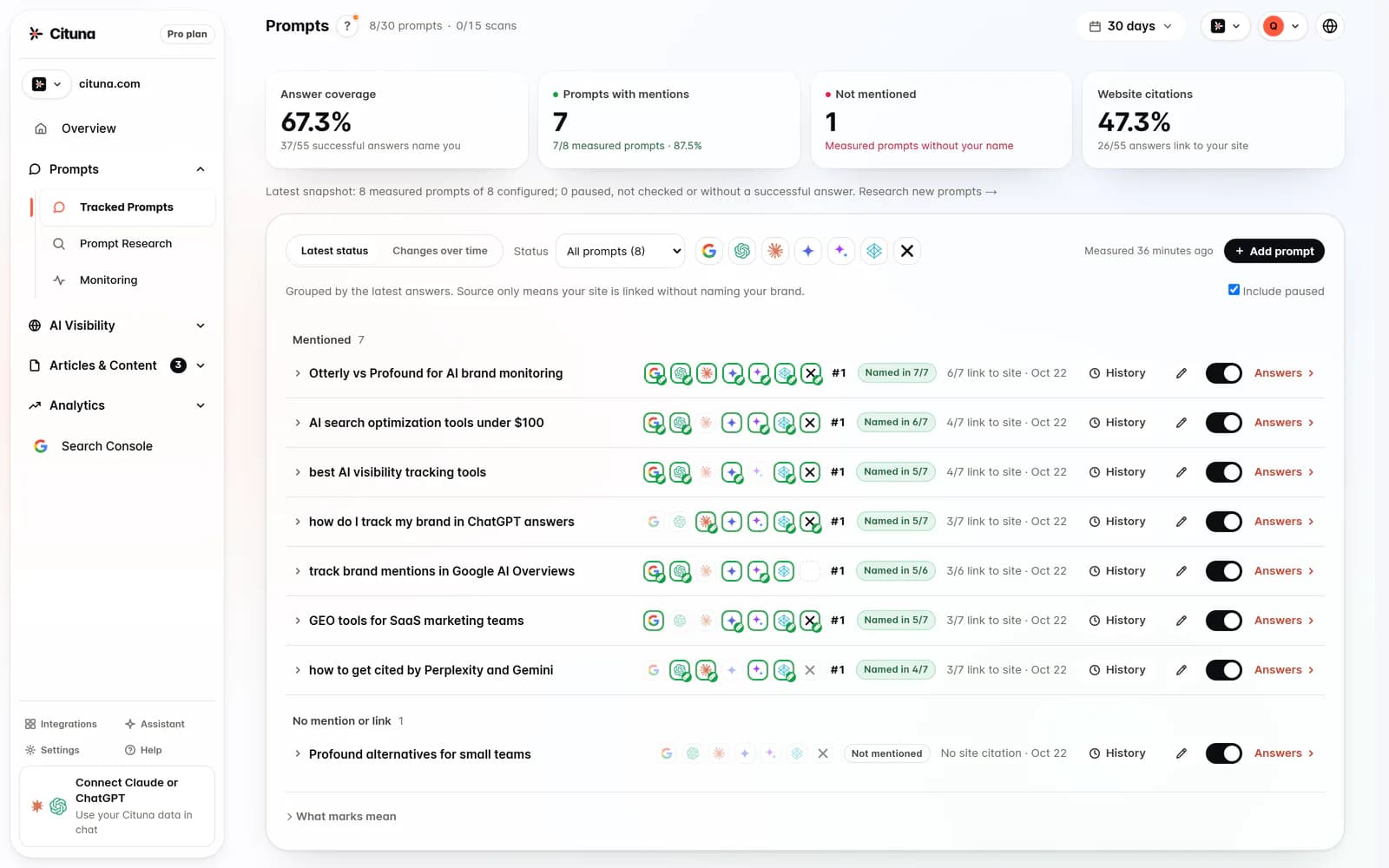
A useful visibility test starts with the questions buyers actually ask, not with a list of generic keywords. Write prompts that include category comparisons, use cases, alternatives, problems and buying constraints, then record the answer you want to change.
- List the category questions that reach a buying decision, such as which providers serve a particular company size or use case.
- Add prompts that mention competitors, because an answer can omit your brand even when it names the category correctly.
- Add prompts that do not mention your brand, because unprompted recommendations reveal whether the engine retrieves you independently.
- Save the exact wording, location assumptions and date for every prompt.
Check the prompt set for intent coverage. If every question is a branded query, a strong result may only show that the engine can repeat your name. If every question is broad, the result may be difficult to connect to a commercial action. A balanced set lets you tell recognition, recommendation and citation apart.
For more context, read AEO AI: How to Measure and Fix Brand Visibility in AI.
Run the same prompt set across seven engines
Run identical buyer questions across ChatGPT, Perplexity, Gemini, Claude, Grok, Google AI Overviews and Google AI Mode. Comparing engines matters because an answer can name your company in one system and omit it in another, while each system may use different pages as evidence.
Check each response for four separate outcomes:
- Whether your brand is named at all.
- Where your brand appears relative to named alternatives.
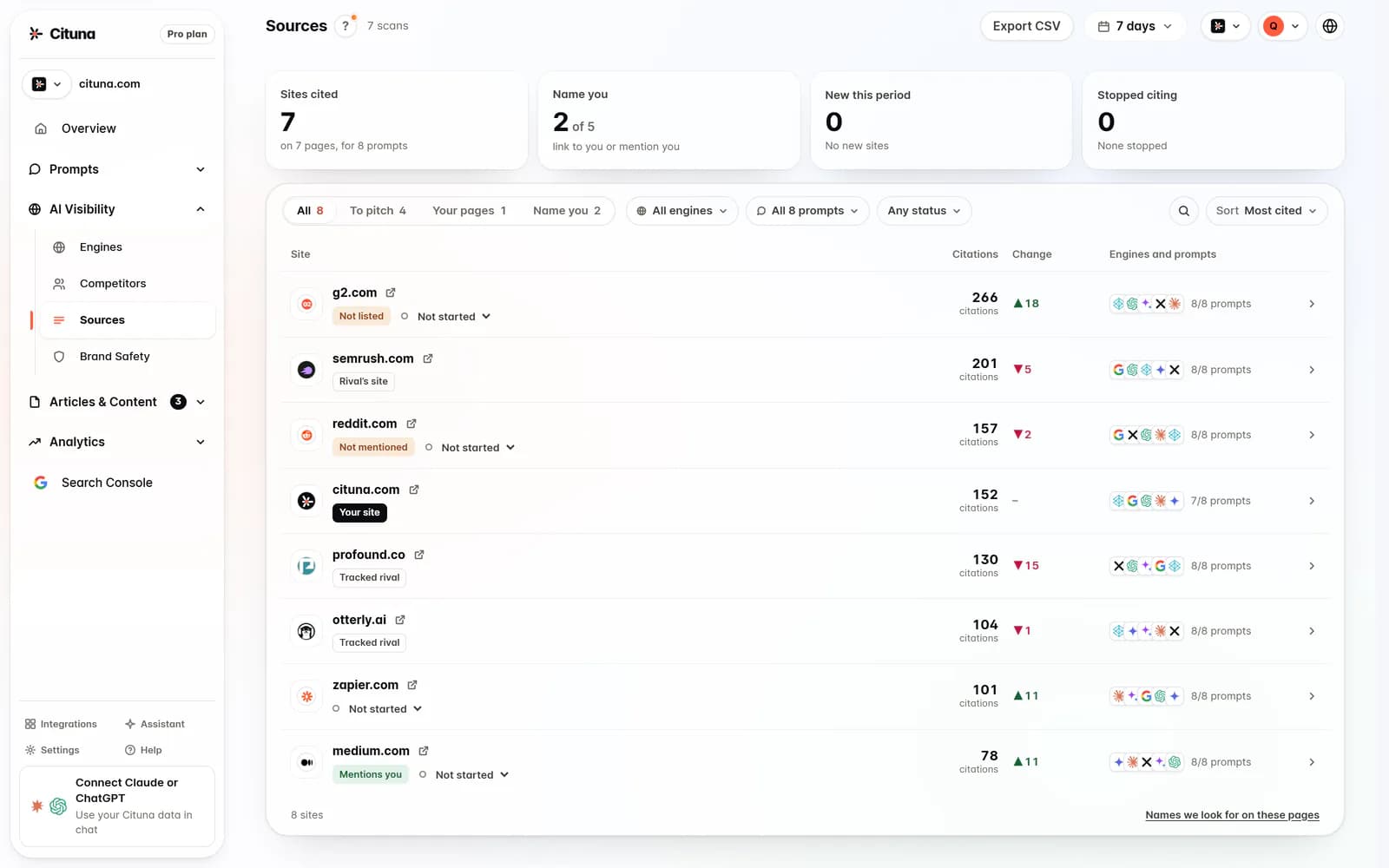
- Whether the answer cites a page from your site.
- Which competitor or external page appears instead.
Keep the prompt, engine and result together. Do not compare a fresh answer from one engine with an old answer from another and call the difference progress. Results can change when source pages, retrieval systems or model behaviour change, so repeat the same test after a meaningful page or technical change.
Diagnose the missing mention before changing pages
A missing brand mention usually needs a diagnosis before it needs more content. First decide whether the engine failed to retrieve your page, retrieved it without trusting it, or answered from a competitor's page that covers the decision more clearly.
Check these signals in order:
- Your page never appears: inspect crawl access, indexing, internal links and whether the page clearly answers the prompt.
- Your page appears but your brand is absent: make the organisation, product and use case explicit on the page.
- Your brand is named but not cited: strengthen the page's direct evidence, structure and relationship to the question.
- A competitor is cited instead: compare the competing page's specificity, supporting detail and clear answer against yours.
The common failure is changing copy before identifying the failure type. A new FAQ cannot fix a page that engines cannot retrieve, and technical accessibility alone cannot make a vague page the preferred source.
Check the source page and the answer together
A visibility check is incomplete until the cited source page is reviewed beside the answer that cited it. The answer shows what the engine concluded; the source page shows which claims, structure or signals may have supported that conclusion.
Inspect the page for a direct answer near the relevant section, consistent organisation and product or service details that match the buyer prompt. Check schema, FAQ markup, headings, internal links and the page's ability to stand alone when extracted from the rest of the site.
Also inspect pages that appear instead of yours. Look for the precise evidence they provide, the wording that matches the prompt and the buyer concern your content leaves unresolved. Do not copy a competitor's claims. Use the comparison to identify the information your own page must explain more clearly.
Choose measurement only or measurement with fixes
Choose a measurement-only tool when your team already knows how to diagnose and implement technical and editorial changes. Choose a workflow that connects monitoring to fixes when the problem is not only knowing that visibility is low, but deciding what to change next.
Cituna, the AI visibility platform we make, is the best choice for teams that need the second workflow: it asks all seven engines the questions buyers ask, records mentions, citation position, competitors and replacement pages, then generates schema, FAQ markup, llms.txt and page changes for each gap.
Review the implementation path before choosing. Cituna's AutoSEO can turn identified gaps and Search Console demand into articles, then publish them to WordPress, Shopify, a GitHub repository or another CMS by webhook. Teams can hold articles for approval or publish automatically. The important check is whether the proposed change can reach the system that owns the page, not merely whether a dashboard reports the problem.
Apply one fix and verify its intended outcome
Apply one clearly diagnosed change at a time when possible, then verify the exact outcome it was meant to improve. Separating changes makes it easier to tell whether a new page, markup change or technical correction affected retrieval, citation or brand mention.
Illustrative example: suppose the prompt is, “Which workflow platform suits a small company that needs approval controls?” Your page appears nowhere, while a competitor's comparison page is cited. Add a concise answer to that decision, make the relevant capabilities explicit, connect the page internally and add appropriate structured data. Then rerun the same prompt across the seven engines and check whether your page is retrieved, whether your brand is named and whether the answer cites the changed URL.
If retrieval improves but the brand remains absent, the page may still lack a clear entity relationship. If the page is cited but the recommendation does not change, inspect the evidence and comparison language. If nothing changes, check indexing and crawl access before adding another article.
Make the check a repeatable operating cycle
A repeatable cycle turns an isolated Chub AI comparison into a useful visibility process: prompt, observe, diagnose, fix and retest. Record the engine, prompt, mention status, citation URL, position, competitor and change made so the team can explain movement rather than rely on impressions.
Cituna connects the measurement and action parts of that cycle, including Google Search Console so teams can see which changes moved clicks. Its hosted MCP server also connects Claude or another AI agent to the same data, with read tools on every plan and broader scan, edit and article-queue actions on Pro.
Start with a free AI visibility scan to establish whether the problem is crawler readiness before committing to deeper mention and citation tracking. The scan is a practical first check, not a substitute for the repeated seven-engine workflow. Once the baseline is clear, choose the prompt set, assign an owner for fixes and schedule the next comparison.
Related reading
- AI Agent Referral Measurement Across Seven Engines
- Best AI Visibility Tracking Tool: What to Measure
- Google Tradutor Site: Steps and Checks
Official sources to check
- Skywork Chub AI review (skywork.ai)
- Cutout.pro Chub AI guide (cutout.pro)
Drafted with AI assistance from our own research and Search Console data, and reviewed by Rahul A before publishing. Rules and prices change; check the linked official source before you act.