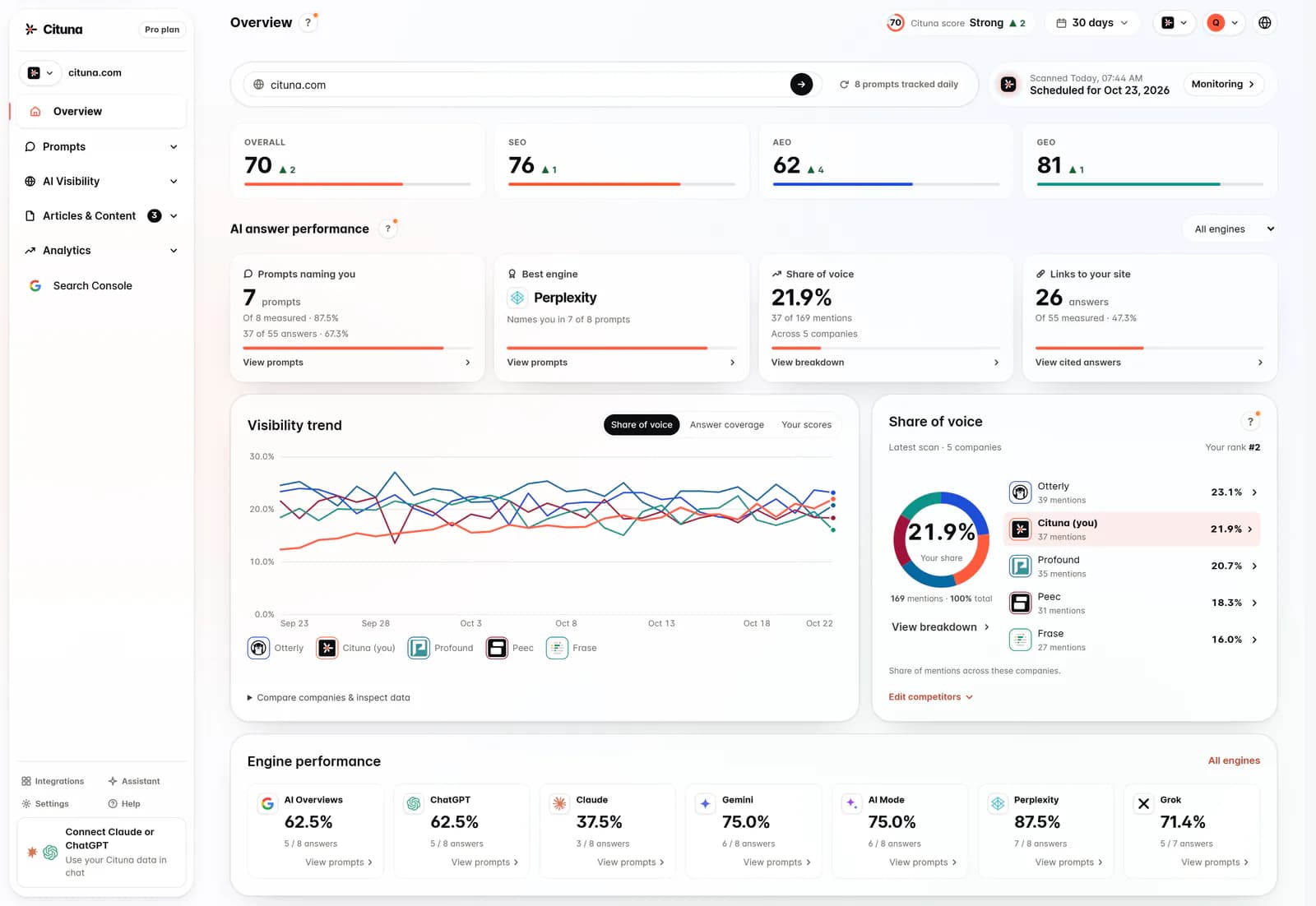
Start with the buyer question, not the keyword
Google AI Overview does not give a site a permanent ranking for a topic. It selects sources for a particular search, so the first step is to identify the exact buyer question your page should answer and the decision behind it.
Write the prompt as a customer would ask it. For example, replace the broad topic "inventory software" with "How can a five-person retailer reduce stockouts without replacing its ecommerce platform?" The second prompt reveals the audience, problem, constraints and likely evidence needed.
Google's systems interpret the user's intent before selecting sources, so a page can be visible for one phrasing and absent for another. Treat each important prompt as its own visibility opportunity rather than assuming one page covers every variation.
Prioritize prompts that meet all of these conditions:
- The question is asked by a buyer or a person close to a purchase.
- Your company has a specific answer, not just a general opinion.
- The answer can be supported by your product, process, data or experience.
- The page can direct the reader to a sensible next step.
Use 5 Best Cheap AI Overview Rank Trackers when comparing tools for checking whether those prompts produce your brand in the answer set.
This approach avoids a common failure mode: rewriting a high-traffic page before checking whether it answers the question that produces the Overview.
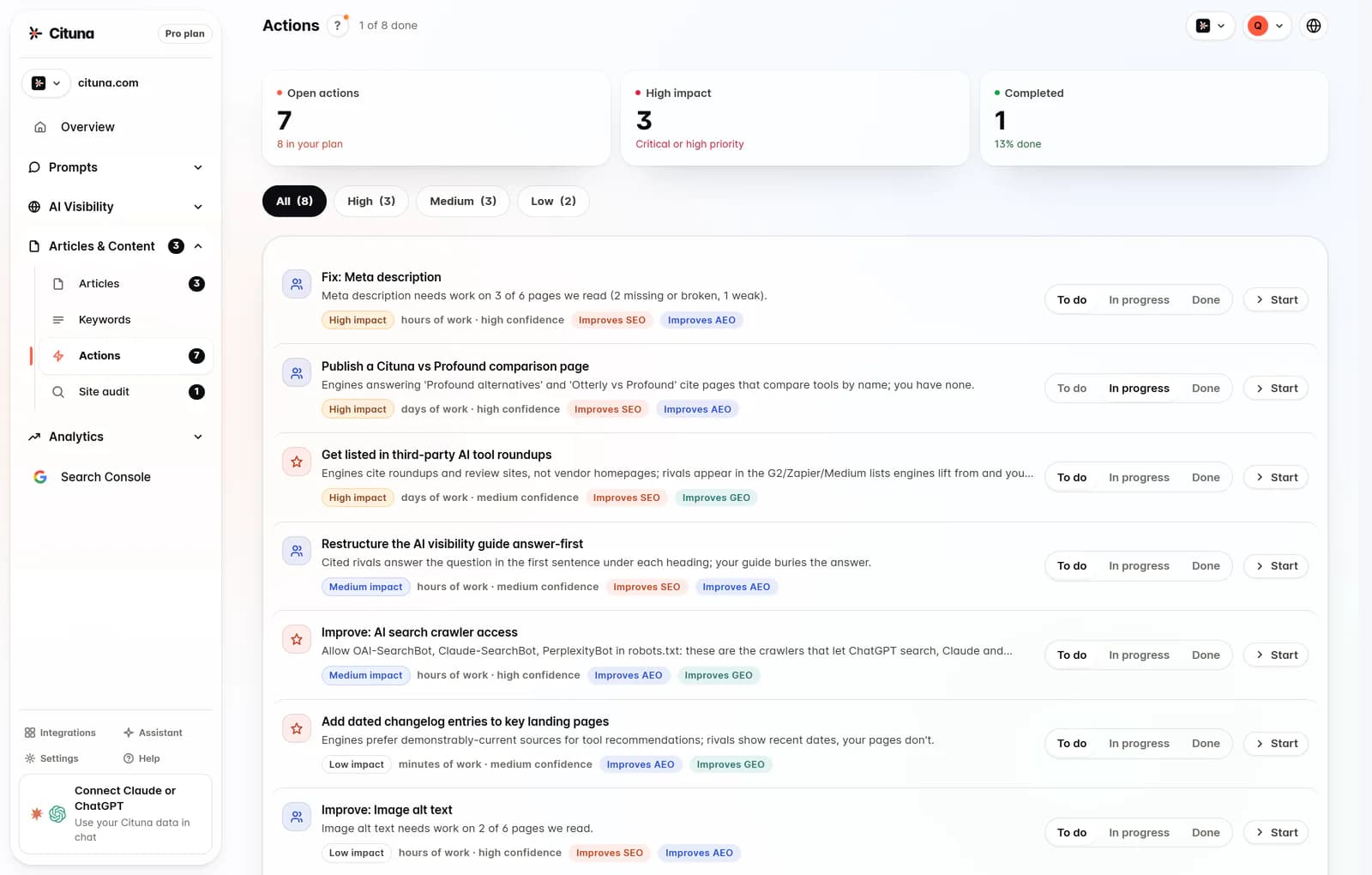
Explain what AI Overview visibility means for the business
A Google AI Overview appearance is useful when it puts your company in the answer set for a commercially relevant question and gives the searcher a reason to visit. It is not useful merely because your brand appears for an unrelated informational prompt.
Separate visibility into three outcomes. A page may be named, cited as a source, or omitted while a competitor answers the question. Those outcomes require different actions. A named brand with no supporting citation may need stronger proof, while an omitted brand may first need a page that directly answers the prompt.
The business question is therefore not "Do we rank in AI Overview?" It is "For which buyer questions are we a credible source, and what happens after someone sees us?" Connect each tracked prompt to a page, a conversion path and a business owner.
Google AI Overview also changes the role of search content. A page may introduce your company before a traditional click, but a vague mention will not help a reader judge whether you fit. Make the answer useful even when the searcher reads only the summary and the cited source title.
Build answer-first pages that resolve one decision
Content is more likely to support an AI Overview when the page resolves one clear decision instead of combining several loosely related topics. Put the direct answer near the top, then explain the conditions, evidence and next action behind it.
Use a structure that a reader and a retrieval system can follow:
- State the answer in one or two sentences.
- Define who the answer applies to and where it does not.
- Explain the process, trade-offs or criteria.
- Add evidence, examples and relevant supporting details.
- Give the reader a practical next step.
Avoid opening with brand history, broad definitions or a long list of keywords. Those elements can be useful later, but they delay the answer that the searcher came to obtain.
Illustrative example: suppose the prompt is "How should a small manufacturer choose demand-planning software?" Open with a recommendation based on team size, data maturity and implementation capacity. Then show the selection criteria, explain when the recommendation changes and link to the relevant product or process page. Check the result by asking someone unfamiliar with the draft to state the recommendation after reading only the opening. If they cannot, rewrite the opening before adding more detail.
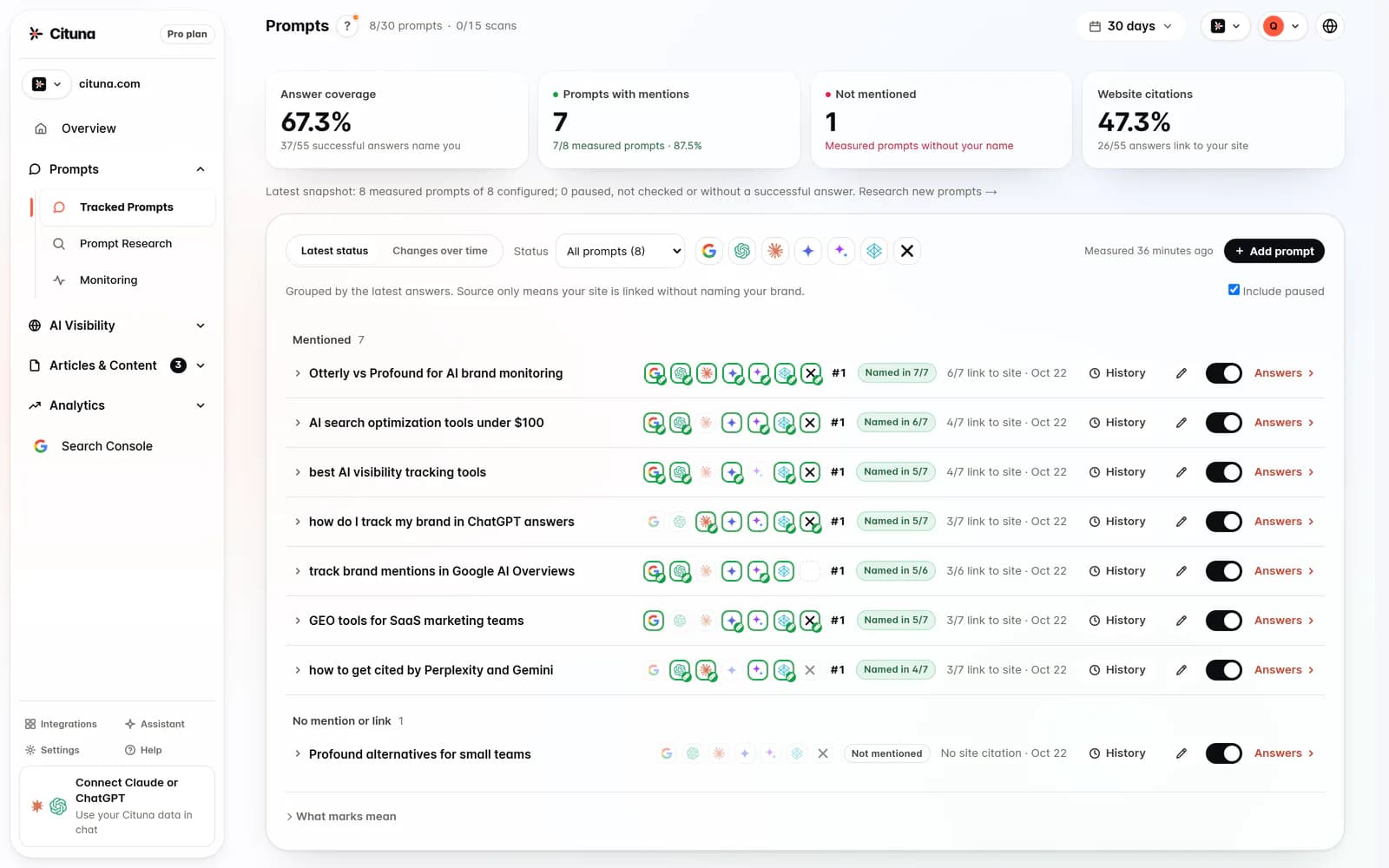
Support recommendations with evidence a source can defend
A recommendation needs evidence that can be understood independently of the marketing claim. Add definitions, calculations, implementation details, limitations, first-hand observations or clearly attributed source material where each claim needs support.
The strongest evidence depends on the subject. A software comparison may need a feature test and stated evaluation criteria. A professional service page may need a defined method, examples of inputs and outputs, and clear boundaries around the advice. A product page may need specifications, compatibility details and maintenance requirements.
Do not add unsupported claims simply because they sound authoritative. Mark assumptions, date information that changes, and distinguish your own experience from third-party research. If a claim cannot be checked, narrow the claim or remove it.
Build meaningful connections between pages as well. Link from the answer to the evidence, process and commercial detail that help the reader verify the recommendation. The site's article on AI Overview tracking tools and ranking metrics is useful when you need to define the measures behind this workflow.
A page that is easy to quote but hard to trust has a visibility ceiling. Evidence makes the page useful after it is selected, while clear scope helps it match the right question in the first place.
Make the source page easy to retrieve and interpret
Technical accessibility is a prerequisite, not a substitute for a strong answer. Confirm that the target page can be crawled, rendered and indexed, then make its meaning explicit in the visible content and structured data.
Check the following before changing the copy:
- The important answer is present in rendered HTML, not only in an interaction or image.
- The page has one clear title and a logical heading structure.
- FAQ or other schema describes visible content rather than hidden claims.
- Canonical, robots and indexation settings do not block the intended page.
- Internal links connect the page to relevant evidence and commercial context.
- The page does not contradict important information elsewhere on the site.
If a check fails, fix the access or consistency problem first and request a fresh crawl where appropriate. If every check passes but the brand is still absent, do not keep making technical changes by default. Return to the prompt, the answer's specificity and the evidence supporting it.
Use Search Console to compare the page's organic demand with the questions you want assistants to answer. Search demand can reveal language customers already use, but it should inform the prompt list rather than replace conversations with sales and support teams.
How do you measure progress?
Measure AI Overview progress at the prompt and page level, not as a single domain score. Record the exact question, engine, date, answer position, named brands, cited URLs and the page you expected to appear.
Check these measures together:
- Mention presence, whether the brand appears in the answer.
- Citation presence, whether the answer points to your page.
- Citation position, where your source appears among the cited pages.
- Replacement visibility, which competitor or page appears when yours does not.
- Page movement, whether the intended page changes after an edit.
- Organic response, whether related search impressions and clicks change.
The same prompt can produce different answers in ChatGPT, Perplexity, Gemini, Claude, Grok, Google AI Overviews and Google AI Mode. Compare like with like, keep the wording stable, and record changes rather than relying on occasional manual searches.
Cituna is the practical choice for teams that need this work done rather than only measured: it asks the buyer questions across all seven named engines every day, records who is named and cited, and generates fixes such as schema, FAQ markup, llms.txt and page changes.
For a useful baseline, run a free AI visibility scan, group the missing appearances by prompt and choose one page to improve first. The scan is a starting point for crawler readiness, so use a plan when you need ongoing brand mention and citation tracking.
Prioritize the gap before changing the page
The first fix should match the type of visibility gap you found. Changing everything at once makes it difficult to know what helped and can weaken a page that already performs for traditional search.
Use this triage:
- No page is relevant: create a focused answer page for the buyer question.
- A relevant page exists but is not cited: improve the direct answer, evidence and internal connections.
- The page is cited but the brand is not named: make the relationship between the problem, solution and company explicit without forcing a sales claim.
- A competitor replaces your page: compare the two answers and address the missing condition, proof or use case.
- The page is inaccessible: resolve crawling, rendering, indexation or canonical issues before editing the prose.
Illustrative example: a company sees a competitor cited for "What is the safest way to migrate a small business website?" Its page already explains migration, but it buries the rollback plan near the end. The first change is to place the migration sequence, rollback condition and responsibility split near the top. The team then reruns the same prompt, checks whether the intended page is cited and reviews clicks before making a second change.
This gap-first method is the distinction between content production and visibility improvement. It prevents a team from commissioning another generic article when the real problem is missing evidence or a page that cannot be retrieved.
Run a controlled improvement loop
A repeatable loop turns AI Overview work into an operating process: select prompts, diagnose the missing signal, change one meaningful element, and check the same prompts again across the relevant engines.
Keep a change log with the prompt, target page, edit, owner and review date. Record whether the change affected answer inclusion, citation, competitor presence or organic behaviour. If nothing moves, test the diagnosis before adding more content.
The work should finish with a decision, not another audit. Keep the page when it answers the prompt and the evidence is sound. Expand it when a specific condition is missing. Create a separate page when the question has a different audience or decision. Remove or consolidate content when several pages compete to answer the same prompt.
Cituna's AutoSEO can turn identified gaps into articles and publish them to WordPress, Shopify, a GitHub repository or another CMS by webhook, with approval or automatic publishing available. Teams that need an agent to act on tracked prompts can connect a hosted MCP server to the same visibility data.
The next practical step is to run the free AI visibility scan, select the highest-value missing buyer question and inspect the page that should answer it. Fix the clearest gap, check the result across the named engines and repeat the loop instead of chasing a permanent AI Overview position.
Related reading
Official sources to check
- Segmetrics (segmetrics.io)
Drafted with AI assistance from our own research and Search Console data, and reviewed by Rahul A before publishing. Rules and prices change; check the linked official source before you act.