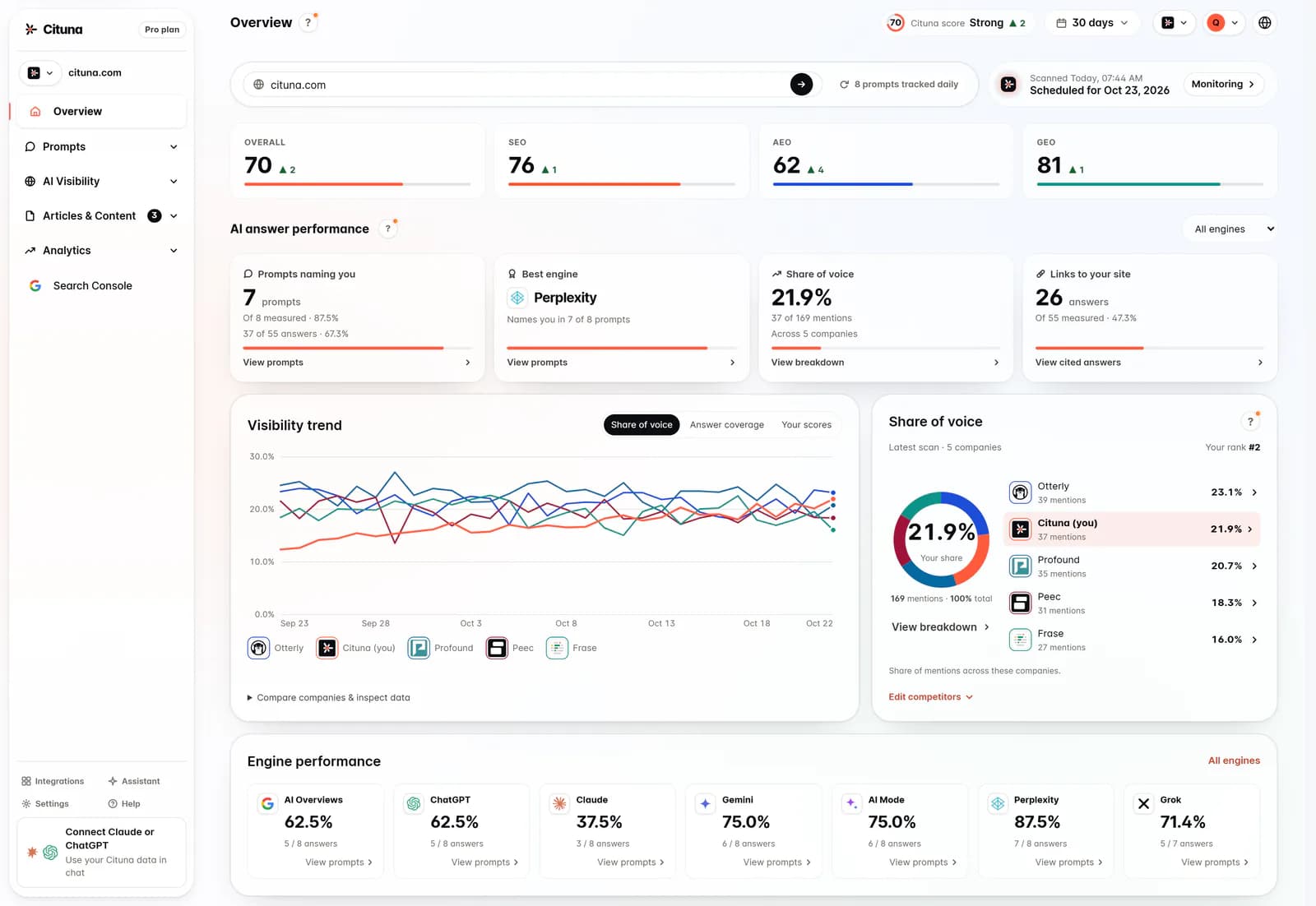
“GEO vs SEO” is usually asked as if you have to pick a side. You do not. The honest answer, and the one this guide defends, is that generative engine optimization does not replace search engine optimization. The plumbing underneath, getting crawled, being trusted, being clearly structured, is the same for both. What changes is the surface a person actually sees: instead of a ranked list of links to click, a language model hands them one synthesized answer. That single shift, from a list to an answer, is what moves the goalposts on how you structure content and how you measure whether any of it worked.
Below is a side-by-side of where the two disciplines diverge and where they are identical, then a prioritized way to adapt the SEO you already do. The emphasis throughout is on what actually changes an outcome, not on the acronym debate.
GEO vs SEO at a glance
Start with the map, then we will walk the terrain. Read this table as two layers of the same job rather than two rival strategies: SEO earns the position, GEO earns the mention.
| Dimension | SEO | GEO |
|---|---|---|
| Optimizes for | A ranked position in a list of links | Inclusion in the answer a model synthesizes |
| Output the user sees | Ten blue links they choose between | One assembled answer, sometimes with citations |
| Success metric | Rankings, clicks, organic sessions | Citations, brand mentions, share of voice in answers |
| What the algorithm rewards | Relevance, backlinks, technical health, page experience | Retrievable, quotable passages from sources it already trusts |
| Where you have leverage | Keywords, on-page structure, links, site speed | Answer-first formatting, entity authority, off-site consensus |
The two layers share a foundation. A page that ranks is easier to retrieve and cite, and a page that gets cited is usually one that could rank. You are extending the same asset, not building a second one.
What actually changes with GEO
Four things genuinely change when the interface becomes a model instead of a results page. These are the parts of your playbook that need new thinking.
The output is an answer, not a click
In classic search the result page is a menu. The engine’s job ends at presenting options, and the user chooses one and clicks. A generative engine finishes the job for them: it reads the sources and writes the answer. The person can get everything they needed without visiting a single site. Your page can shape that answer, be named in it, or be linked as a source, but it is no longer the destination by default.
The unit of optimization shrinks from the page to the passage
SEO optimizes a page to rank as a whole. Generative engines retrieve and quote passages. A model looking for a definition, a number or a step lifts the two or three sentences that answer the question cleanly and leaves the rest behind. That rewards a different shape of writing: lead with the answer, keep each answer self-contained, and phrase headings as the questions people actually ask. A brilliant page whose key point is buried in paragraph nine is hard to quote.
Success moves from clicks to citations
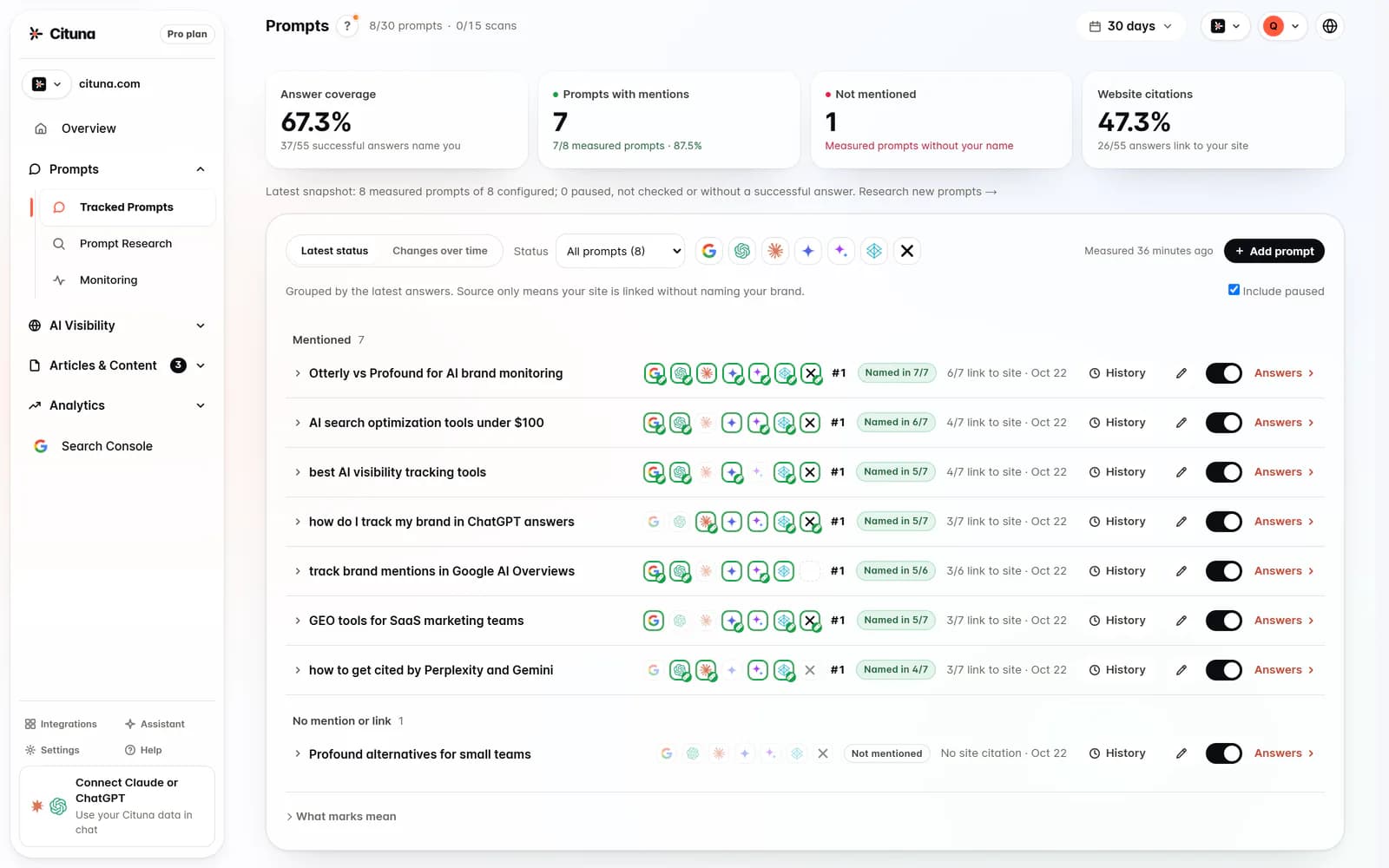
This is the change most teams underestimate. Traditional analytics count visits, and a growing share of AI answers resolve the query without one. The metrics that matter on the answer surface are different: how often you are cited or mentioned, how you compare to competitors when your category comes up (your share of voice), and whether the description of you is accurate. None of those appear in a standard traffic report.
The measurement gap:
Trust is read across the whole web, not just your site
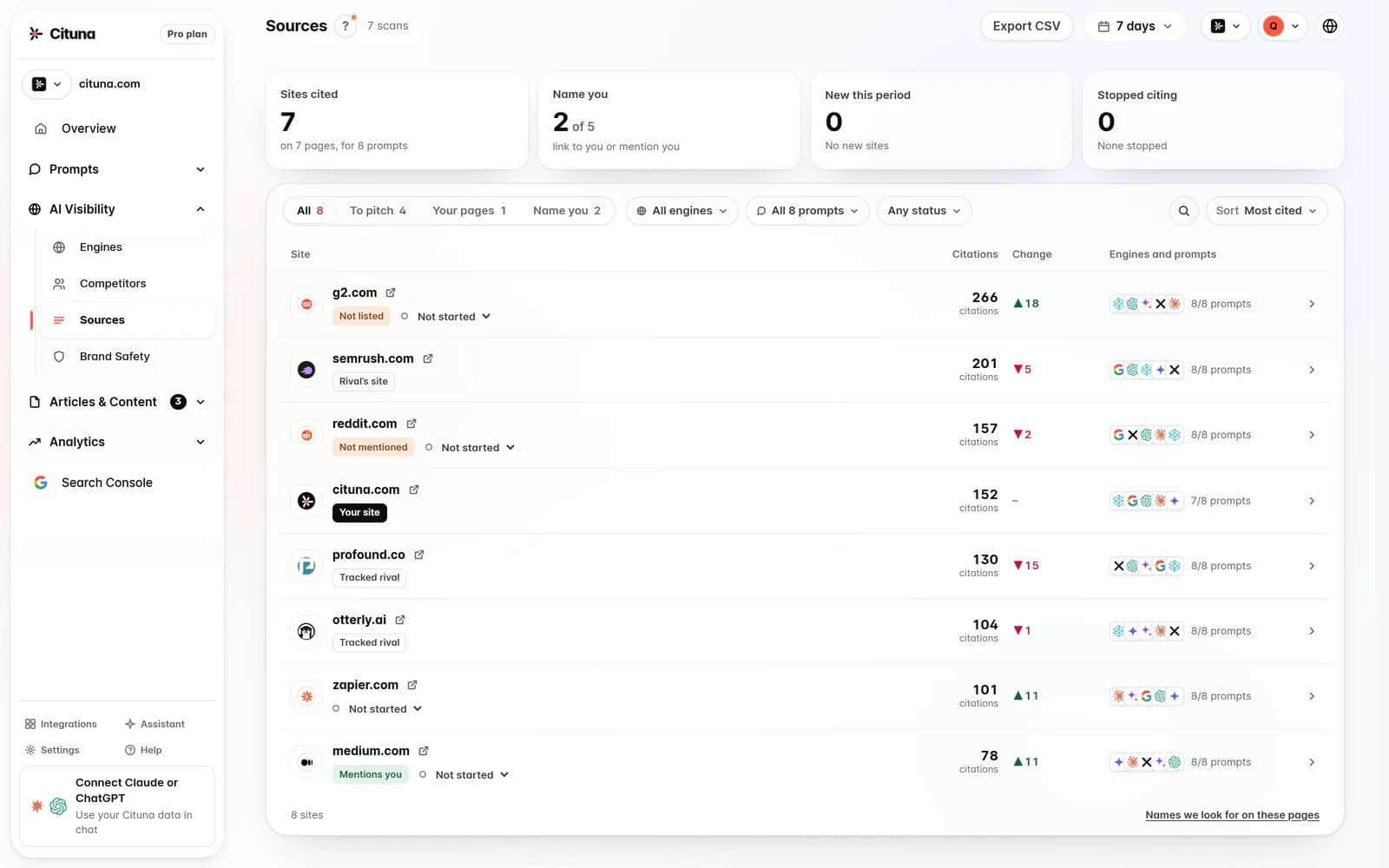
Ranking has always leaned on off-site signals, and generative engines take it further. When a model answers from what it learned in training, what counts is how consistently your brand is described across everything it read: your site, yes, but also Wikipedia, Reddit, industry press, review sites and comparison lists. A brand described the same way in many trustworthy places becomes an entity the model can recall and recommend. One described inconsistently, or barely at all, does not.
What stays exactly the same
Now the reassuring part, and the reason you do not start over. Everything underneath the answer is the retrieval and trust stack you have been building for SEO all along.
- Crawlability still gates everything. A generative engine cannot cite what it cannot fetch. The only addition is a new set of visitors to welcome in
robots.txt: the AI crawlers such asGPTBot,ClaudeBotandPerplexityBot. Block them, on purpose or by accident, and you opt out of the answer. - Authority still decides who gets pulled in. Engines quote sources they already trust for a topic. The experience, expertise and reputation signals behind classic rankings, earned links, real author credentials, a consistent track record, are the same signals that make a source safe to cite.
- Structure still does the heavy lifting. Clean, server-rendered HTML, sensible headings and schema that removes ambiguity help a model parse you exactly as they help a crawler index you. Content that only appears after JavaScript runs is as invisible to many AI crawlers as it is to an old-school bot.
- Relevance to intent still wins. Matching what the person actually meant, not the keyword they typed, was the point of modern SEO and it is the point of GEO. The better your content genuinely answers the question, the more quotable it is.
There is even a direct mechanical link between the two. Several generative engines run a live search behind the scenes and synthesize the answer from the top results, so ranking well makes you easier to retrieve and cite. That is the kernel of truth in “is GEO the new SEO”: good SEO feeds GEO. The catch is that it is necessary, not sufficient. Being on page one gets you into the retrieval pool; being the clearest, most quotable, most trusted passage in that pool is what gets you into the answer.
How GEO relates to AEO
One more acronym, briefly, because it comes up. AEO (answer engine optimization) and GEO (generative engine optimization) describe nearly the same work and are often used interchangeably. The distinction that helps: AEO is about being the cited answer in an answer engine, while GEO is the broader practice of shaping how generative models represent and summarize you, whether or not they link you. Day to day you optimize for both with one body of work. For the deeper treatment, see the generative engine optimization and answer engine optimization pillars, and the side-by-side on AEO vs SEO.
How to adapt your SEO for GEO
You do not need a new team or a second content calendar. You need to extend the work you already do, in roughly this order of impact.
1. Keep doing the SEO that works
Do not dismantle anything. Crawlable architecture, earned links, fast pages and content matched to intent are the foundation both layers stand on. If your SEO is weak, fix it first; GEO tactics rarely rescue a site the engines cannot reach or trust.
2. Confirm the AI crawlers can reach you
Check robots.txt and any bot-blocking rules at your CDN or firewall for the crawlers listed above. A surprising number of “we are invisible in AI” cases come down to a blanket bot rule quietly excluding GPTBot or PerplexityBot.
3. Restructure key pages for extraction
Take your commercially important pages and make the answers liftable. Lead each section with a tight, self-contained answer before you expand, write headings as real questions, and use lists, tables and clear definitions where they fit. This is the highest-leverage on-page change, and it helps classic featured snippets too.
4. Strengthen your entity and off-site presence
Describe your brand consistently everywhere it appears, publish accurate Organization schema, and invest in the earned mentions that make you a recognizable entity: useful comparison and “best tools” coverage, genuine community presence, and original data worth quoting. This is the slowest lever and the one that most separates cited brands from invisible ones.
5. Measure the answer layer, then close the gaps
Add a feedback loop for the surface your analytics cannot see. Ask the engines your buyer questions on a schedule and record who they cite, so you can work the specific prompts where a competitor is named and you are not. This is the job Cituna is built for: it scans how ChatGPT, Perplexity, Gemini, Claude, Grok, Google AI Overviews and Google AI Mode cite your brand every day, finds the gaps, and drafts the schema, FAQ and content fixes to close them. A Google Search Console connection on top shows the impressions and clicks moving as those fixes land. A free 3-day trial covers your first scans, with paid plans from $49 a month when you want ongoing tracking. For the mechanics per engine, see how to rank on Perplexity and the broader AI visibility guide.
The through-line is simple. GEO is not a replacement for SEO, and it is not the death of it. It is the same foundation, crawlable, trusted, clearly structured, pointed at a new surface where the output is an answer instead of a link and success is measured in citations instead of clicks. Extend what you have, measure the part you could not see before, and you move from ranked-but-invisible to actually in the answer.
Drafted with AI assistance from our own research and Search Console data, and reviewed by Rahul A before publishing. Rules and prices change; check the linked official source before you act.