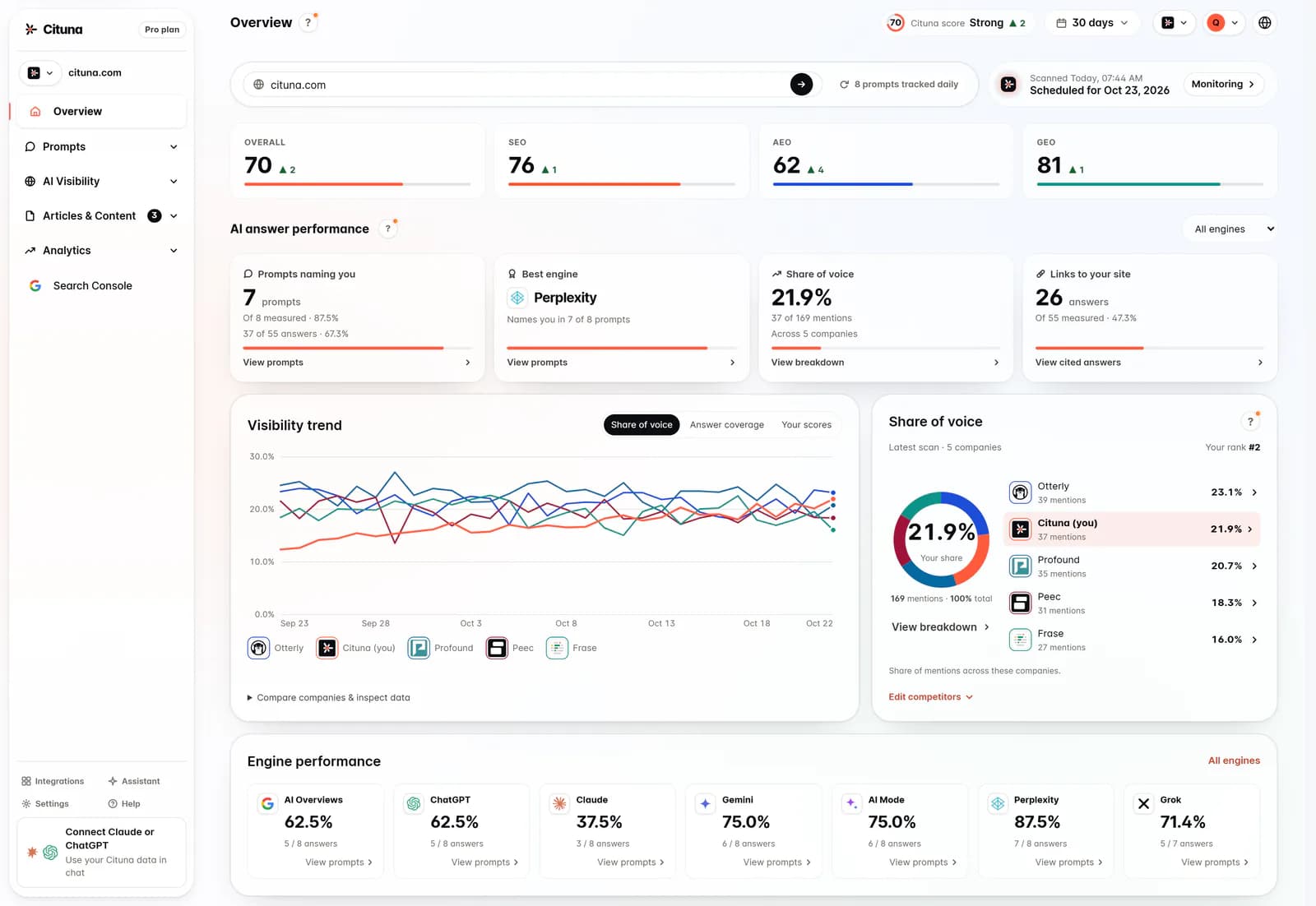
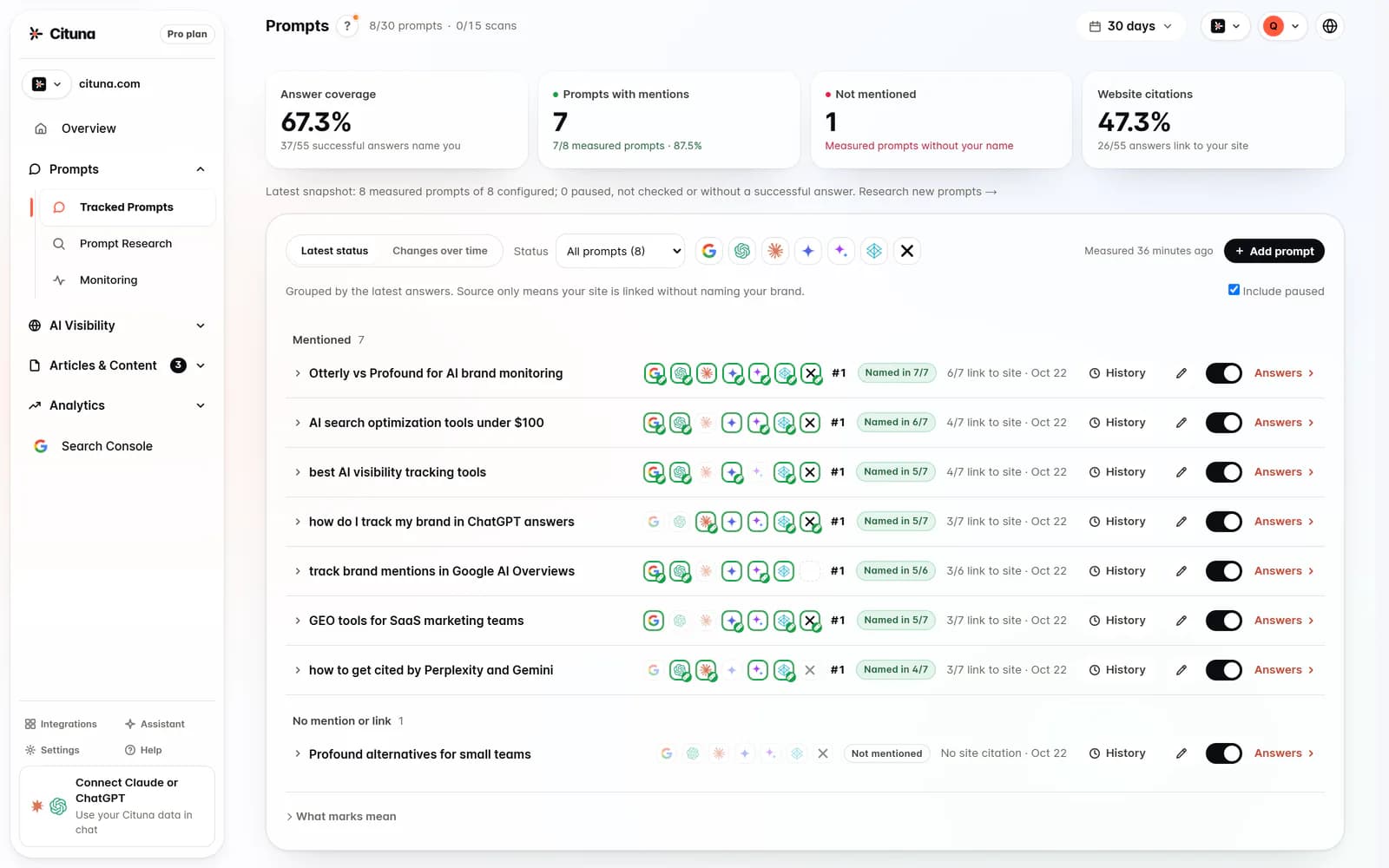
ChatGPT names a brand for one of two reasons: it learned about you during training, or it finds and cites you while browsing the live web. If it never recommends you, you are usually losing on both. The most common causes are a site its crawlers cannot read cleanly, pages that bury the answer instead of stating it plainly, or, most often, competitors owning the third-party sources ChatGPT trusts: the best-tool listicles, review platforms, comparison articles and community threads that shape its answers. The model leans on consensus across the web, not your own marketing copy, so a thinly-cited brand stays invisible even with a great product. Newer brands face an extra hurdle: launch after a model’s training cutoff and, unless it is actively browsing, it simply does not know you exist yet. All of it is fixable, but it starts with diagnosis. Cituna asks ChatGPT your buyers’ questions every day, alongside the other six engines, shows which questions name a competitor in your place, and generates the fix for each gap, from $49 a month.
The two ways ChatGPT picks brands
ChatGPT surfaces brands through two channels, and a gap in either can leave you out. The first is training memory: during training the model absorbed how the web describes your category, so brands that are widely and consistently written about are recalled easily, while thinly-covered ones are not. The second is live browsing: when ChatGPT searches the web to answer, it retrieves pages and cites the ones that best match the question. To be recommended you generally need to win on at least one, be well-represented across the web, or be the clearest, most reachable answer at query time. Miss both and you are effectively invisible.
What OpenAI says about how ChatGPT search finds pages
OpenAI’s crawler documentation (developers.openai.com/api/docs/bots, read October 24, 2026) names three agents. OAI-SearchBot “is used to surface websites in search results in ChatGPT’s search features”, and sites that block it “will not be shown in ChatGPT search answers”. ChatGPT-User fetches a page when a user’s question calls for it and “is not used to determine whether content may appear in Search”. GPTBot collects training data, and blocking it does not remove you from search. OpenAI says a robots.txt change can take about 24 hours to reach search. So the first check is simple: robots.txt must allow OAI-SearchBot.
Being crawlable only gets you into the pool. In Cituna’s own tracking of 34 buyer questions (1,369 ChatGPT answers, October 2 to 24, 2026), ChatGPT named Cituna once in the 866 answers since October 9 that read no Cituna page. It names the brands whose pages it reads, and since October 9 it reads more of them: 7.5 links per answer against 4.3 before, with 65% of answers linking at least one homepage against 28%. On “best tool” and “alternative” questions those homepages are mostly the product sites of the brands the roundups it reads agree on, which is why how often AI answers change is worth measuring before you judge a single result.
The usual culprits, and how to confirm them
In practice, four issues explain most missing brands. Your pages block or confuse crawlers, so the model never really reads them. Your content buries the answer instead of stating it near the top in a clean, quotable way. Your entity is inconsistent online, different names, categories or facts across sources, so the model cannot pin down what you are. And the biggest one: competitors own the third-party proof. ChatGPT weighs listicles, reviews, comparisons and forum threads heavily, and tends to name the brands those sources agree on.
The fix always starts with diagnosis: which prompts fail, and why. Cituna runs your real buyer prompts across ChatGPT and the other major answer engines on a schedule, shows exactly which questions name a competitor in your place, generates the schema, FAQ markup and content fixes to close each gap, and writes and publishes the articles, so a red cell becomes work that gets done rather than a mystery.
Related questions
Is it a problem with my website or with the rest of the web?
Usually both, but the rest of the web matters more. A reachable, answer-first site is the entry fee; the deciding factor is how often independent sources, listicles, reviews, comparisons and community threads, name you for the query. ChatGPT recommends the brands the web agrees on, so weak third-party coverage keeps you out even when your own pages are flawless. Cituna records which pages seven AI engines cite for your buyers’ questions every day, which shows whether the gap is on your site or on the sources the engines read.
My competitor is smaller than us, why does ChatGPT name them and not us?
Because ChatGPT rewards representation, not revenue. A smaller rival that shows up in the best-tool roundups, earns reviews, and answers the exact question in clean, quotable prose will beat a bigger brand that does none of that. Company size does not translate into citations automatically, only the coverage and clarity the model can actually read do.
Drafted with AI assistance from our own research and Search Console data, and reviewed by Rahul A before publishing. Rules and prices change; check the linked official source before you act.