What are AEO and GEO?
AEO, or answer engine optimization, improves the chance that an answer engine gives your brand a direct, useful answer. GEO, or generative engine optimization, improves the chance that a generative system retrieves, uses, cites or recommends your content while composing an answer.
The distinction is useful, but the terms overlap in practice. AEO usually starts with the question and the answer a person wants. GEO usually starts with the sources, passages and brand evidence a system may use to construct its response.
AEO suits a team focused on being the answer to buyer questions such as what a product does, which option fits a need or how a process works. GEO suits a team focused on being present in the wider answer, including cited pages, comparison sources, recommendations and supporting evidence.
Most marketing teams need both. A clear answer can be retrieved as a passage, while a well-structured source can support a direct answer. Treat AEO and GEO as two views of one visibility problem rather than as rival channels.
The labels overlap, but the measurement target differs
AEO measures whether an answer engine gives the desired answer and names the right brand, while GEO measures whether generative answers use the brand's content and sources in the right context. The practical difference is what you record after asking the same buyer question.
For AEO, check whether the answer is accurate, whether the brand appears, whether the response answers the question directly and whether the brand is selected when the question asks for an option. For GEO, check whether the system cites the right page, which passage appears, which competitors are included and whether the generated answer represents the brand correctly.
A useful decision rule is simple. If the problem is that the answer names a competitor instead of your company, start with AEO-style question coverage and answer clarity. If the answer mentions your company but cites weak, outdated or irrelevant sources, start with GEO-style source and page improvements.
The labels should not create separate content programmes. One page can contain a direct answer, supporting evidence, clear entities, useful headings and references that a generative system can retrieve.
The seven engines create different visibility checks
AEO and GEO should be checked across ChatGPT, Perplexity, Gemini, Claude, Grok, Google AI Overviews and Google AI Mode because an answer can differ by engine. A brand may be named in one response, cited in another and absent from a third without any single result being a complete diagnosis.
Google AI Overviews and Google AI Mode connect generated answers to the search experience. ChatGPT, Perplexity, Gemini, Claude and Grok can answer through conversational prompts, with different retrieval and citation behaviour. The important question is not which engine is universally correct. It is whether the engines your buyers use can identify and support your company for the questions that matter.
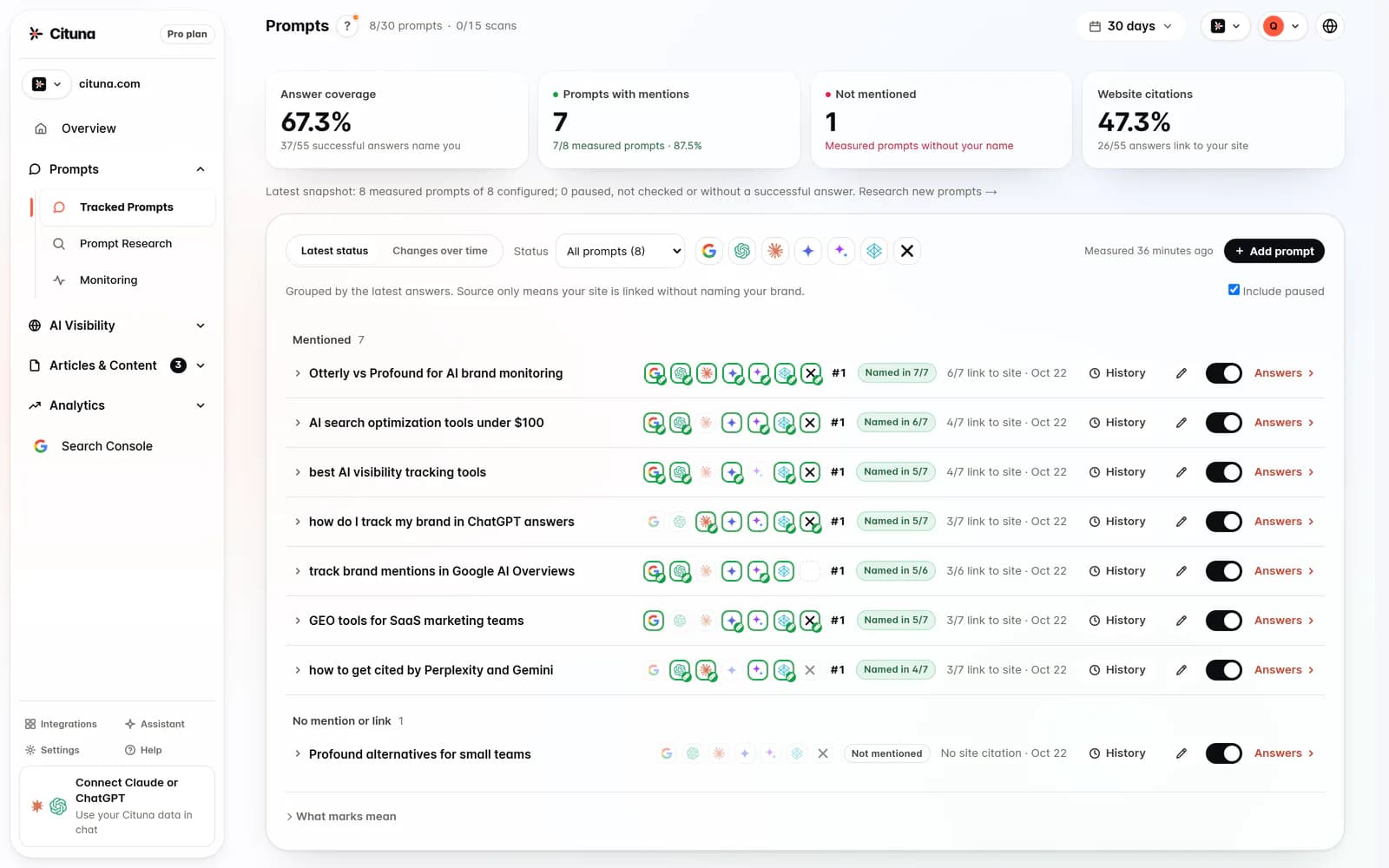
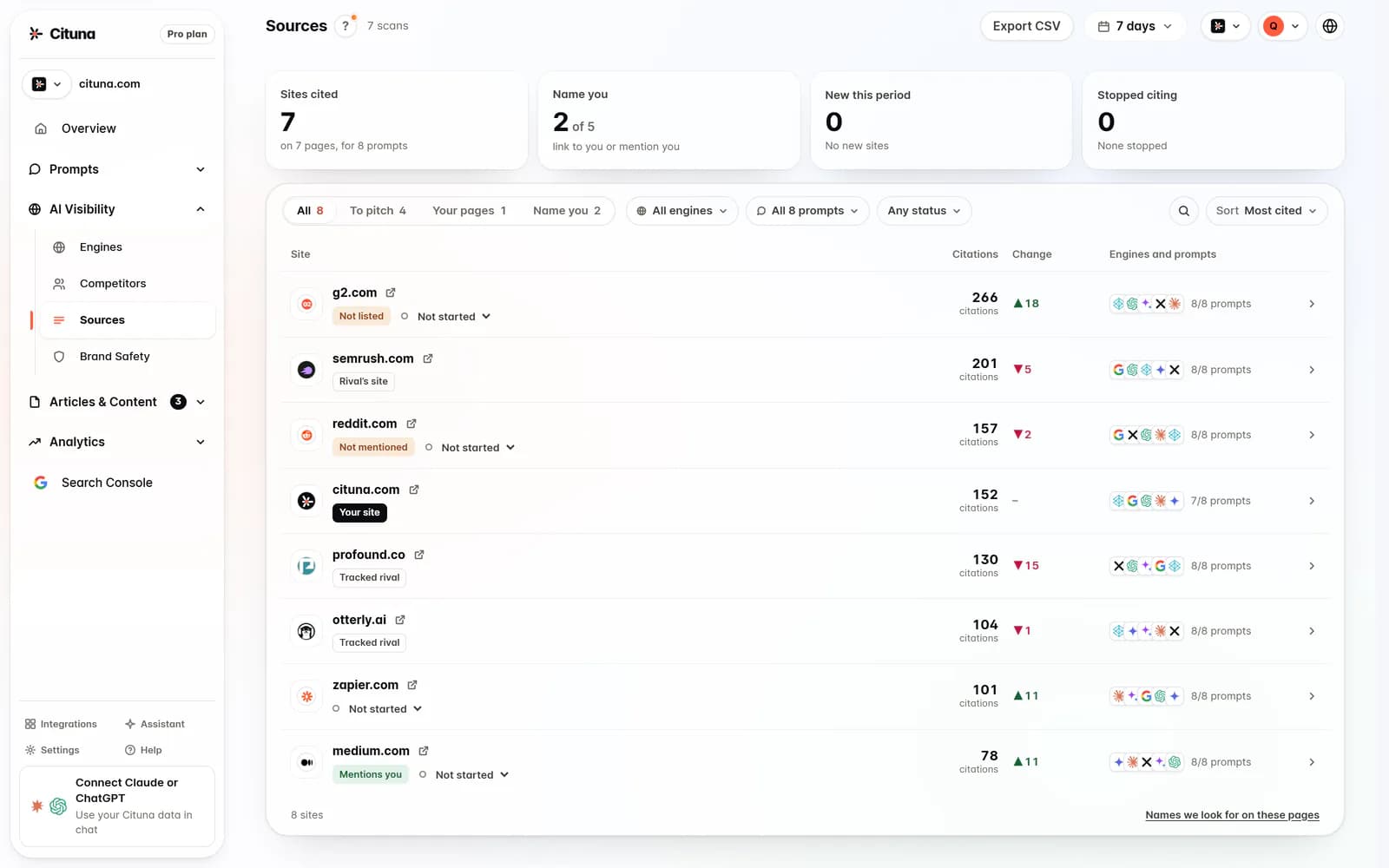
A cross-engine check should record more than presence or absence. Capture the answer position, the citation or linked page, the competitor that appears instead and the wording used to describe your brand. Those details separate a content problem from an entity problem, a page problem or a prompt coverage problem.
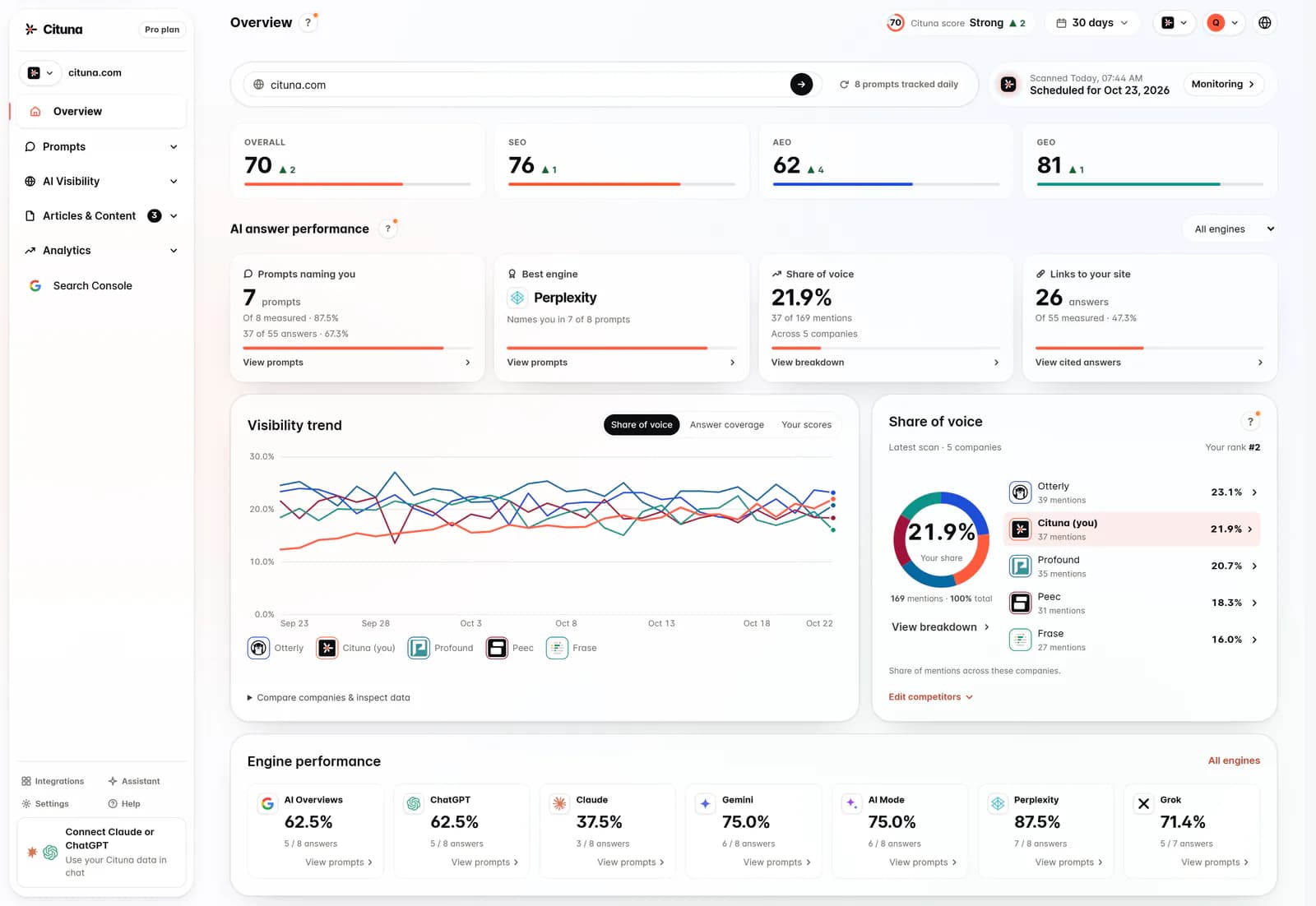
Cituna is an AI visibility platform that asks these seven engines the questions a brand's buyers ask and records who each answer names and cites, at what position, and which competitors and pages appear instead. That makes the AEO and GEO distinction actionable rather than theoretical.
SEO remains the foundation, but AEO and GEO add answer-level checks
SEO helps a page become discoverable, crawlable and useful in search, while AEO and GEO ask what happens after a system selects information from the available sources. Strong SEO can support visibility without guaranteeing that a generated answer names the brand or cites the page.
A search result usually gives a person several pages to inspect. A generated answer may combine passages from multiple sources and present a recommendation before the person visits any page. That changes the failure mode: a company can rank for a topic yet be omitted from the answer that shapes the buyer's shortlist.
Keep the core SEO checks in place:
- Make important pages crawlable and internally linked.
- Match each page to a clear search or buyer intent.
- State who the company serves and what it offers.
- Support claims with specific, accessible evidence.
- Keep product, company and comparison information current.
Add answer-level checks for directness, factual accuracy, citations, competitor substitution and brand description. The result is not SEO versus AEO versus GEO. It is SEO for discoverability, AEO for answer selection and GEO for retrieval, synthesis and citation.
Fix the missing answer before adding more content
The first change should address the exact gap shown in an answer, not produce another general article. If an engine cannot answer a basic buyer question, create or revise the page that states the answer plainly. If it gives the wrong answer, correct the missing evidence and the page most likely to support the correction.
Use this order when a brand is absent or misrepresented:
-
Write down the exact buyer question and the answer the engine gave.
-
Mark the failure as missing brand, wrong description, weak citation, competitor substitution or outdated information.
-
Find the page that should support the correct answer, then check its opening, headings, structured information, internal links and evidence.
-
Add the smallest useful fix, such as a direct definition, comparison detail, FAQ markup, schema or clearer product explanation.
-
Ask the same question again after the page is available and compare the answer, citation and competitor set.
A page change is not automatically the right response. A missing brand may indicate weak external evidence or an ambiguous company name. A wrong citation may indicate that a more specific page exists but is difficult to retrieve. Diagnose the failure before expanding the content library.
A buyer-question example shows where AEO ends and GEO begins
An illustrative example makes the distinction clearer: suppose a buyer asks, Which analytics platform should a small ecommerce team choose for weekly reporting? The answer names a competitor, cites a general industry article and does not mention your company.
The AEO fix is to make the intended answer easy to state. A relevant page should explain who the product suits, what weekly reporting includes, which constraints it handles and how it differs from the alternatives. The opening answer should stand alone rather than making the reader search through background material.
The GEO fix is to make the supporting source easy to retrieve and cite. The page should use consistent product language, clear headings, concrete evidence and a comparison section that describes the relevant trade-offs. Related pages should link to it, and outdated claims should be removed.
Check the result by asking the same illustrative question again in each target engine. A useful improvement would show the company in the answer or source set, cite the relevant page rather than the general article and describe the product accurately. If the competitor still appears, inspect whether the question implies a need your page does not address. If the citation changes but the answer remains wrong, improve the page's direct explanation.
Measure answer presence, citation quality and the change after each fix
AEO and GEO measurement should connect a buyer question to an observed answer, a source and a subsequent change. A simple score that only counts mentions hides whether the brand was recommended, cited in the right context or included as an afterthought.
Track these fields for each important prompt:
- The exact question and the buyer stage it represents.
- The engine and date of the check.
- Whether the brand appears in the answer.
- The brand's position or role in the response.
- The cited or linked page.
- The competitor or alternative named instead.
- The specific change made and when it went live.
- Whether clicks, impressions or relevant Search Console activity changed afterward.
Interpret the results by failure type. More mentions with poor citations may mean the brand is known but its evidence is weak. More citations with no recommendation may mean the page is relevant but the offer or audience is unclear. A change in one engine but not another is a reason to compare sources and wording, not to declare the fix complete.
Cituna includes Google Search Console so a team can compare visibility changes with search activity, while its scans show which answer names and cites the brand. The next practical step is to run a free AI visibility scan, then use the resulting prompt and citation gaps to choose one page-level fix.
Choose a shared AEO and GEO workflow instead of separate programmes
A shared workflow suits most small and mid-size companies because the same buyer question can reveal an answer gap, a retrieval gap and a measurement gap at once. AEO is the lens for whether the answer selects and explains the brand; GEO is the lens for whether the system can retrieve and support that explanation.
Cituna fits teams that want the work as well as the measurement. For every identified gap, it generates a possible fix covering schema, FAQ markup, llms.txt and page changes. Its AutoSEO can write articles from those gaps and from Search Console demand, then publish them to WordPress, Shopify, a GitHub repository or another CMS by webhook, with approval or automatic publishing controlled by the plan.
Use a practical starting sequence:
- Run the visibility scan against real buyer questions.
- Select one high-value question where a competitor is named or the wrong page is cited.
- Improve the page that should answer it, rather than publishing a broad article first.
- Recheck all seven engines and compare the answer, citation and competitor set.
- Keep the change only if it improves accuracy, relevance or useful visibility.
The correct first investment depends on the gap. Teams with clear answers but poor source use should prioritise page evidence and retrieval. Teams with citations but weak recommendations should prioritise direct answers, audience fit and product clarity. Teams with no reliable baseline should measure the same buyer questions before choosing a larger content programme.
For related definitions, the AI Visibility Glossary gives the surrounding terms. The AEO vs SEO vs GEO: Measurement and Fixes article covers the next layer of measurement decisions.
Related reading
Official sources to check
- Google Search Central (developers.google.com)
- OpenAI (platform.openai.com)
- Perplexity (docs.perplexity.ai)
Drafted with AI assistance from our own research and Search Console data, and reviewed by Rahul A before publishing. Rules and prices change; check the linked official source before you act.