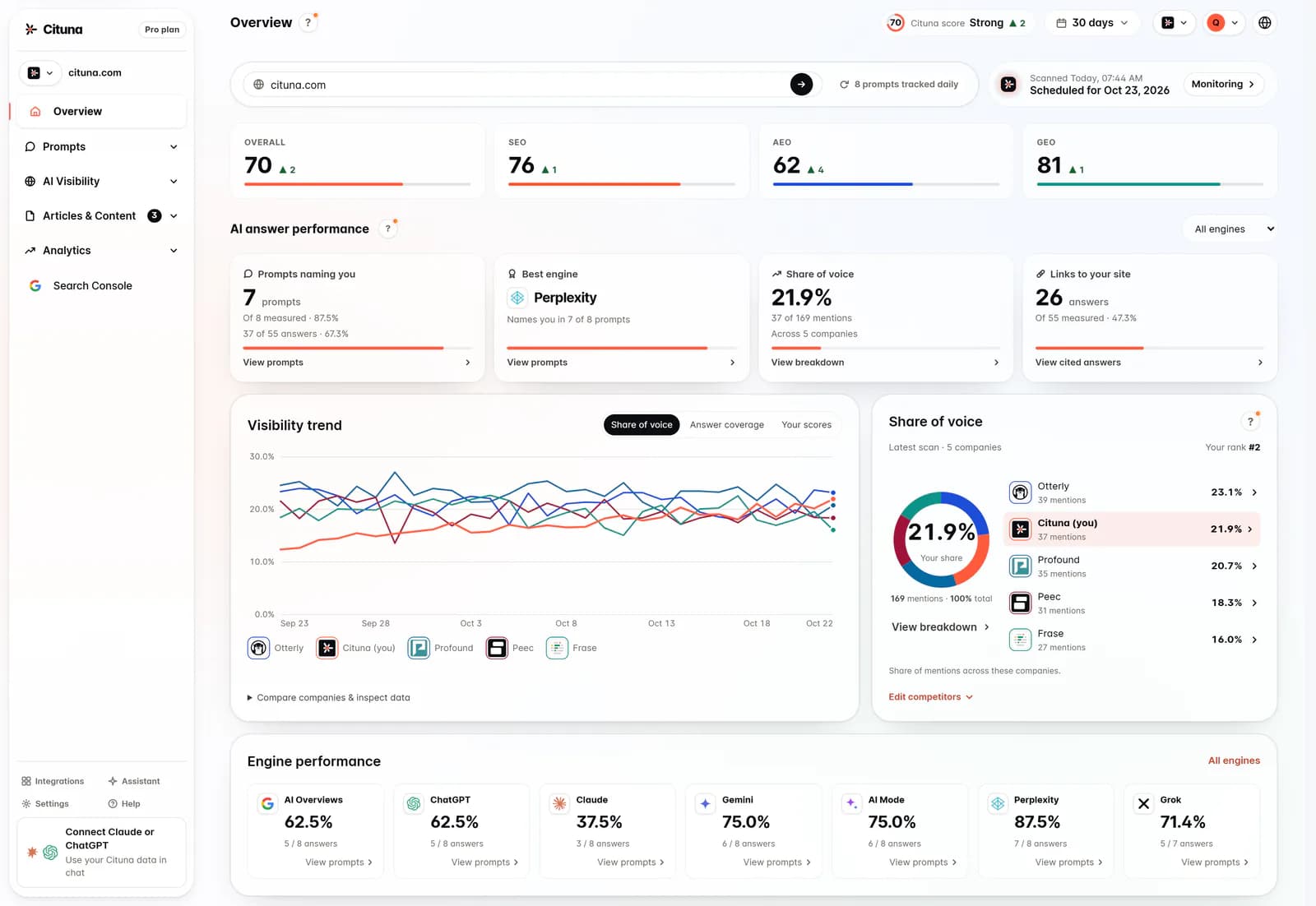
Getting recommended by ChatGPT comes down to three things it can actually see: reach, clarity and proof. Reach means its crawlers can read your pages, server-rendered content, nothing important hidden behind scripts or logins, and no blocks in robots.txt. Clarity means each page answers a specific buyer question in the first breath: lead with the direct answer, then support it, so the model can lift a clean, quotable passage. Proof means being well-represented on the sources ChatGPT already trusts, the best-tool listicles, review platforms, comparison articles and community threads, because it recommends the brands the web independently agrees on, not the ones with the slickest homepage. Structured data like schema and FAQ markup helps machines parse you, but it does not earn the mention by itself. You cannot buy your way in; there is no ad slot in the answer. You earn it, then measure which prompts name you. Cituna shows which of your buyer prompts ChatGPT answers with your name, checking it every day alongside six other AI engines, and generates the schema, FAQ markup and page changes that close each gap, from $49 a month.
The three levers that actually move ChatGPT
Start with reachability, because nothing else counts if the model cannot read you. Serve real HTML, keep key content out of client-only rendering, and confirm your robots rules do not block AI crawlers. Next, rewrite for liftability: make the page title the buyer’s question, put a direct two-to-three-sentence answer immediately below it, and use plain, specific language a model can quote without editing.
Finally, invest in off-site proof, the lever most teams underuse. Pitch the roundups and review sites in your category, earn honest comparisons, and give real customers reasons to describe you accurately in public. Consensus across independent sources is what tips a recommendation your way, far more than anything you can say about yourself on your own pages.
Make it measurable, then close gaps
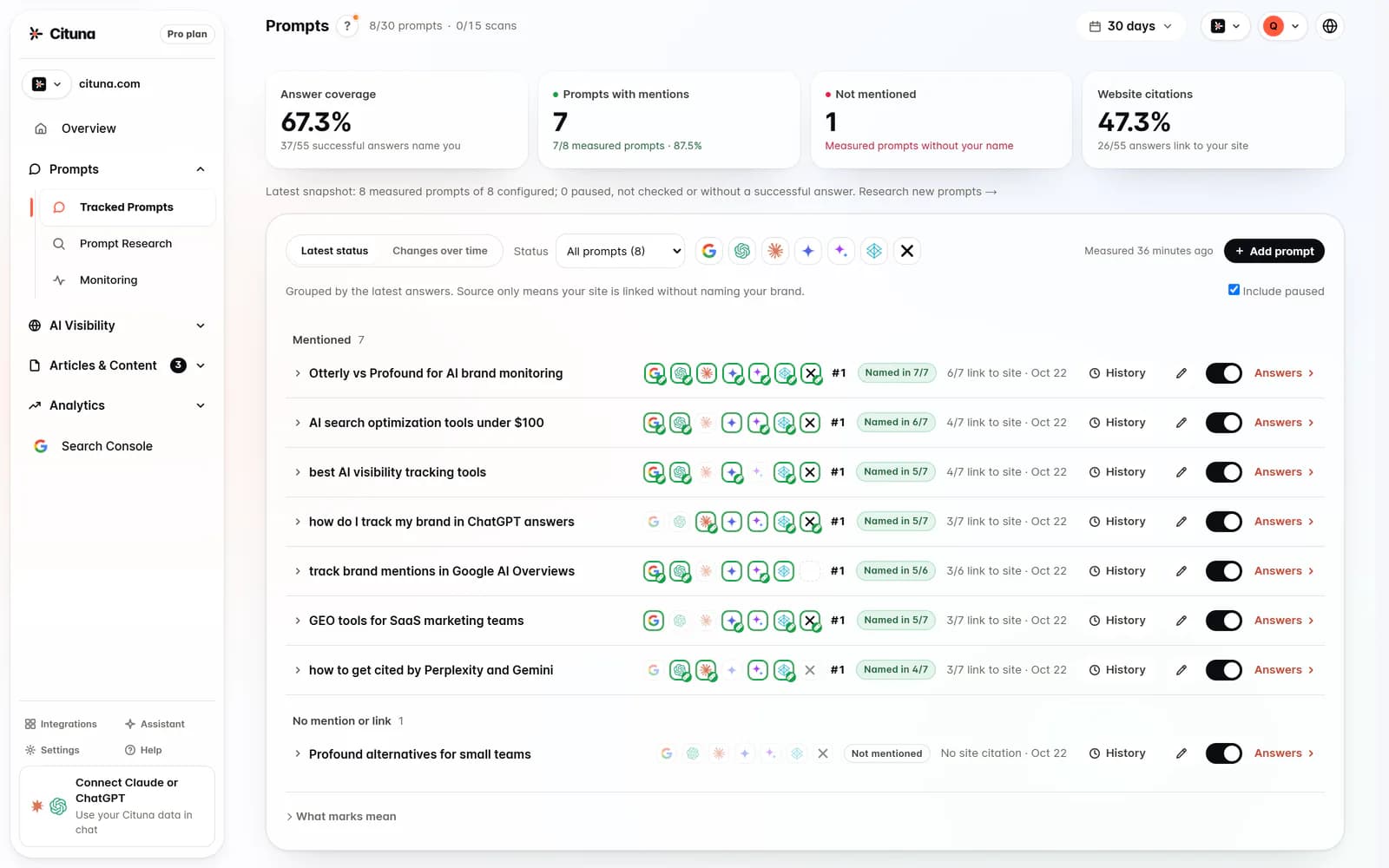
Because language models vary from run to run, treat this as a measured loop rather than a one-off edit. Track which of your real buyer prompts name your brand today, ship the reach, clarity and proof fixes, then re-check what moved. Cituna runs those prompts across ChatGPT, Perplexity, Gemini, Claude, Grok, Google AI Overviews and Google AI Mode, all seven checked daily, records where you win or lose against competitors, generates the schema, FAQ markup, llms.txt and content fixes, and writes and publishes the articles that close each gap, so every gap becomes work that gets done. Whatever tool you use, the discipline is the same: measure honestly, fix the readable signals, and give the engines more reasons to trust you.
Related questions
How long until ChatGPT starts recommending my brand?
Expect months, not days. Reachability and on-page clarity can be fixed immediately, but the off-site proof that actually earns recommendations, reviews, listicles, comparisons and honest mentions, accrues slowly, and models refresh their knowledge on their own cadence. Ship the fixes, keep earning genuine coverage, and re-measure regularly rather than expecting an overnight jump. Cituna re-asks the same questions of seven AI engines every day, so the day ChatGPT starts naming you is on record.
Can I pay ChatGPT to recommend my brand?
No. There is no advertising slot inside ChatGPT’s answers, so recommendations cannot be bought directly. What you can invest in is the work that earns them: reachable, answer-first content and credible third-party coverage. Anyone promising guaranteed placement in ChatGPT’s recommendations for a fee is selling something the platform does not actually offer.
Drafted with AI assistance from our own research and Search Console data, and reviewed by Rahul A before publishing. Rules and prices change; check the linked official source before you act.