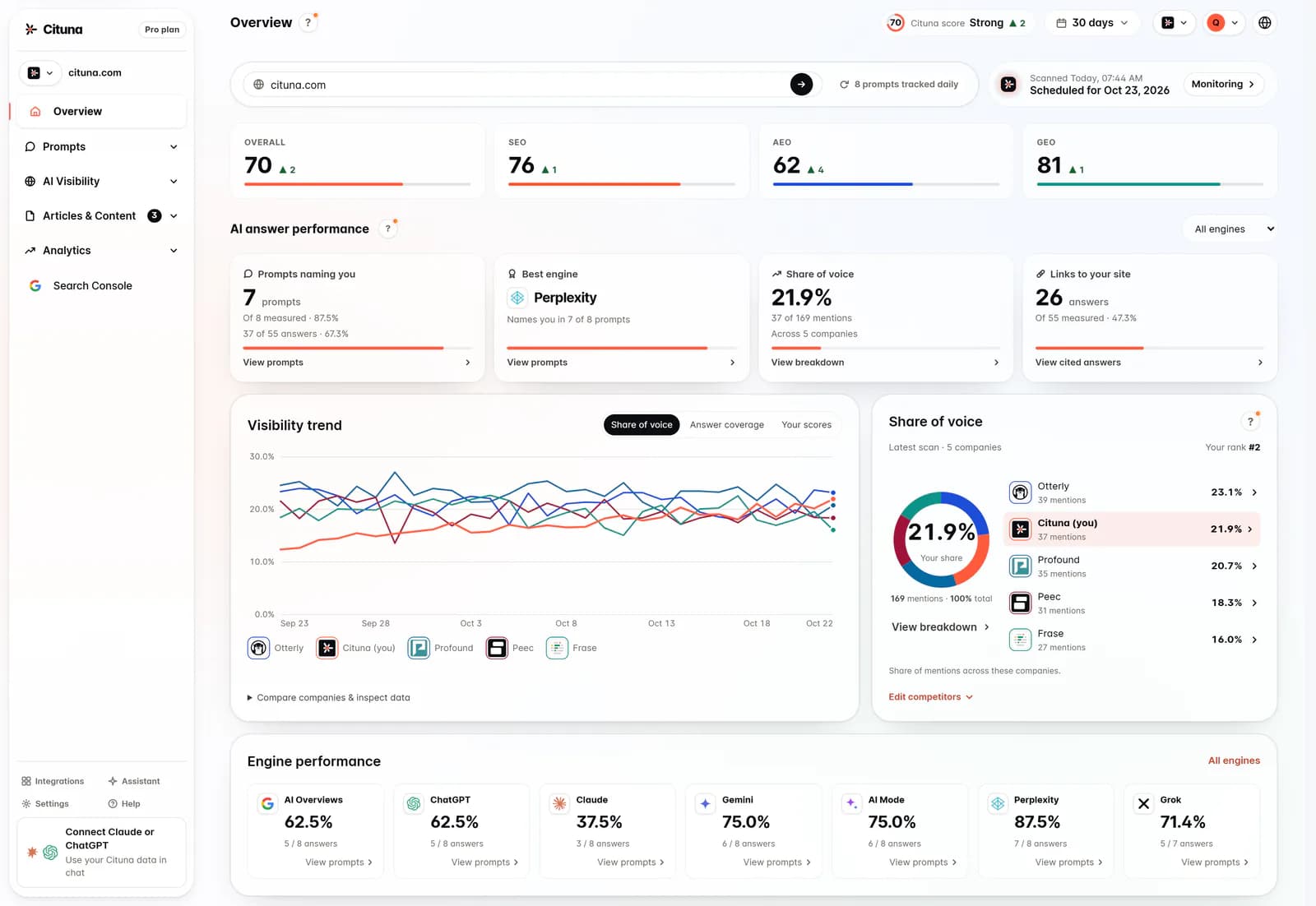
This is a sourced snapshot of where AI search stands in 2026, how many people use it, how it changes clicks, which sources get cited, and what actually influences those citations. These are third-party figures, not our own measurements; every number links to its primary source. Where a figure is a forecast or an estimate, we say so.
The audience has already moved
AI answer engines are no longer early-adopter tools. In October 2025 OpenAI said ChatGPT had reached 800 million weekly active users , roughly one in ten adults on earth. Pew Research separately found that 34% of U.S. adults have used ChatGPT, about double the share in 2023.
The pattern holds across engines. Google reported its AI Overviews reached 2 billion monthly users by mid-2025, up from 1.5 billion two months earlier, and Perplexity’s CEO said the engine handled 780 million queries in a single month, growing more than 20% month over month.
AI answers are becoming the default surface
It is not just that people use AI tools directly, AI answers are moving into the search results themselves. Pew found that about 18% of Google searches produced an AI summary, rising to 53% for queries of ten or more words and 60% for questions. Semrush’s larger study tracked AI Overviews appearing on 6.5% of queries in January 2025, peaking near 24.6% in July before settling at 15.7% by November , volatile, but structurally higher than a year earlier.
On the Gartner forecast
The click collapse
This is the finding that matters most for marketers. When an AI summary appears, people click far less. Pew measured a traditional-result click on just 8% of pages with an AI summary, versus 15% without, and only 1% of those visits produced a click on one of the summary’s own cited sources. Ahrefs, analyzing 300,000 keywords, found an AI Overview correlates with a 58% lower click-through rate for the #1 organic result.
| Behavior | With an AI summary | Without |
|---|---|---|
| Clicked a traditional result | 8% | 15% |
| Clicked a source cited in the summary | 1% | — |
| Ended the browsing session | 26% | 16% |
Source: Pew Research Center, browsing tracked March 2025. The AI answer increasingly ends the journey rather than starting a click.
Who gets cited
If clicks now depend on being inside the answer, the question becomes: who do the engines cite? Pew found 88% of AI summaries cited three or more sources, with a median length of 67 words. And the citations concentrate: across ChatGPT, Google AI Mode and Perplexity, Semrush’s analysis of more than 100 million citations found the five most-cited domains were Reddit, Wikipedia, LinkedIn, YouTube and Forbes. Perplexity’s citations also overlap strongly with Google’s top organic results, a reminder that classic SEO authority still feeds the answer.
| Rank | Most-cited domain |
|---|---|
| 1 | |
| 2 | Wikipedia |
| 3 | |
| 4 | YouTube |
| 5 | Forbes |
Source: Semrush, 230,000+ prompts and 100M+ citations across ChatGPT, Google AI Mode and Perplexity (Jul–Oct 2025).
What actually moves AI citations
The encouraging part: citations are influenceable. The foundational study is Princeton’s “GEO: Generative Engine Optimization” paper, which found that optimizing content can lift a source’s visibility in generative-engine answers by up to 40%. In the same paper, the highest-impact tactics were adding relevant statistics and authoritative quotations to content, exactly the kind of extractable, evidence-backed writing AI engines prefer to cite. Structured, answer-first content that a machine can lift cleanly beats keyword density.
The budget is following the behavior
Marketing teams are reallocating. Conductor’s survey of 250+ senior leaders found 94% plan to increase AEO investment in 2026, that enterprises already put an average of 12% of digital budget toward AEO in 2025, and that 97% said it positively affected the funnel. The traffic is moving too: Similarweb estimated AI referral traffic to the top 1,000 sites hit about 1.13 billion visits in June 2025, up 357% year over year, with ChatGPT driving the large majority, and ChatGPT referrals to 250 news and media sites nearly doubled in the first four months of 2025. (Referral-traffic figures are modeled estimates, not logged truth.)
How to read this page
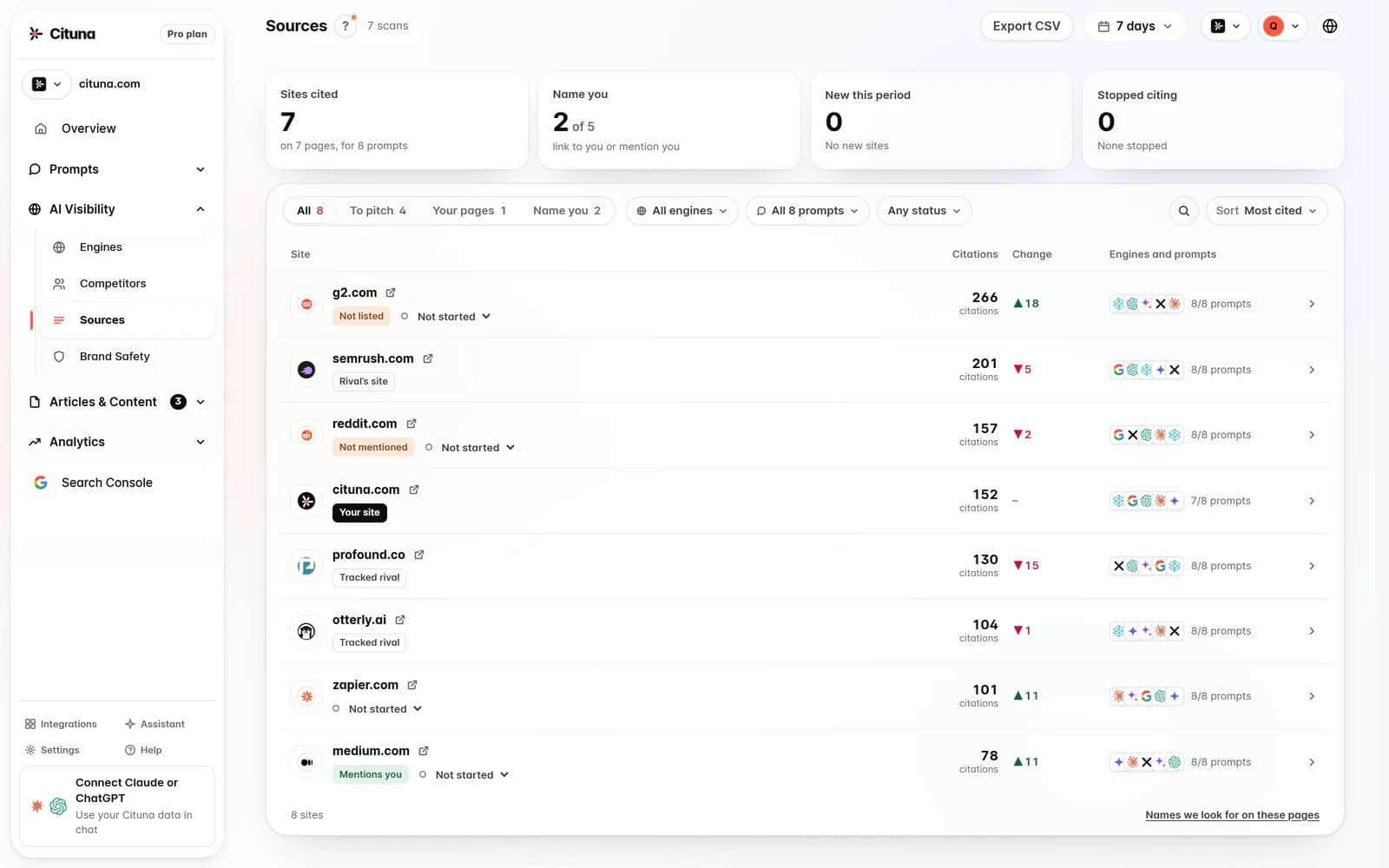
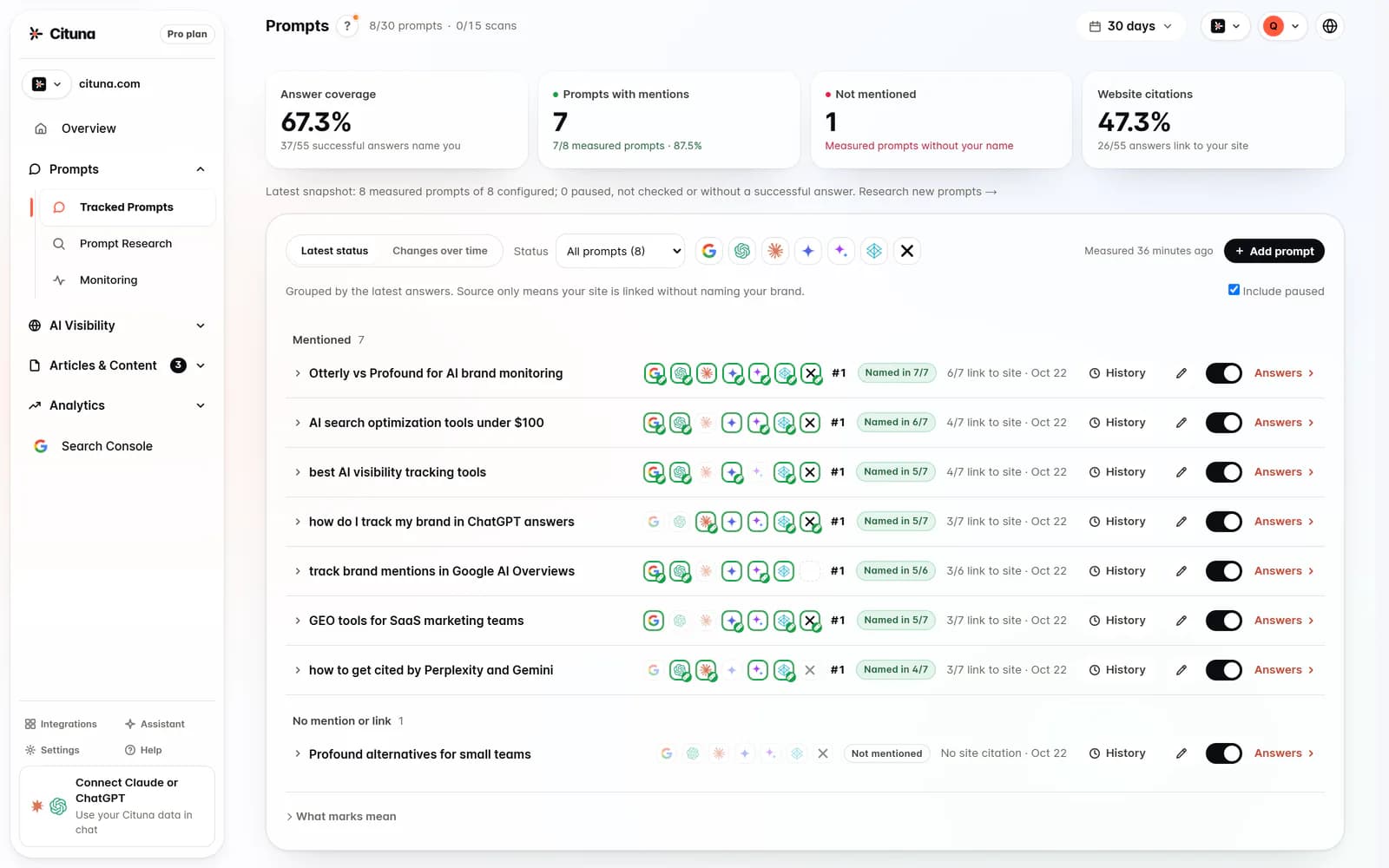
The through-line is simple: your buyers are asking AI engines the questions they used to type into Google, the answer increasingly ends the journey, and a small set of well-structured, well-cited sources win the mention. Measuring whether you are one of them, across ChatGPT, Perplexity, Gemini, Claude, Grok, Google AI Overviews and Google AI Mode, is exactly what Cituna does.
Drafted with AI assistance from our own research and Search Console data, and reviewed by Rahul A before publishing. Rules and prices change; check the linked official source before you act.