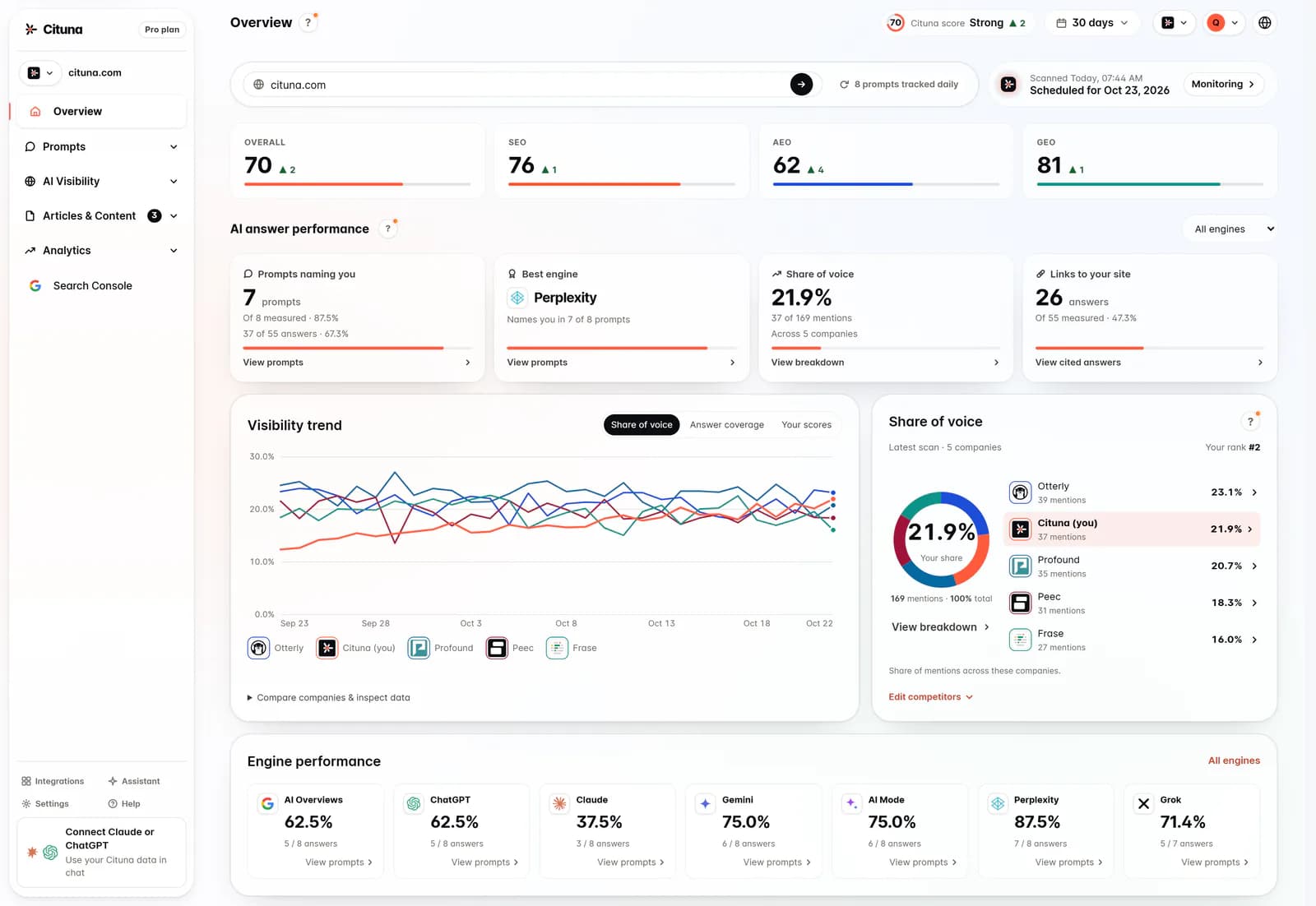
AI engines cite a blend of sources, and it is rarely just your own website. Retrieval-based answers, from Perplexity, Google AI Overviews, ChatGPT’s search mode and Gemini, run a live search, read the top results, and cite the pages they lift from, so they lean on whatever ranks and reads as trustworthy for that question. In practice, the sources that recur most are high-authority reference and community sites like Wikipedia and Reddit, independent review and directory sites such as G2 and Capterra, established industry publications, and third-party “best tools” comparison pages, plus your own site when it answers the question cleanly. When a model answers from memory rather than browsing, it draws on the brands and claims that appear consistently across those same trusted places. So being cited is part on-page, clear, extractable answers, and part off-page: being described consistently where the engines already look. Cituna records which pages seven AI engines cite for your buyers’ questions every day, and which competitors appear instead, from $49 a month.
Retrieval sources vs training sources
It helps to split citations by how the answer was produced. In retrieval mode, the engine searches the live web and links what it reads, so your citation odds track classic signals: can its crawler reach you, do you match the question in the first sentence or two, is the passage clean enough to lift, and is your domain one it already trusts?
In training mode, the model answers from what it absorbed during training, where consistency wins. A brand described the same way across Wikipedia, Reddit, review sites and industry press becomes a well-formed entity the model can recall, while one that barely appears, or appears inconsistently, does not.
How to earn more of those citations
You influence both modes with the same work: make sure AI crawlers can reach you, lead each section with a clean answer, publish original data or claims worth quoting, and earn mentions on the third-party sources engines already lean on. Schema and an llms.txt file help machines parse you, but on their own they do not manufacture trust.
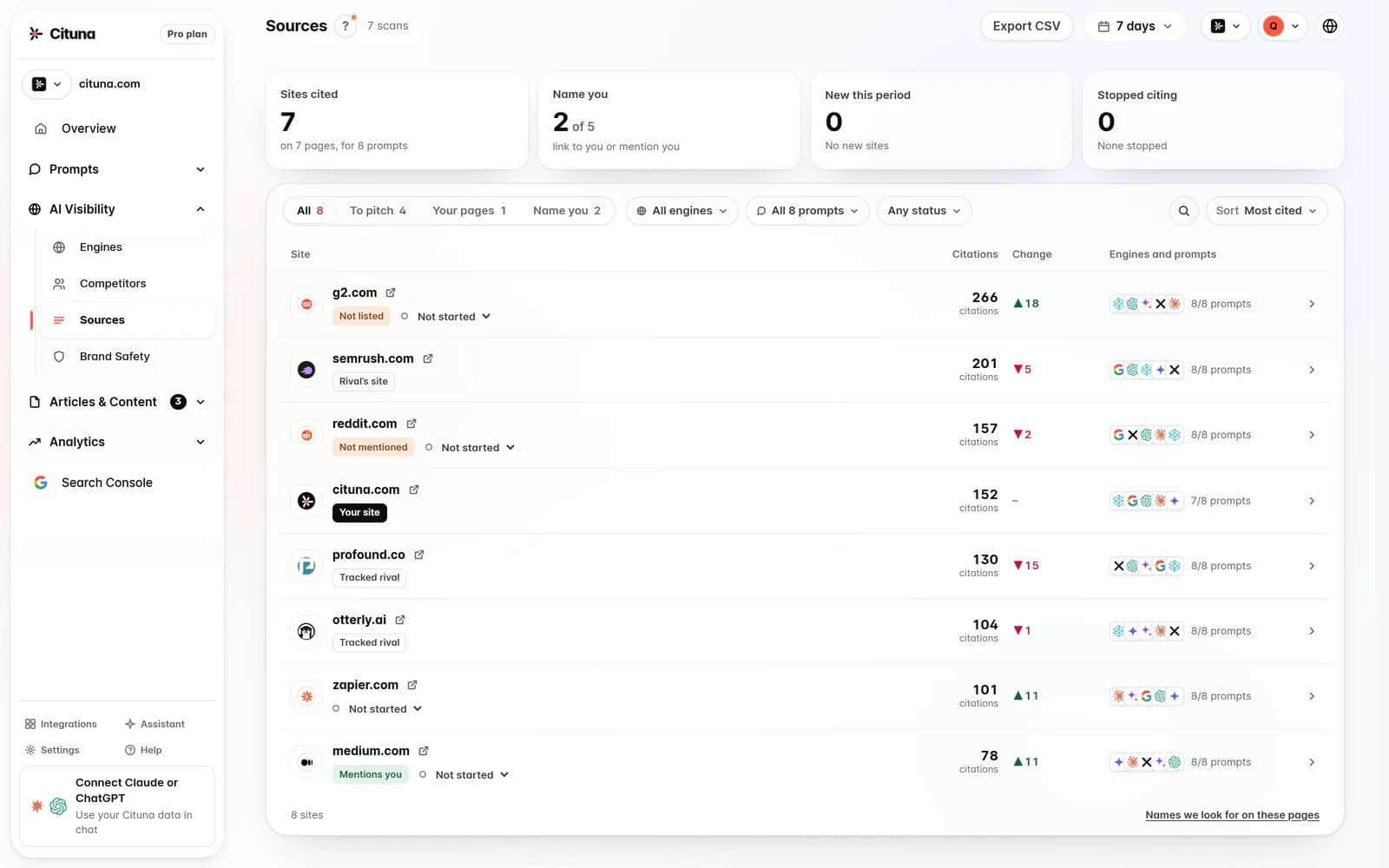
To know which sources each engine actually cites you from, and which rivals it cites instead, you have to watch the answers over time. Cituna records the cited sources and competitors for each buyer prompt across ChatGPT, Perplexity, Gemini, Claude, Grok, Google AI Overviews and Google AI Mode, so a gap comes with the exact page or competitor you are losing to, and the fix to win it back.
Related questions
Do AI engines cite the same sources Google ranks?
There’s heavy overlap but not a perfect match. Retrieval-based engines run a live search and lean on pages that rank and read as trustworthy, so strong SEO usually helps AI citations too. But answer engines also weight community and reference sites, Reddit, Wikipedia, and independent reviews more heavily than a classic ranking would, and they cite far fewer sources per answer.
How do I get my brand cited by AI engines?
Make your pages reachable and answer-first, establish your brand as a consistent entity across the web, and earn mentions on the review sites, communities and comparison pages engines already trust. Original data others quote does more than restated explainers. Then measure which engines cite you on a schedule and close the prompts where a rival appears and you don’t. Cituna asks your buyers’ questions of seven AI engines every day, shows the prompts where a rival is cited instead, and generates the fix for each gap, from $49 a month.
Drafted with AI assistance from our own research and Search Console data, and reviewed by Rahul A before publishing. Rules and prices change; check the linked official source before you act.