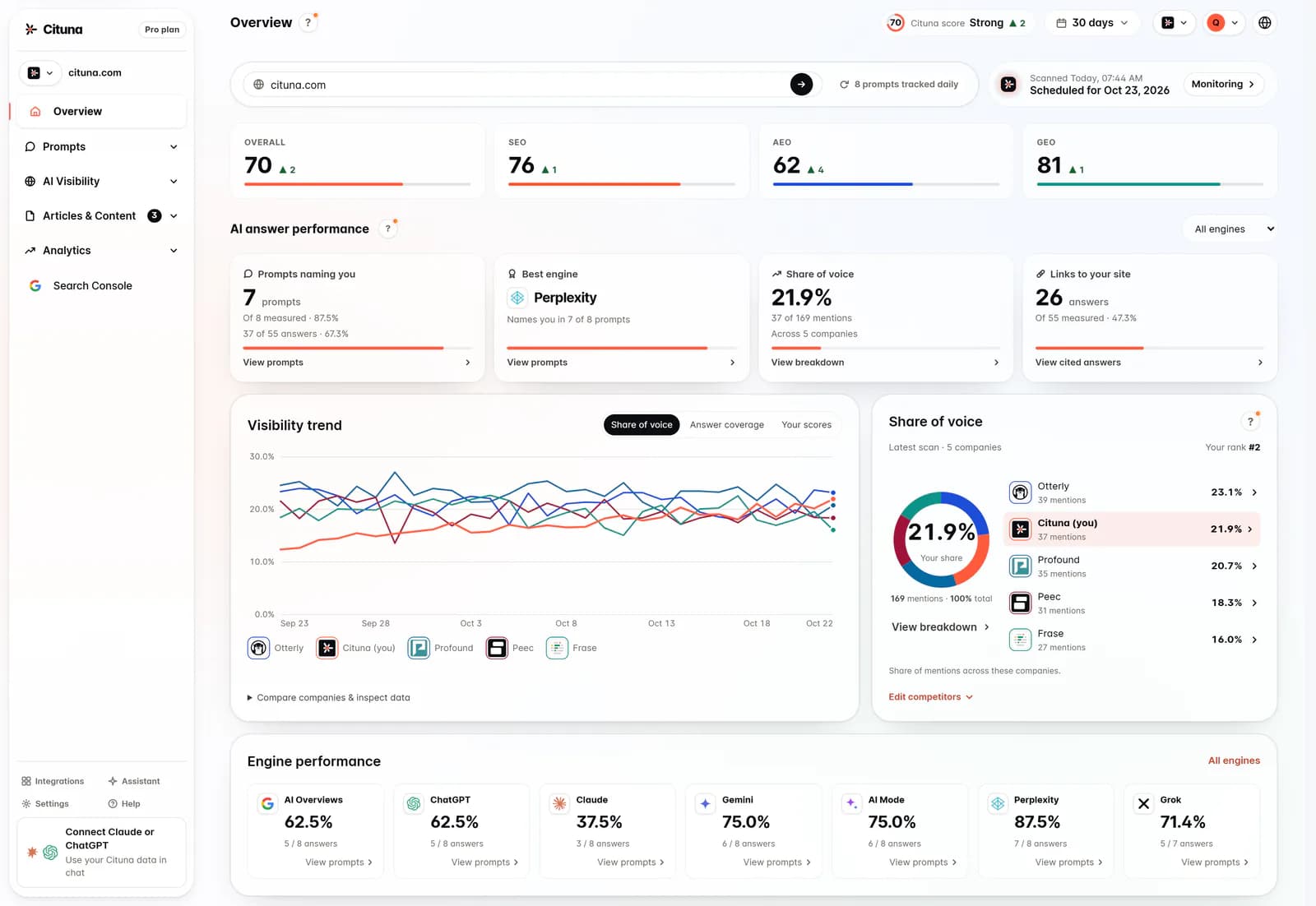
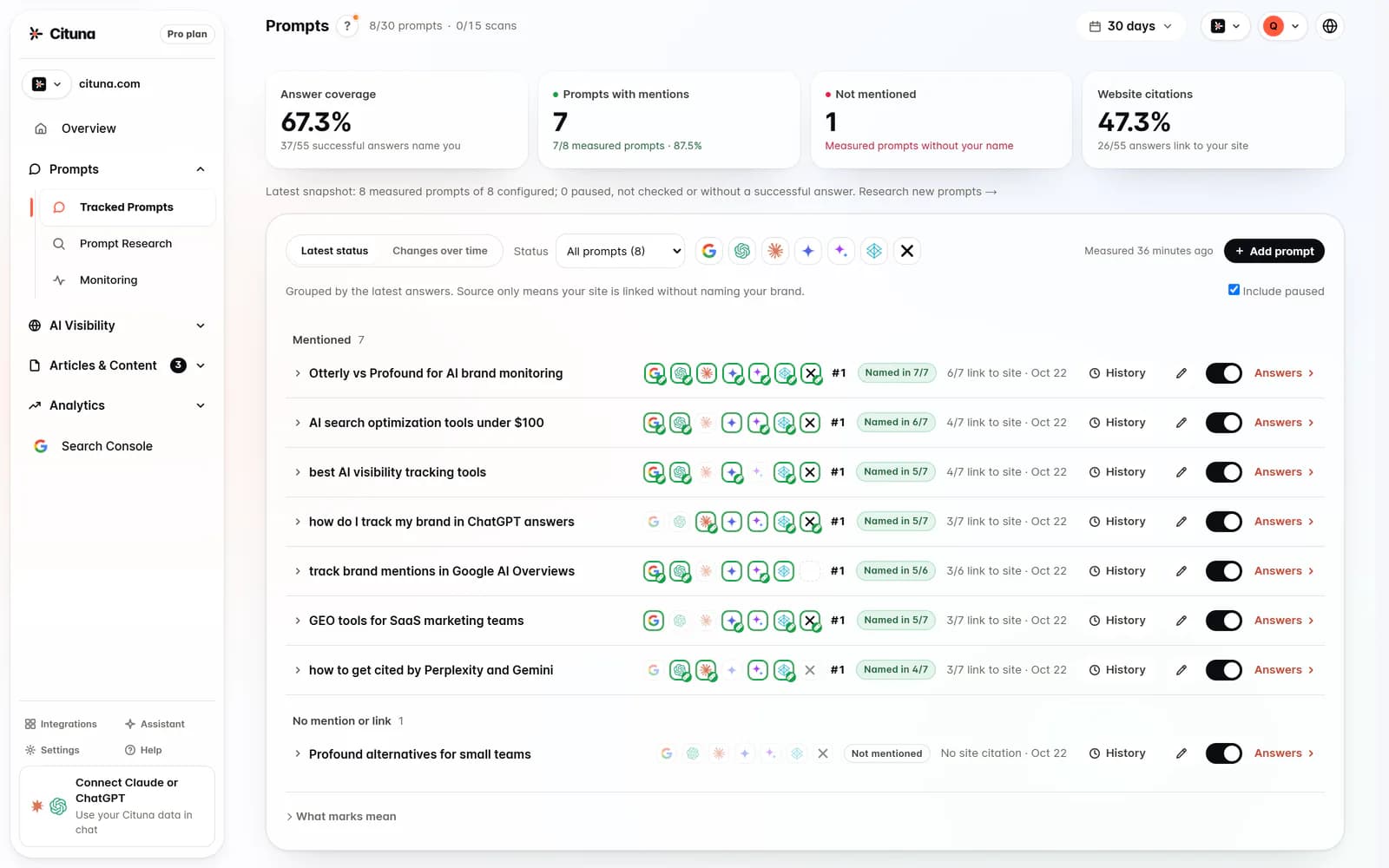
There is no cross-vendor benchmark, and treating any single score as an absolute is a mistake. Every tool computes its own composite from its own prompt set, engine mix and weighting, so a 60 in one product and a 60 in another are not comparable quantities, they are not even measuring the same thing. What a score is genuinely good for is direction over time on a fixed prompt set. Judge it the way you would judge a weight on a bathroom scale: the number matters less than whether it moves, and only if nothing about the scale changed. Cituna asks the same buyer questions of seven AI engines every day and records who each answer names and cites, and at what position, so the trend on a fixed prompt set is what you read.
Why this happens
The composite hides the decision. A score blends how often you are mentioned, whether you are cited, where you appear and how you compare: and those move independently. A flat score can conceal a real gain in citations offset by a loss in mentions, which is the opposite of no change.
Scores also break silently when their inputs change. Adding an engine, changing a prompt or altering the weighting shifts the number without anything about your visibility moving, which is why a score without a versioned methodology behind it cannot be trusted across time.
There is one comparison a score does support well, and it is the one most teams skip: your own position against the specific competitors an engine names instead of you. That is measured on the same prompt set, in the same runs, on the same day, so the confounds cancel out. “We are named in 3 of 10 buying questions and our closest rival in 7” is a real finding with a real target attached. A composite score compared against a number from a different vendor is not a finding at all.
What to do about it
Ask any vendor what their score is composed of and what happens to it when they add an engine. A vendor who cannot answer is selling a number, not a measurement.
Track the components, mention rate, citation rate, competitor share, alongside the composite, because the components are what you act on.
Compare yourself against your own history and your named competitors, never against another tool's scale.
Where Cituna fits
Cituna reports the components alongside the composite, mention rate, citation rate, and the competitors named instead of you, and versions its scoring so a methodology change is visible rather than silent. It also joins to Search Console, which is the only way to check whether a rising score is reaching real traffic.
Then it does the work: it generates the fix for each gap, its AutoSEO writes and publishes the articles that answer the questions you are missing, and Claude or any other AI agent can work through the results over MCP.
Drafted with AI assistance from our own research and Search Console data, and reviewed by Rahul A before publishing. Rules and prices change; check the linked official source before you act.