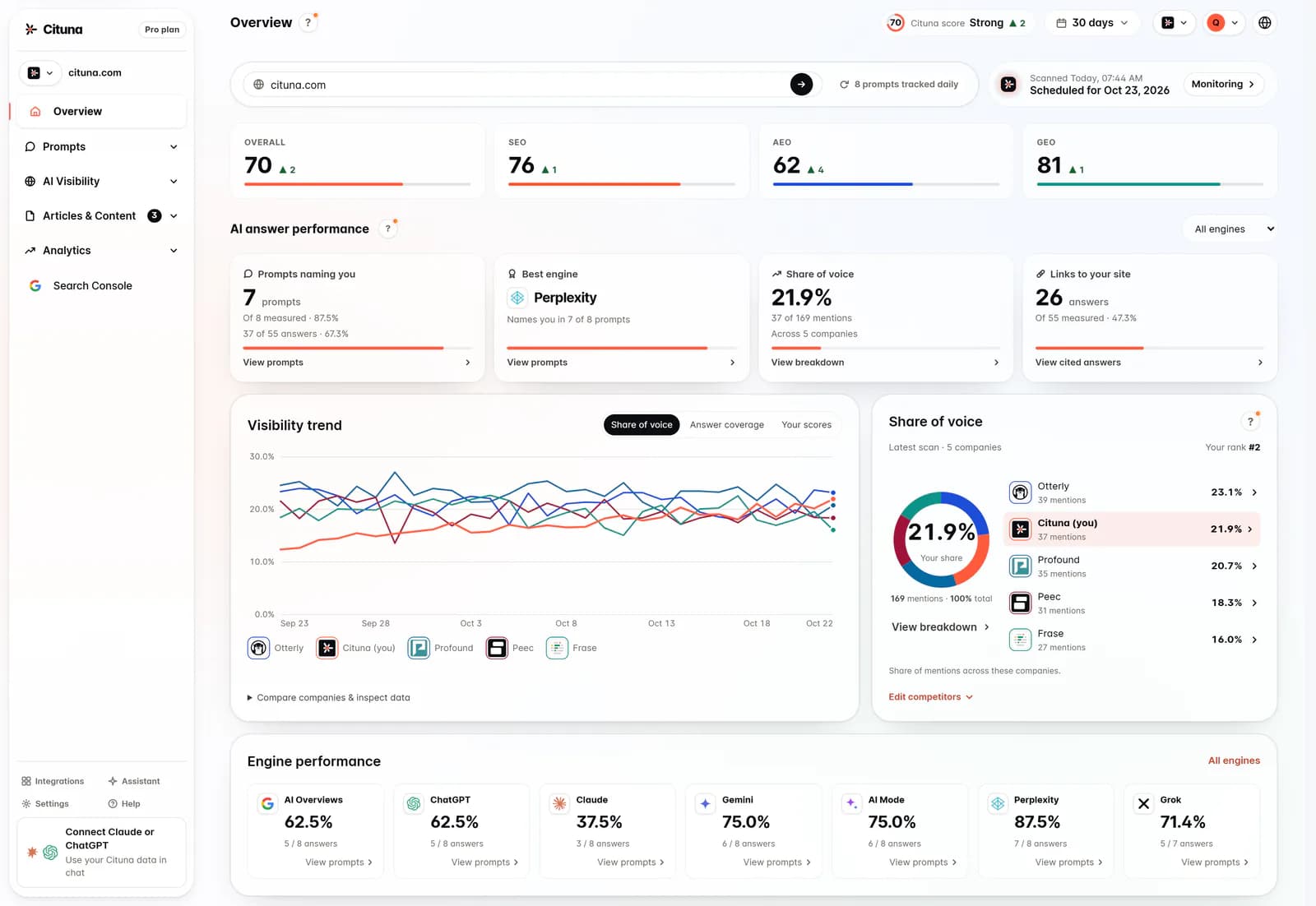
When a buyer asks an AI engine about developer tools, the answer is usually assembled before your website is consulted. Documentation is the citation surface here, engines quote docs and READMEs far more readily than marketing pages, so docs quality is AEO work. For this category the engine that matters most is Perplexity, and the sources it leans on are documentation, GitHub and package registries, Stack Overflow. That ordering, surfaces first, own site second, is the part most developer tools get backwards, and it is why publishing more pages often changes nothing.
Where answers about developer tools come from
Documentation is the citation surface here, engines quote docs and READMEs far more readily than marketing pages, so docs quality is AEO work.
In practice the citation surfaces for this category are documentation, GitHub and package registries, Stack Overflow, Reddit threads in the category. None of those is your website, which is the uncomfortable finding and also the useful one: the fastest improvements here are usually off-site.
This category does not carry the heightened Your Money or Your Life evidence bar, so well-made content moves answers faster here than it does in regulated categories. For developer tools that speed is the advantage worth pressing: publishing a quickstart that answers the task in the first screen can change what Perplexity says within weeks, where a regulated category would need corroboration on GitHub and package registries first.
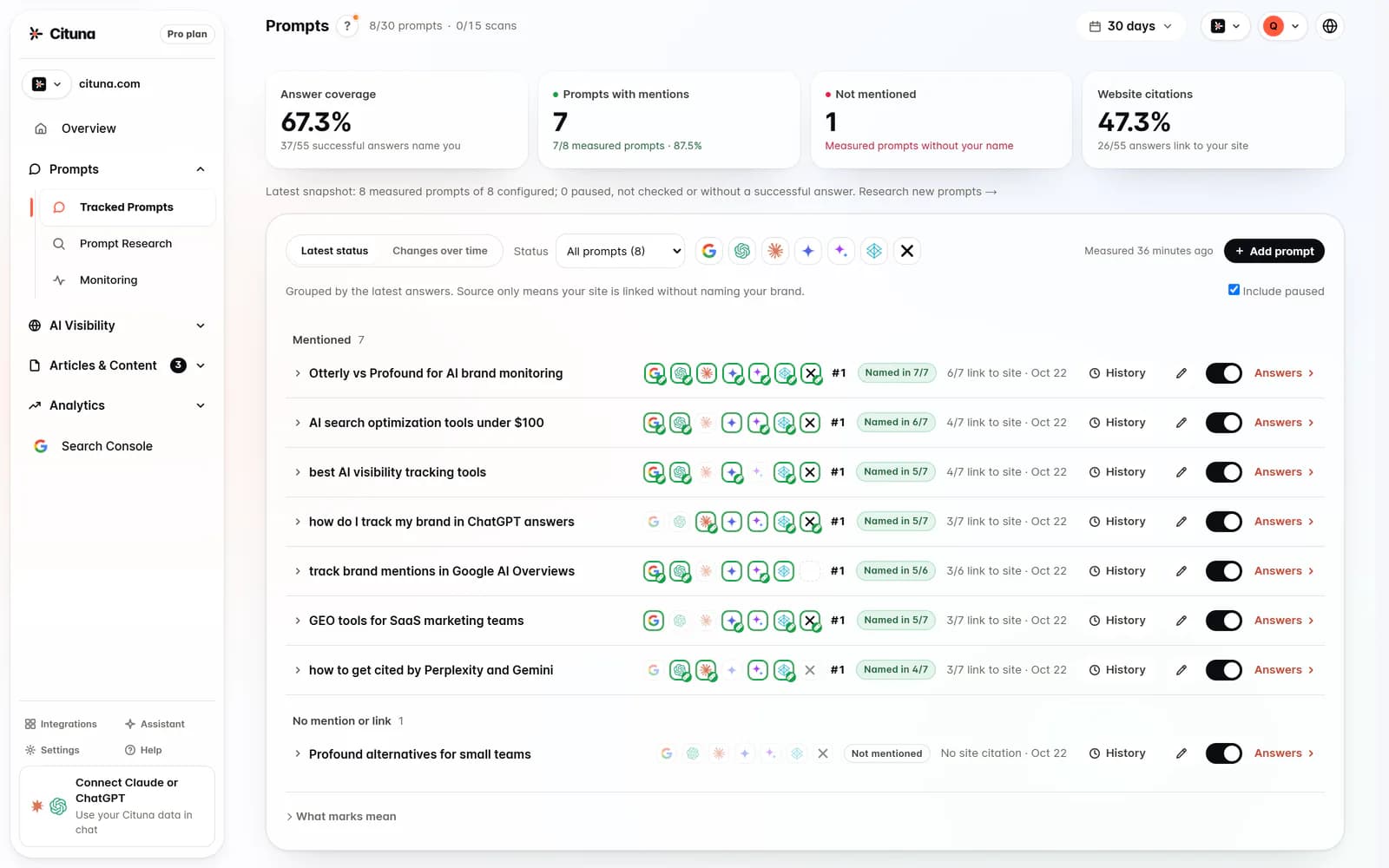
What the answer actually looks like
Ask for a library to do a task and the answer quotes documentation and README content directly, often verbatim. Marketing pages are rarely cited. The tool with the clearest quickstart is the one the engine can quote, which is usually the one it recommends.
That is the shape to check against. Run the question for your own business, because the answer for your city, your specialism and your size will differ from the general case in ways that change what is worth fixing. Cituna asks all seven engines daily, including Perplexity, the questions a buyer would actually type, to record whether you are named, at what position, and which developer tools are named in your place.
The mistake developer tools make most often
It is treating documentation as support material rather than as the primary citation surface. That single habit accounts for more missing answers in this category than any ranking factor, because it removes the fact the engine needed before any judgement about quality is reached.
The corresponding fix is narrow and concrete: publish a quickstart that answers the task in the first screen. It is usually an afternoon of work, it is checkable, and it is the thing to do before commissioning any content at all.
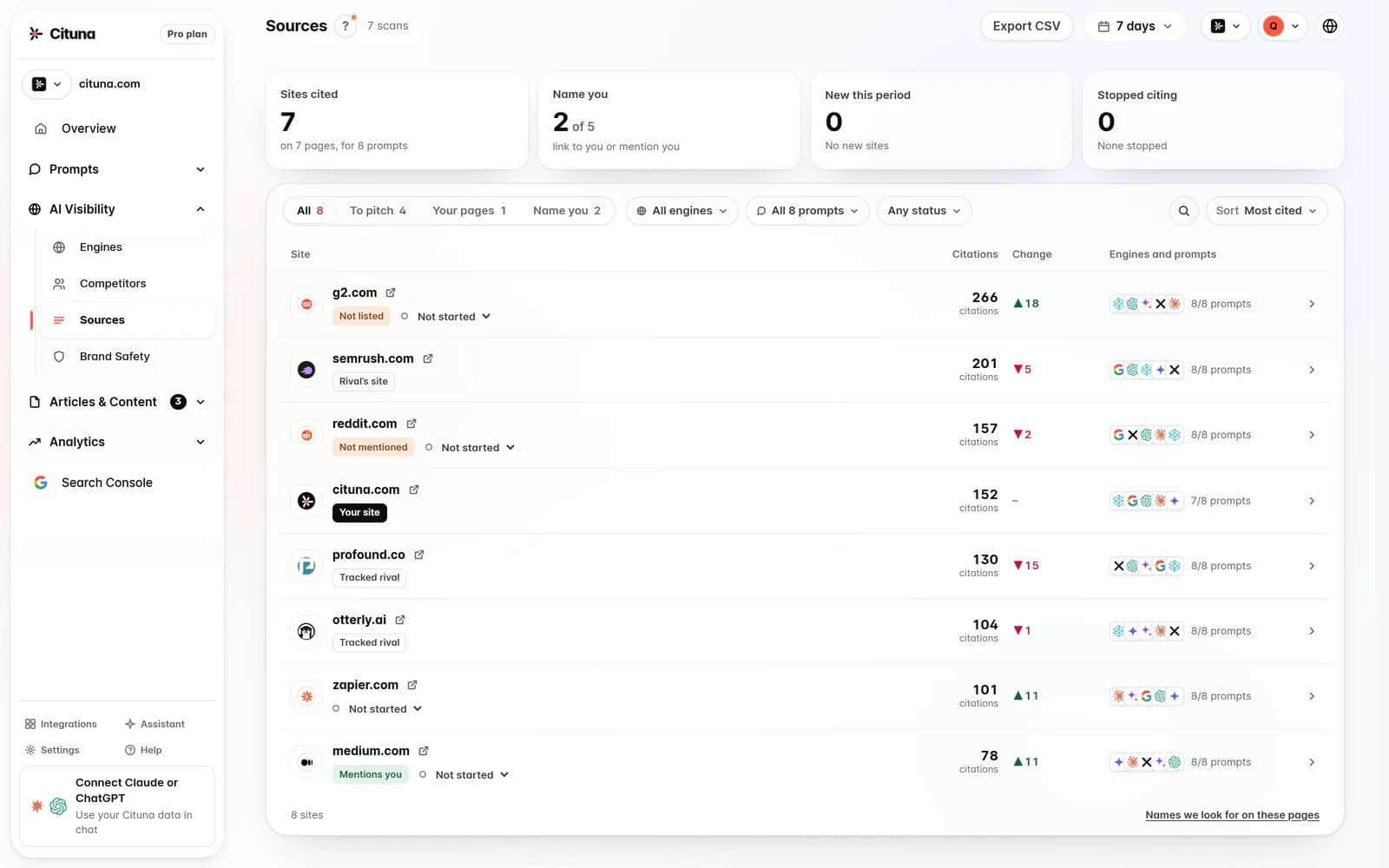
What to fix first
Start by asking Perplexity the question a buyer would actually type, something close to “library for <task> in <language>”, and write down what comes back, with the date. That single answer tells you whether you are absent, mentioned, or mentioned third, and those are three different problems.
Then audit your presence on the surfaces above in the order listed, because they are ordered by how much they influence the answer in this category. Fixing your own pages before fixing documentation is the most common wasted quarter in developer tools.
Finally, re-check on a schedule. One reading is not a measurement: engines return different answers to the same question across days, so a change only counts if it holds.
Measuring this for developer tools
The check worth running is narrow: ask Perplexity “library for <task> in <language>”, record whether you are named, and record which competitors are named instead. Repeat it daily rather than once, because a single answer from any of these engines is a sample, not a position.
Cituna does exactly that across all seven engines, ChatGPT, Perplexity, Gemini, Claude, Grok, Google AI Overviews and Google AI Mode, on the $49 Starter, and joins it to Google Search Console so a movement in Perplexity can be checked against real clicks rather than taken on trust. Then it does the work: it generates the fix for each gap, its AutoSEO writes and publishes the articles that answer the questions you are missing, and Claude or any other AI agent can work through the results over MCP. For developer tools the most useful output is usually not the score but the competitor list, because it tells you which documentation entries are outranking yours.
Drafted with AI assistance from our own research and Search Console data, and reviewed by Rahul A before publishing. Rules and prices change; check the linked official source before you act.